
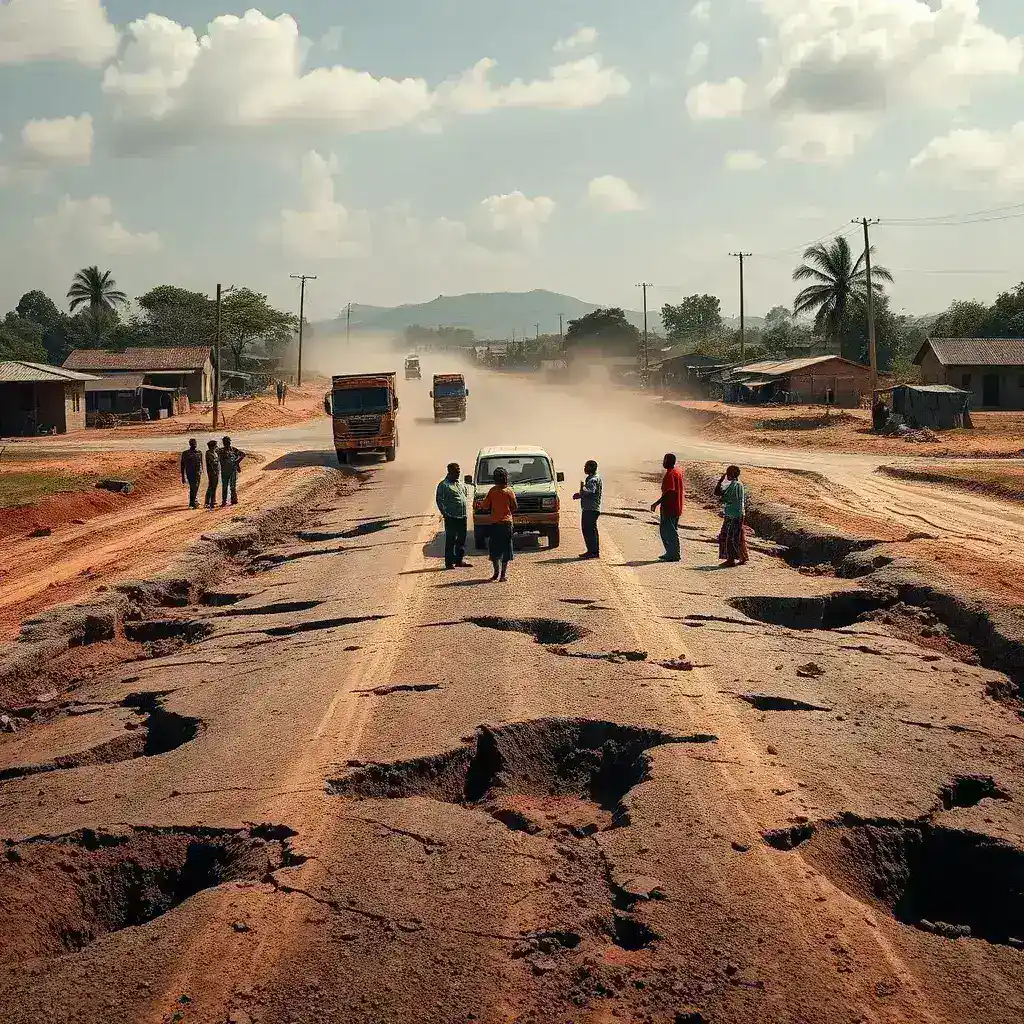
The Public Interest and Accountability Committee (PIAC) is investigating the prolonged delays and potential mismanagement of petroleum revenue linked to the Ehi–Dzodze road project in Ghana’s Volta Region. The investigation, prompted by persistent complaints from residents of the Ketu North Municipality, aims to ascertain why a project funded by the nation’s oil wealth has stalled for over a decade, leaving a crucial road in disrepair and impacting local livelihoods.
Context: Petroleum Revenue and Infrastructure Development
Ghana began oil production in 2010, with revenues earmarked for critical national development projects, including infrastructure. The Petroleum Revenue Management Act (PRMA) guides the allocation and use of these funds. However, concerns have frequently arisen regarding the transparency and efficiency of how these revenues translate into tangible development, particularly in local communities.
The Ehi–Dzodze road project, intended to improve connectivity and facilitate economic activity, was originally scheduled for completion in 2011. Its financing through petroleum revenues places it under scrutiny by PIAC, an independent statutory body tasked with promoting transparency and accountability in the management of petroleum revenues.
Delayed Project, Worsening Conditions
Residents of the Ketu North Municipality have endured years of deteriorating road conditions along the Ehi–Dzodze stretch. What was meant to be a bitumen-surfaced road, planned to commence in 2006 and finish by 2011, remains incomplete. Sections of the road are in a deplorable state, causing significant hardship and hindering daily life and economic activities.
During a recent nationwide monitoring exercise, PIAC officials visited the municipality to assess petroleum-funded projects. While inspecting a newly constructed 1,000-metric-tonne warehouse and ancillary facilities at Dzodze, intended to boost agricultural productivity, the committee’s attention was drawn to the Ehi–Dzodze road.
Concerns Over Accountability and Value for Money
PIAC Senior Technical Manager, Emmanuel Gyapong, expressed deep concern over the protracted delay. He emphasized that PIAC’s mandate includes evaluating the proper execution of petroleum-funded projects and ensuring public funds deliver value to the communities they are intended to serve. The lack of progress on the Ehi–Dzodze road raises questions about accountability and the effective utilization of Ghana’s oil revenue.
Drivers using the Ehi–Dzodze stretch report frequent vehicle breakdowns, which significantly increases operational costs. Traders have seen transportation expenses rise substantially, impacting the prices of goods and services. Farmers face immense difficulties in transporting their produce to market, leading to potential post-harvest losses and reduced income.
Commercial drivers described the road as not only dangerous but also economically burdensome, especially during the rainy season when accessibility becomes severely limited. The poor state of the road directly impedes the movement of people and goods, stifling economic potential within the municipality.
Local Authorities Acknowledge Hardship, Appeal for Intervention
The Municipal Chief Executive for Ketu North, Rev. Martin Amenaki, acknowledged the severe hardship faced by residents due to the road’s condition. He stated that the deteriorating infrastructure is slowing economic activity, hampering mobility, and disrupting the daily lives of the municipality’s inhabitants.
Rev. Amenaki appealed to the government for urgent intervention. He called for a thorough investigation to retrieve any misapplied funds, a repackaging of the contract, and a renewed commitment to ensuring the project’s swift completion. Residents echo this sentiment, believing the completed road will ease transportation, improve market access, reduce business costs, and foster new economic opportunities.
Implications for Future Development and Public Trust
The Ehi–Dzodze road project serves as a stark reminder of the critical need for diligent oversight and efficient project management in the utilization of petroleum revenues. For the residents of Ketu North, the expectation is that national wealth translates into visible, lasting improvements in their quality of life. The prolonged delay erodes public trust in the government’s ability to deliver on development promises funded by valuable natural resources.
This investigation by PIAC highlights the broader challenge of ensuring that petroleum revenues contribute effectively to sustainable national development. The outcome of the probe into the Ehi–Dzodze road project will be closely watched as an indicator of accountability in Ghana’s oil-funded infrastructure initiatives. Future attention will focus on whether corrective actions are taken, contracts are re-evaluated, and the project is finally brought to fruition, thereby restoring confidence in the management of the nation’s oil wealth.






Leave a Reply