
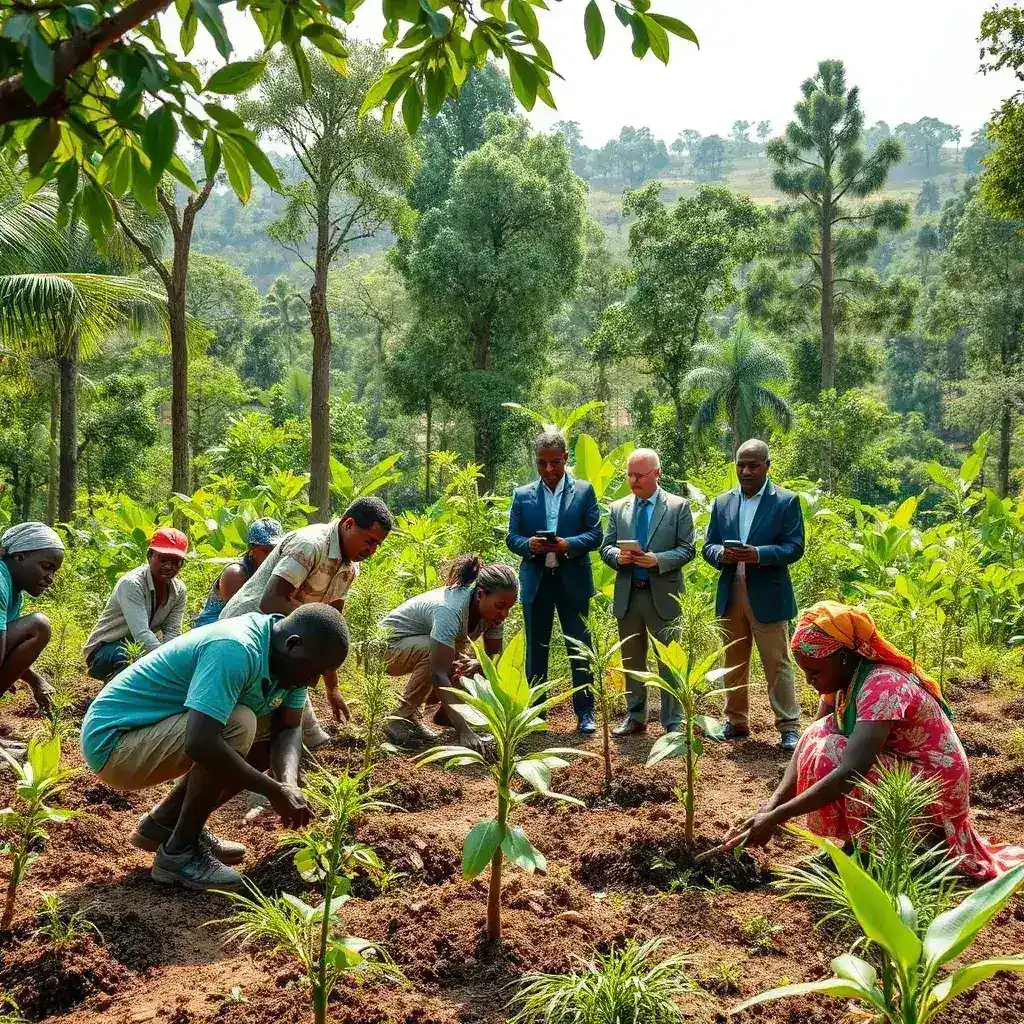
Ghana is actively seeking significant private sector investment for its ambitious forest restoration projects and burgeoning carbon markets, aiming to secure vital climate finance. This push was highlighted at the Ghana-UK Business Summit in London, where Ghanaian officials emphasized the critical need for non-public funding to tackle environmental challenges.
The Funding Imperative
Elikem Kotoko, Deputy Chief Executive Officer of Ghana’s Forestry Commission, stated at the London summit that relying solely on public funds is inadequate for the monumental task of climate change mitigation and adaptation.
The scale of environmental degradation and the urgent need for reforestation and sustainable land management demand resources that far exceed governmental budgets, particularly in developing nations like Ghana.
Ghana’s Nature-Based Solutions Strategy
Ghana is positioning itself as a prime destination for investment in nature-based solutions. These solutions leverage natural processes to address societal challenges, such as climate change, water security, and biodiversity loss.
Forest restoration is a cornerstone of this strategy, aiming to reverse deforestation and degradation, enhance carbon sequestration, and protect vital ecosystems. The country is also keen on developing its carbon markets, providing opportunities for businesses to invest in emission reduction projects and earn carbon credits.
Carbon Markets as a New Frontier
The global carbon market offers a potential avenue for significant financial flows into climate action. Ghana aims to attract international and domestic private capital to support projects that demonstrably reduce greenhouse gas emissions or enhance carbon sinks.
These markets operate on the principle that entities can buy and sell permits to emit carbon dioxide or other greenhouse gases. For countries like Ghana, this translates into opportunities to monetize their carbon sequestration potential through verified projects.
Attracting Private Capital
The Ghana-UK Business Summit provided a platform for Ghanaian officials to engage directly with potential investors. The message was clear: Ghana offers a fertile ground for impactful investments in sustainability, with clear policy frameworks and a commitment to environmental stewardship.
The government is working to create an enabling environment for private sector participation, including streamlining regulatory processes and ensuring transparency in carbon credit verification and trading.
Expert Perspectives and Data
According to a 2023 report by the United Nations Environment Programme (UNEP), nature-based solutions have the potential to provide up to one-third of the cost-effective climate mitigation needed to keep global warming below 2 degrees Celsius by 2030.
This underscores the immense economic and environmental value of investing in ecosystems. For Ghana, successful implementation could not only lead to significant carbon credit revenues but also enhance biodiversity, improve water resources, and create green jobs.
Implications for Ghana and the Industry
The success of Ghana’s initiative could serve as a model for other developing countries seeking to finance their climate goals through private capital. It signals a shift towards recognizing the economic value of natural capital and integrating it into national development strategies.
For the private sector, this presents an opportunity to meet corporate sustainability targets, invest in impactful projects, and potentially generate financial returns through carbon markets and other nature-based investments.
What to Watch Next
The focus will now shift to the concrete outcomes of these discussions. Investors will be looking for clear project pipelines, robust verification mechanisms for carbon credits, and strong governance structures to ensure accountability and transparency. Ghana’s ability to translate these commitments into tangible investment deals will be crucial for its climate finance aspirations.








Leave a Reply