
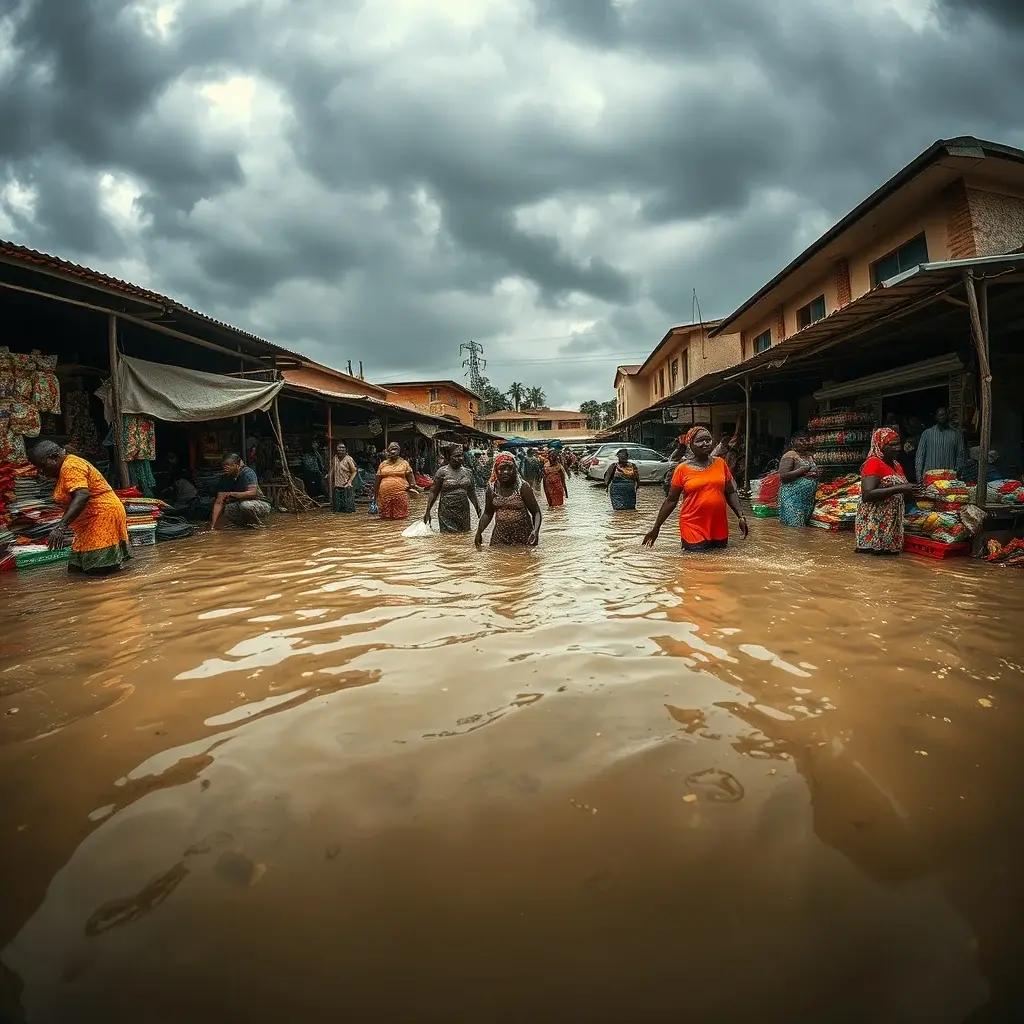
Accra experienced significant disruptions on Wednesday as heavy rainfall submerged several parts of the capital, impacting transportation, businesses, and daily life. The downpour led to widespread flooding in communities including Kaneshie, Pantang, Ashaley Botwe Lakeside, Ashaiman, Sakumono, Kanewu, Adjei Kojo, and sections of the Agbogba–Ashongman Road.
The flooding submerged markets and roads, causing considerable damage and inconvenience. At Kaneshie Market, one of the affected areas, floodwaters inundated trading spaces, resulting in the destruction of goods and significant financial losses for numerous vendors.
This event underscores the recurring challenge of urban flooding in Accra, particularly during the rainy seasons. Factors such as inadequate drainage systems, rapid urbanization, and the impact of climate change are often cited as contributing causes to these persistent issues.
The Ghana Meteorological Agency (GMet) had forecast mixed weather conditions for the period of June 3 to June 5, 2026. Their outlook included expectations of thunderstorms, rain, mist, and occasional sunshine across different ecological zones of the country. While GMet indicated a low overall risk level, they cautioned residents to remain alert to localized weather disturbances, especially during morning and evening hours.
Following Wednesday’s downpour, the Ghana National Fire Service (GNFS) issued a public safety alert. They urged residents in flood-prone areas to implement precautionary measures against potential flash floods. The GNFS confirmed the activation of its emergency response channels and provided key contact numbers for public assistance, including the national emergency number 112 and specific lines for the Fire Management Centre.
This incident highlights the vulnerability of Accra’s infrastructure to extreme weather events. Experts have long warned about the need for improved urban planning and drainage systems to mitigate the impact of heavy rains. The combination of increased rainfall intensity, potentially linked to climate change, and existing infrastructural deficits creates a precarious situation for many urban dwellers.
The economic toll of such events is substantial. Beyond the immediate loss of goods for market traders, disruptions to transportation can paralyze economic activity for extended periods. Businesses face operational challenges, and commuting becomes difficult and time-consuming for the general population.
Data from various urban resilience studies often point to the critical need for investment in flood management infrastructure. These include the expansion and maintenance of drainage networks, the promotion of permeable surfaces to reduce runoff, and better waste management to prevent blockages in existing systems. The frequency and severity of flooding events in Accra suggest that current measures may be insufficient to cope with the challenges.
The Ghana National Fire Service’s proactive alert and activation of emergency services demonstrate an effort to respond to immediate threats. However, the recurring nature of these floods indicates a need for more comprehensive, long-term solutions that address the root causes of urban inundation.
Looking ahead, residents and city authorities will be watching closely to see what immediate and long-term measures are implemented to address Accra’s persistent flooding issues. The effectiveness of these responses will be crucial in mitigating future risks and ensuring the safety and economic stability of the city’s inhabitants during the remainder of the rainy season and beyond.






Leave a Reply