
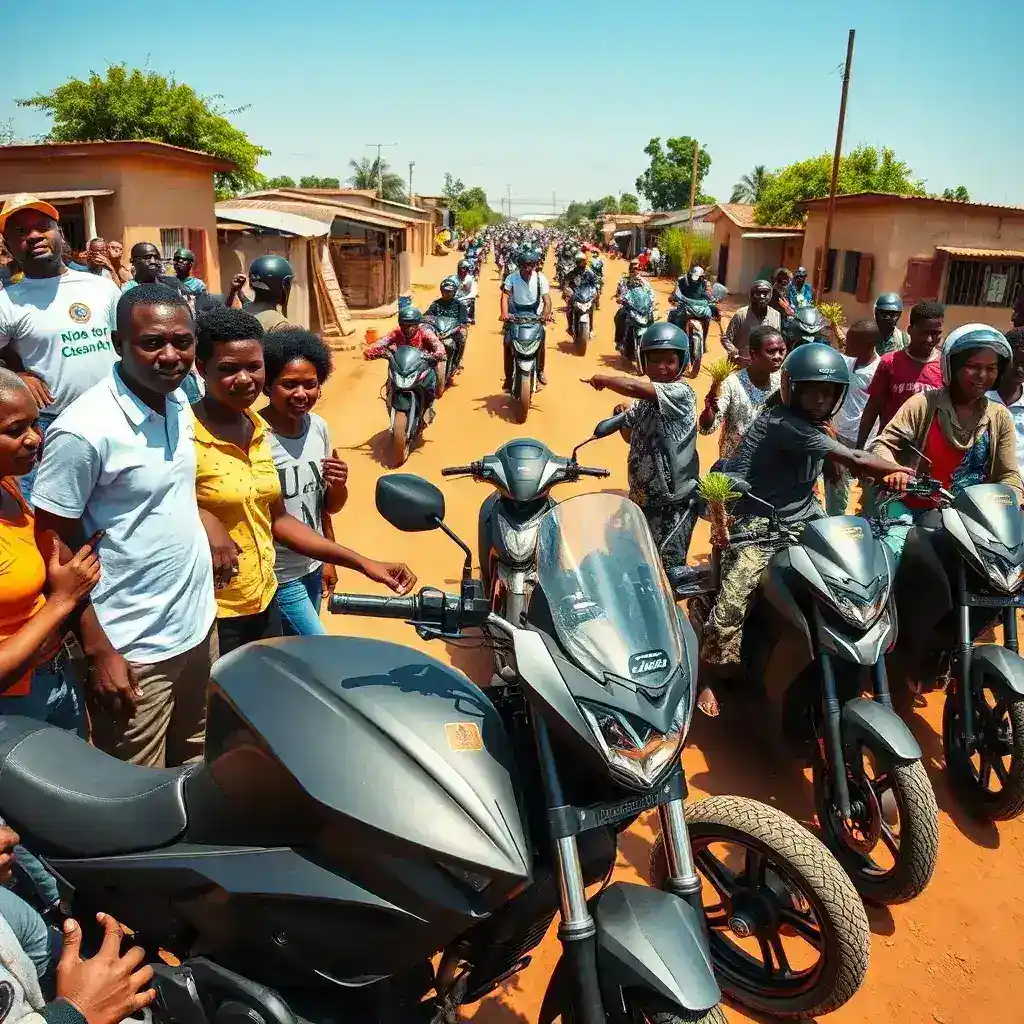
In the northern Ghanaian town of Bawku, the quiet hum of electric motorcycles has replaced the roar of petrol engines, marking a significant shift in local transportation and a burgeoning climate solution. This transition, accelerated by local restrictions and a growing demand for sustainable mobility, was highlighted recently during a community campaign ahead of World Environment Day, where hundreds of residents participated in a “Ride for Clean Air” event to champion cleaner transport and improved air quality.
Context of the Shift to Electric Mobility
The adoption of electric motorcycles in Bawku began to gain momentum around 2023. Initially spurred by restrictions placed on petrol-powered motorbikes during periods of local unrest, the trend evolved as residents discovered the practical and economic benefits of electric alternatives. This grassroots movement has seen electric bikes become the primary mode of motorized transport for commuting, small business operations, and daily errands.
What makes Bawku’s experience particularly noteworthy is that the widespread adoption of electric mobility has been largely user-driven, rather than propelled by substantial government subsidies or external incentives. Riders themselves have championed the change, citing reduced fuel costs and a tangible improvement in the town’s air quality as key advantages.
Community-Driven Climate Action in Action
The “Ride for Clean Air” event served as a powerful demonstration of community engagement in climate action. Environmental advocates, local officials, journalists, and hundreds of electric motorcycle riders converged for a coordinated ride through Bawku’s main streets. This initiative aimed to raise awareness about the critical need for stronger climate action, emphasizing that impactful change often originates from everyday choices at the community level, not solely from global policy forums.
Hakeem Girma, CEO of M. Sniff Business Hub – Electric Bike Ghana, a key organizer, emphasized the accessibility of cleaner technology. “Many people think climate change can only be addressed through major international agreements and large investments. But it also starts with how we travel, how we use energy, and how we care for our environment,” Girma stated. He highlighted that the growing presence of electric motorcycles in Bawku proves communities are ready to embrace cleaner transport when it is affordable and practical.
“Just a few years ago, very few people imagined electric bikes would become part of everyday life here. Today, they are helping people commute, transport goods, and carry out daily activities while reducing fuel consumption and air pollution,” Girma added. He underscored that each electric motorcycle on the road contributes to emission reduction, decreased reliance on fossil fuels, and better air quality.
Policy Gaps for Grassroots Users
Despite Ghana’s broader efforts to incentivize electric vehicles, stakeholders point out that current policies are not effectively reaching the grassroots users who are driving the transition in places like Bawku. Mr. Girma noted that community-level riders continue to face significant expenses due to import duties and other charges levied on electric bikes.
This cost barrier, he argued, hinders wider adoption, particularly among low-income workers who depend on motorcycles for their livelihoods. “Electric vehicle incentives exist in policy discussions, but they are not reaching the grassroots level where most transport happens. The riders in places like Bawku are the real drivers of this transition, yet they carry the highest cost burden,” he asserted.
Girma called for targeted support for electric motorcycles, including reduced import duties, accessible financing options, and investment in community-level charging infrastructure. Such measures, he believes, would accelerate the shift to cleaner transport, cut emissions, lower transportation costs, and improve public health.
“One Rider, One Tree” Initiative
Complementing the focus on clean transport, the World Environment Day activities also launched the “One Rider, One Tree” campaign. This initiative links sustainable mobility with environmental restoration efforts. Participating riders received tree seedlings, including mahogany, cassia, and neem, to plant in their communities, with a total of 200 seedlings distributed.
Seedlings were also planted at Kpalugu Primary and Junior High School in the Binduri District as part of ongoing efforts to increase green spaces. Organizers aim for this initiative to restore degraded environments, build climate resilience, and foster long-term community involvement in tree planting. A follow-up monitoring system is in place to track the survival and growth of the planted trees.
Officials from Ghana’s Forestry Commission participated, with the District Manager of the Bawku Forest District, Seidu Adams, emphasizing the vital role of trees in environmental protection. “Trees play a critical role in environmental protection. They improve air quality, support biodiversity, and contribute to climate change mitigation and adaptation,” Adams stated, pledging continued support for afforestation efforts.
A Model for Sustainable Futures
Environmental advocates view Bawku’s integrated approach of promoting electric mobility and tree planting as a practical model for community-led climate action. They advocate for increased investment in clean transport, urban greening, and environmental education to enhance air quality, reduce emissions, and foster healthier communities.
Participants urged policymakers and development partners to recognize and support community-driven initiatives, which can deliver immediate environmental and social benefits. Bawku’s experience offers a compelling case study, suggesting that impactful climate solutions can emerge from local action and everyday choices, demonstrating a potential blueprint for other communities seeking to address environmental challenges.







Leave a Reply