
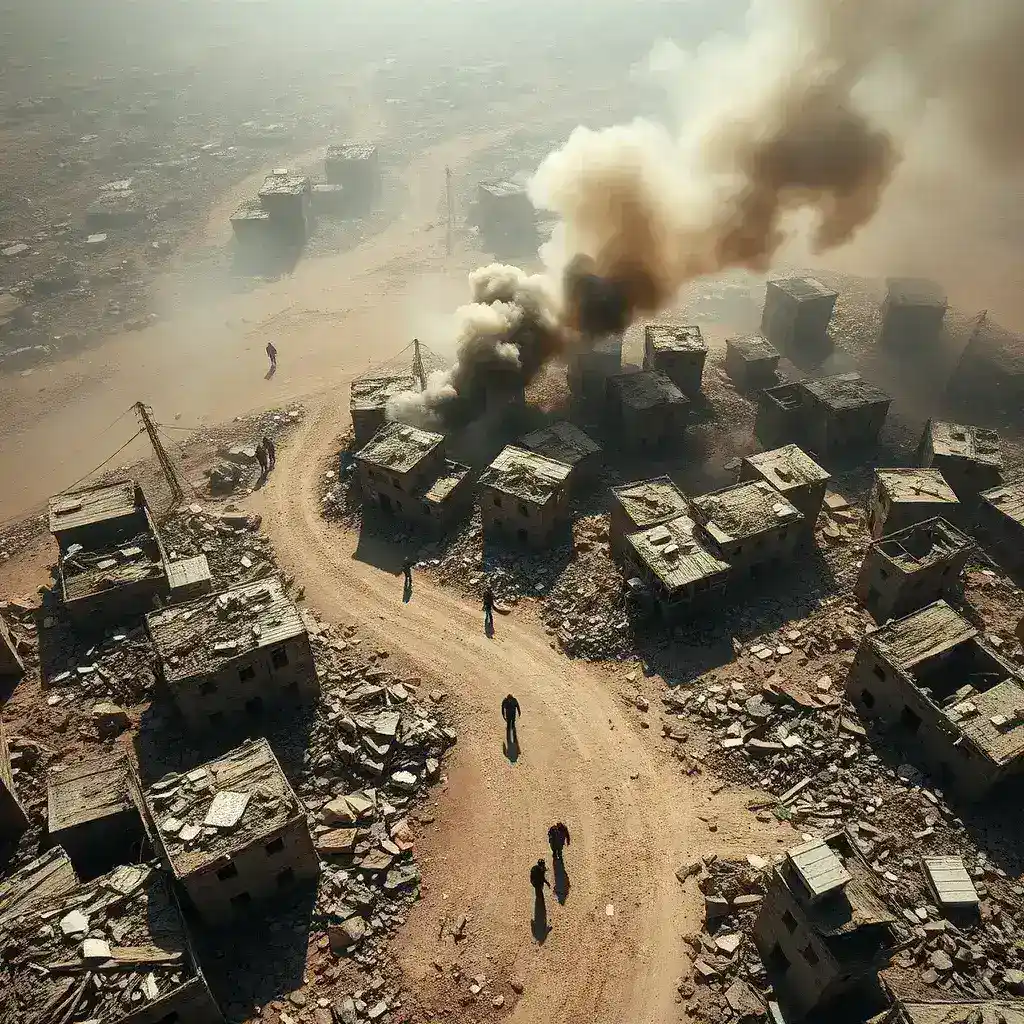
At least 13 individuals, including four women and a child, perished in Israeli air strikes targeting southern Lebanon on Friday, according to the Lebanese health ministry. The strikes hit multiple locations, including Haboush in Nabatieh district, Zrarieh in Sidon district, and Ain Baal in Tyre district, also injuring 32 people. This escalation occurs despite an ongoing three-week ceasefire extension, highlighting the fragility of the current truce between Israel and Hezbollah.
Context of the Conflict
The current hostilities stem from a broader regional conflict that intensified following the US and Israeli attacks on Iran in late February. In retaliation, the Iran-backed group Hezbollah launched attacks into Israel on March 2, prompting widespread Israeli air strikes across Lebanon. Israeli forces re-entered southern Lebanon in early March, occupying approximately 10 kilometers of Lebanese territory and destroying villages.
A previous conflict between Israel and Hezbollah concluded with a ceasefire in November 2024. However, since then, Israel has conducted near-daily attacks on targets it identifies as linked to Hezbollah. The current fragile peace is underscored by the fact that Hezbollah, while not directly involved in the ceasefire agreement, indicated it would adhere to its terms if Israel reciprocated.
Continued Fighting Despite Truce
Despite the three-week ceasefire extension, announced by US President Donald Trump on April 23 following a second round of ambassador talks in Washington, fighting has persisted. While the truce has largely halted strikes on the capital, Beirut, and its southern suburbs, intense clashes continue in the south. The Israeli military reported conducting “around 50 strikes in the last day” on southern Lebanon on Saturday morning, targeting Hezbollah operational headquarters and military buildings.
Hezbollah, on its part, stated on Saturday that it had targeted Israeli soldiers and military vehicles within Lebanon. This exchange follows the death of an Israeli soldier in combat in southern Lebanon on Thursday, bringing the total number of Israeli troop fatalities since early March to 17. According to the Lebanese health ministry, 2,586 people have been killed in Lebanon since early March, including 103 healthcare and emergency responders, though the ministry does not differentiate between combatants and civilians.
Diplomatic Efforts and US Involvement
The initial 10-day ceasefire was announced on April 16, following the first high-level talks between Israel and Lebanon in Washington since 1993. The US has been actively involved in mediating the conflict, with President Trump expressing optimism about the progress of the talks. The US has also pledged to assist Lebanon in protecting itself from Hezbollah.
On April 30, the US embassy in Beirut suggested that a meeting between Lebanese President Joseph Aoun and Israeli Prime Minister Benjamin Netanyahu could provide Lebanon with “concrete guarantees on full sovereignty, territorial integrity, secure borders, humanitarian and reconstruction support, and the complete restoration of Lebanese state authority over every inch of its territory,” with the US guaranteeing these assurances.
Lebanese President Aoun met with the US Ambassador to Lebanon, Michael Issa, on Friday, during which Ambassador Issa reaffirmed the United States’ continued support for Lebanon. These diplomatic overtures aim to de-escalate the conflict and establish a more stable regional environment.
Implications and Future Outlook
The persistent violence in southern Lebanon, even under an extended ceasefire, underscores the deep-seated nature of the conflict and the challenges in achieving lasting peace. The civilian casualties, including women and children, highlight the severe humanitarian cost of the ongoing hostilities. For the residents of southern Lebanon, the continued strikes and evacuation orders create an environment of constant fear and displacement.
The involvement of the US as a mediator and guarantor of potential agreements signals a significant diplomatic push. However, the success of these efforts hinges on the willingness of both Israel and Hezbollah to adhere to de-escalation measures and the ability of the US to broker a sustainable resolution. The coming weeks will be critical in determining whether the extended ceasefire can be solidified into a more durable peace or if the cycle of violence will continue to claim more lives.





Leave a Reply