
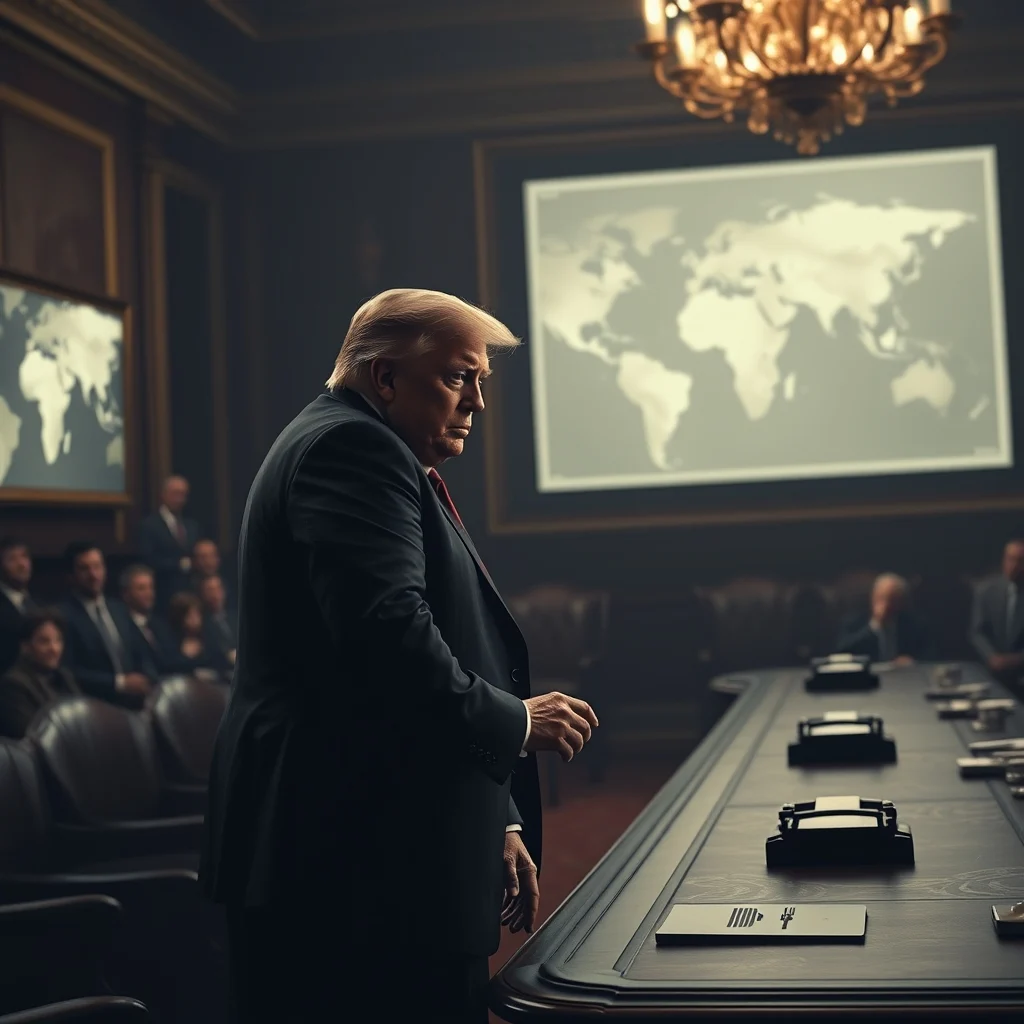
President Donald Trump informed Congress on Friday that U.S. hostilities with Iran have concluded due to an ongoing ceasefire, asserting that this development negates the need for lawmakers’ authorization for the conflict. This declaration comes 60 days after his initial notification to Congress of strikes against Iran, a period after which U.S. law typically requires termination of armed forces’ use unless Congress grants approval.
Background of the Conflict and Congressional Oversight
The current standoff stems from wide-ranging strikes launched by the U.S. and Israel against Iran on February 28, 2026, which resulted in the death of Iran’s supreme leader. Iran retaliated with attacks on Israel and U.S.-allied nations in the Gulf. The U.S. and its allies have long opposed Iran’s nuclear program, alleging it seeks to develop nuclear weapons, a claim Tehran denies.
U.S. law, specifically the War Powers Resolution of 1973, mandates that a president must end the use of U.S. armed forces in combat within 60 days of notifying Congress, unless Congress formally declares war or grants an extension. This law was enacted to limit presidential war-making powers, notably during the Vietnam War era.
Trump Administration’s Stance on Congressional Approval
In a letter to congressional leaders, President Trump stated, “There has been no exchange of fire between the United States Forces and Iran since April 7, 2026. The hostilities that began on February 28, 2026 have terminated.” This assertion is central to his argument that the 60-day clock under the War Powers Resolution has effectively stopped, thereby removing the obligation to seek further congressional approval.
Trump reiterated this position to reporters, questioning the constitutionality of requiring congressional approval and stating that “no other country has ever done it.” He also expressed frustration with the negotiation process, noting that Iranian leadership appeared “very confused” following the deaths of top military officials.
Debate Over the War Powers Resolution Interpretation
The Trump administration’s interpretation of the War Powers Resolution has drawn scrutiny from legal experts and lawmakers. Defense Secretary Pete Hegseth argued before a congressional hearing that the deadline for seeking approval had been paused. However, Democratic Senator Tim Kaine disagreed, stating, “I do not believe the statute would support that.”
Professor Heather Brandon-Smith from Georgetown University Law echoed these concerns, explaining that a ceasefire does not necessarily halt the 60-day clock under the resolution. “A ceasefire is not a permanent end to the conflict,” she noted. “To my mind, a permanent end to the conflict is what would actually sort of close up the 60 days.” She suggested that only courts or Congress could definitively stop the conflict if the administration continued its course.
Ongoing Diplomatic Efforts and Economic Ramifications
Despite the declared ceasefire, a long-term deal between the U.S. and Iran remains elusive. Iranian media reported on Friday that Tehran had sent a new proposal for negotiations to the U.S. via Pakistani intermediaries. Details of this proposal have not been released, and it is unclear if it has reached the American administration.
President Trump acknowledged a recent conversation with Iran but expressed dissatisfaction, stating, “I am not happy.” He indicated a desire to “get this thing done properly” to avoid future issues, suggesting a reluctance to conclude the matter prematurely.
The strategic Strait of Hormuz remains effectively closed, continuing to impact global trade. The U.S. Treasury has issued a warning, informing individuals and companies that paying any “toll” for passage through the strait risks violating U.S. sanctions.
Implications and Future Outlook
The President’s assertion that hostilities have terminated, coupled with his stance on avoiding further congressional input, sets the stage for a significant constitutional debate regarding executive war powers. It also raises questions about the durability of the current ceasefire and the prospects for a lasting diplomatic resolution.
Lawmakers, particularly Democrats, have repeatedly attempted to constrain President Trump on Iran but have largely been unsuccessful, with most Republicans opposing such efforts. However, some Republicans have signaled a potential shift in their stance following the 60-day mark. The coming weeks will likely see continued tension between the executive and legislative branches over the definition and continuation of hostilities, as well as ongoing diplomatic maneuvers and the persistent economic consequences of the Strait of Hormuz closure.










Leave a Reply