
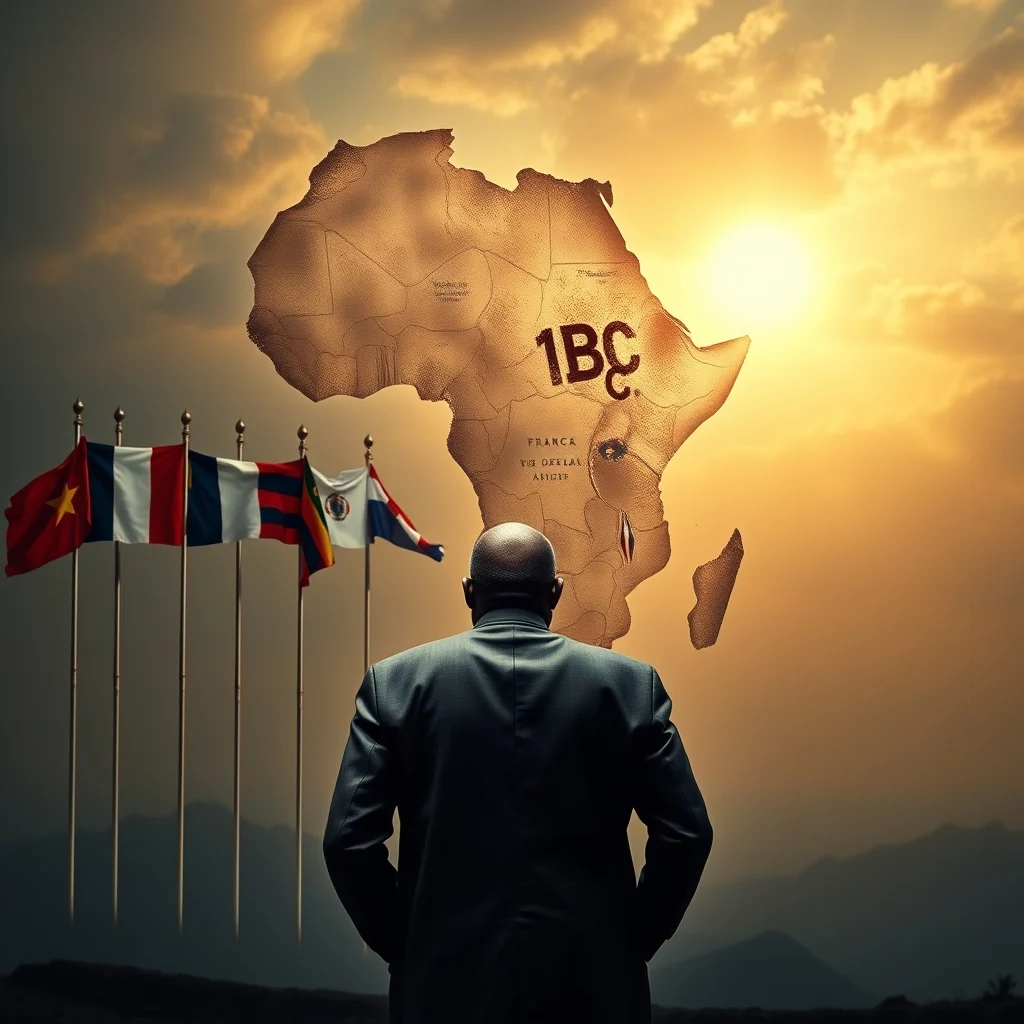
French President Emmanuel Macron is engaging in an “Africa charm offensive” amidst growing demands from African leaders for compensation for wealth and power derived from slavery, while France simultaneously struggles to maintain its influence on the continent. This diplomatic push occurs as African nations increasingly forge new partnerships, particularly with China, for development funding and political alignment, signaling a significant shift away from postcolonial ties to France.
Shifting Sands of Influence
For decades, France exerted considerable influence across Africa through intricate political networks, military and defense agreements, and economic control, notably via the CFA franc currency. Historically, France dominated approximately 21 countries, organized into French West Africa and French Equatorial Africa federations. However, this traditional sphere of influence is rapidly eroding.
The recent expulsion of French troops from Mali (2022), Burkina Faso (2023), and Niger (2023) underscores a critical weakness in the historical “Françafrique” system. These military withdrawals followed years of security operations, including Operation Barkhane, and have highlighted rising anti-French sentiment across its former colonies. This sentiment has compelled Paris to seek new political and commercial relationships, even with Anglophone African nations like Kenya.
Ivory Coast, Chad, and Senegal have also requested the withdrawal of French troops. France recently handed over control of its last major military facility in Senegal, following statements from Senegalese President Bassirou Diomaye Faye that French bases are incompatible with national sovereignty. These developments indicate a decisive move by African nations to assert their independence and redefine their international partnerships.
Grappling with a Difficult Past
France, historically the third-largest slave trader in Europe after Britain and Portugal, transported over a million enslaved individuals from Africa between the 17th and 19th centuries. While France recognized slavery and the slave trade as “crimes against humanity” in 2001, it has yet to issue a formal apology for its role. This stance contrasts with growing African demands for reparations.
Adding to the complexity, France abstained from a recent UN resolution sponsored by Ghana that declared the Transatlantic slave trade the greatest crime against humanity. This decision has drawn criticism, particularly as President Macron now engages in discussions about reparatory justice with African leaders.
The French Revolution abolished slavery in 1794, but Napoleon Bonaparte reinstated it in 1802. A second abolition occurred in 1848, surprisingly with financial compensation awarded to former slave owners, not the enslaved. This historical context fuels contemporary calls for accountability and redress.
New Alliances and Emerging Leverage
African nations are increasingly turning to China for alternative development funding, including infrastructure investment, and for political alignment. These emerging partnerships are actively dismantling the foundations of French influence in West Africa. The rise of blocs like BRICS also signifies Africa’s growing leverage on the global stage, prompting a reassessment of Europe’s approach to the continent.
A recent example of this shift was the Africa Forward Summit held in Kenya, which, despite facing protests against Macron, aimed to revive France’s post-1950s strategy of cultural diplomacy. This approach echoes historical movements, such as the anti-colonial activism in Senegal and the nationalist revolt in Madagascar between 1947 and 1948, where African trade unions and civil society demanded a new relationship with Paris.
Political science professor Douglas Yates of the American Graduate School noted that France’s “predatory neocolonial relationships” have historically underdeveloped its Francophone African states. The statistics are stark: since 1990, 78% of the 27 coups in sub-Saharan Africa have occurred in Francophone states, leading to questions about France’s legacy and its role in regional instability.
Future Trajectories and Lingering Questions
France’s recent move to repeal outdated legislation defining enslaved people as “moveable goods” is seen as a symbolic gesture as the country confronts its colonial past. However, the timing of this repeal, amidst current diplomatic efforts and African demands, raises questions about its sincerity and effectiveness.
The African continent’s growing assertiveness, exemplified by the Alliance of Sahel States (AES) prioritizing self-reliance and regional solidarity, challenges traditional French diplomatic strategies. Analysts suggest Macron’s renewed engagement with Accra is a calculated diplomatic maneuver to regain influence in regions where French presence has waned. However, many Ghanaians question the signal sent by inviting Macron to discuss reparations, especially when the continent is actively pursuing sovereignty and distancing itself from perceived neocolonial interference.
The future of the CFA franc, the ongoing collapse of traditional French influence, and Africa’s increasing leverage through new global partnerships are forcing Europe to fundamentally rethink its entire approach to the continent. The coming months will reveal whether these shifts lead to a genuine recalibration of international relations or a continuation of past patterns under new guises.









Leave a Reply