
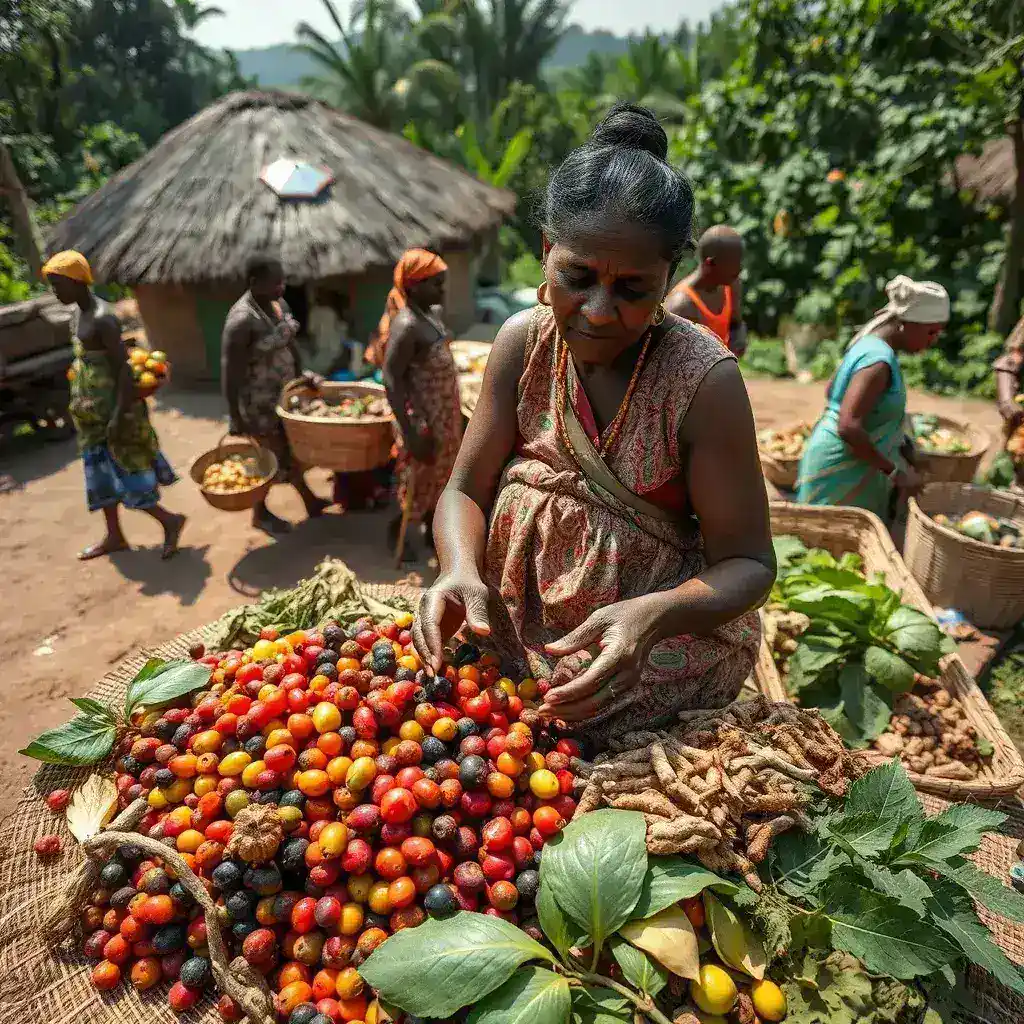
A recent study highlights the growing threat to Africa’s vital forest food systems, essential for the nutrition, income, and resilience of millions, particularly in rural communities. Research spanning Benin, Ethiopia, and South Africa reveals that these natural food sources are diminishing due to environmental pressures and the erosion of indigenous knowledge, despite their critical role in supporting livelihoods and food security across biodiversity hotspots.
Context: Forests as Critical Food Systems
Across the African continent, forests and trees represent more than just natural landscapes; they are informal yet crucial food systems. For many rural households, these resources provide essential sustenance, particularly during times of scarcity when agricultural crops may fail.
In Benin’s forest regions, communities rely on species like bush mango, African locust bean, and African star apple. These plants are not only food sources but also provide income and are used for medicinal purposes.
Ethiopian pastoralist communities depend heavily on a diverse array of wild fruits and plants. Many of these species are drought-resistant, making them indispensable during dry seasons when crop yields are low.
In South Africa’s forest areas, researchers have identified over 100 edible wild plant species. While they may not form the bulk of diets, these plants significantly contribute vital vitamins and minerals to the nutritional intake of rural populations.
Supply Declining Amidst Multiple Pressures
The study indicates a consistent decline in the availability of forest-based foods across all three surveyed countries. This trend is driven by a confluence of factors including deforestation, land conversion for agriculture, unsustainable harvesting practices, and the increasing stress of climate change.
In Benin, the issue is exacerbated by a lack of regeneration in older trees and ongoing forest cover reduction due to agricultural expansion. Furthermore, traditional harvesting methods are weakening, impacting sustainable resource management.
Ethiopia faces reduced availability of wild foods in local markets due to environmental degradation and persistent drought conditions, which directly impact plant life.
South Africa’s forests are severely fragmented, with most remaining forest patches small and isolated. Limited investment in the sector and underdeveloped value chains further hinder the utilization and commercialization of these wild food resources.
Indigenous Knowledge: A Fading but Crucial Resource
Despite the mounting environmental and social pressures, indigenous knowledge remains central to the management and sustainability of forest resources. Traditional systems, including sacred forests, taboos, and customary rules, continue to regulate access and harvesting in many areas.
In Benin, some forest areas are co-managed by communities and local authorities, leveraging traditional governance structures. Elders and religious leaders in Ethiopia play a role in enforcing restrictions on tree cutting and resource use, contributing to the preservation of forest cover in pastoral landscapes.
In South Africa, forest plants are deeply intertwined with cultural and spiritual practices. However, researchers express concern that this vital knowledge is not being effectively passed down to younger generations, leading to its gradual erosion.
Policy Frameworks Meet Implementation Gaps
All three countries have established policy frameworks aimed at enhancing forest governance and promoting the sustainable use of natural resources. Initiatives such as agroforestry and community forest management in Benin are showing positive contributions to restoration and food security.
Ethiopia possesses national frameworks for forest management, but their effective implementation at the local level remains a significant challenge. South Africa has relatively advanced legislation supporting community participation and the integration of indigenous knowledge.
However, even in South Africa, challenges persist regarding enforcement of these policies, attracting necessary investment, and developing viable market systems for wild forest foods. A key finding from the study is the urgent need to integrate indigenous knowledge more effectively with modern conservation and development strategies.
Implications and Future Directions
The research underscores the necessity of forest restoration efforts and robust support for community-based enterprises involved in wild food production and trade. Improving processing techniques and strengthening value chains are also crucial steps.
Furthermore, there is a pressing need to challenge the often-negative perceptions surrounding wild foods. These resources are frequently undervalued despite their significant nutritional contributions and economic potential.
Looking ahead, the focus must shift towards practical implementation of policies that empower local communities, conserve biodiversity, and ensure the sustainable harvesting of forest foods. The success of these efforts will largely depend on bridging the gap between policy and practice, fostering market development, and actively preserving and revitalizing the traditional knowledge systems that have sustained these vital resources for centuries.










Leave a Reply