
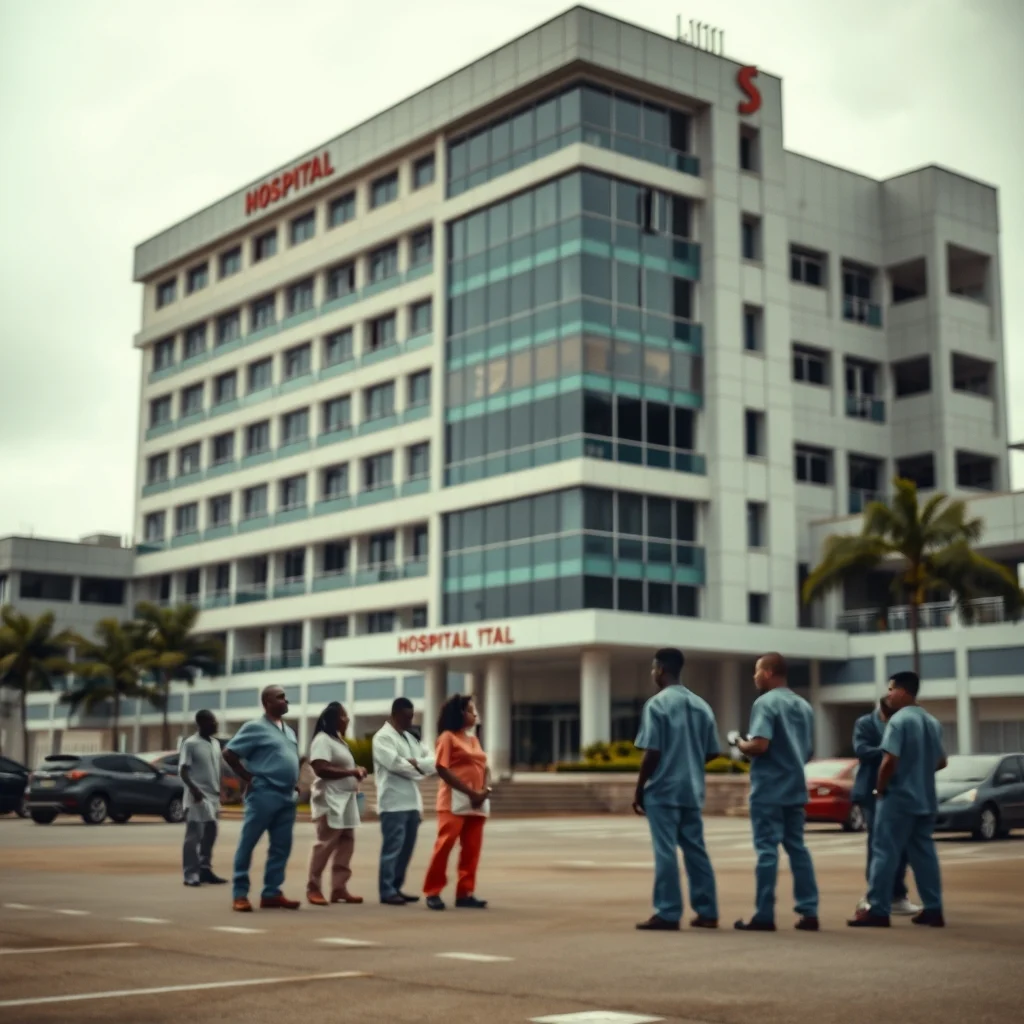
Accusations of political bias have emerged from Ghana’s Minority in Parliament, questioning whether delays in fully operationalizing key health facilities in the Ashanti Region are politically motivated. This concern follows the recent suspension of the Komfo Anokye Teaching Hospital (KATH) CEO, Dr. Paa Kwesi Baidoo, by the Minister of Health, a move the Minority argues distracts from systemic issues and exacerbates the “No Bed Syndrome” at KATH.
Context of KATH CEO Suspension
Medical doctors at KATH announced an indefinite withdrawal of services on Friday, June 5, 2026, in protest of the Minister of Health’s directive to suspend CEO Dr. Paa Kwesi Baidoo for two weeks. The doctors deemed the suspension unjustified and potentially detrimental to patient care, stating it followed an emergency meeting on the same day.
Minority Cautions Against “Reactionary” Decisions
The Minority caucus, through its Ranking Member on Parliament’s Health Committee, Dr. Nana Ayew Afriye, described the government’s decision as “unfortunate, reactionary, and fails to address the underlying structural failures confronting Ghana’s health sector.” They argue that while accountability for preventable deaths is crucial, singling out a hospital administrator overlooks deeper, long-standing challenges within the healthcare system.
Delayed Operationalisation of Key Facilities
Dr. Ayew Afriye pointed to the significant delays in bringing major health infrastructure projects in the Ashanti Region into full operation as a primary cause of the strain on KATH. He highlighted the 500-bed Afari Military Hospital and the 250-bed Ashanti Regional Hospital, facilities intended to alleviate pressure on KATH, as examples of stalled projects.
“It is therefore difficult to understand why a government that inherited these critical facilities would choose to suspend a hospital CEO rather than accelerate the full operationalisation of these hospitals and strengthen referral arrangements,” Dr. Ayew Afriye stated.
Concerns Over Political Considerations
The lawmaker raised a critical question regarding the government’s commitment to the Ashanti Region’s healthcare infrastructure. “Is the Government’s failure to fully operationalise these hospitals due to political considerations?” he asked.
He suggested that the perceived lack of urgency in operationalizing facilities like the Sewua Hospital might be influenced by the region not being considered a major electoral stronghold of the governing NDC. Dr. Ayew Afriye called for clear answers from the government to prove that healthcare access is not being dictated by partisan interests.
Underutilized District Hospitals Add to Concerns
Further compounding the issue, Dr. Ayew Afriye cited the 100-bed Trede District Hospital and the 100-bed Kokoben-Oforikrom District Hospital. These facilities, commissioned in 2024, were specifically built to manage growing patient demand and reduce the burden on KATH.
However, despite substantial public investment and nearly two years since commissioning, these hospitals remain largely non-operational. Meanwhile, KATH continues to grapple with severe congestion, overstretched staff, and a critical shortage of beds.
“It is therefore difficult to understand how government can justify suspending the CEO of KATH for challenges arising from excess demand when two fully completed 100-bed hospitals, specifically built to absorb part of that demand, remain unable to provide the services for which they were constructed,” he argued.
Capacity and Infrastructure Deficiencies
The Minority insists that the “No Bed Syndrome” is fundamentally a problem of capacity, infrastructure, referral systems, and resource allocation, rather than a leadership issue at KATH. They contend that punishing a single administrator will not solve the core problems.
“Punishing one hospital administrator may create headlines, but it will not create additional beds, equip emergency wards, recruit specialist staff, or decongest referral centres,” Dr. Ayew Afriye emphasized.
Call for Reinstatement and Action
The Minority caucus has called for the immediate reinstatement of the KATH CEO. They are also demanding the urgent operationalization of all completed hospitals in the Ashanti Region and greater consultation with health sector stakeholders.
“The health sector requires solutions, not scapegoats,” Dr. Ayew Afriye concluded, asserting that the suspension might serve a temporary political narrative but does little to address the deep-seated challenges in Ghana’s healthcare delivery system.
Looking Ahead
The coming months will reveal whether the government will prioritize the operationalization of these critical health facilities in the Ashanti Region and address the systemic issues highlighted by the Minority. Public scrutiny will likely intensify as citizens await tangible solutions to the persistent challenges in healthcare access and capacity, particularly in light of the upcoming electoral cycle.









Leave a Reply