
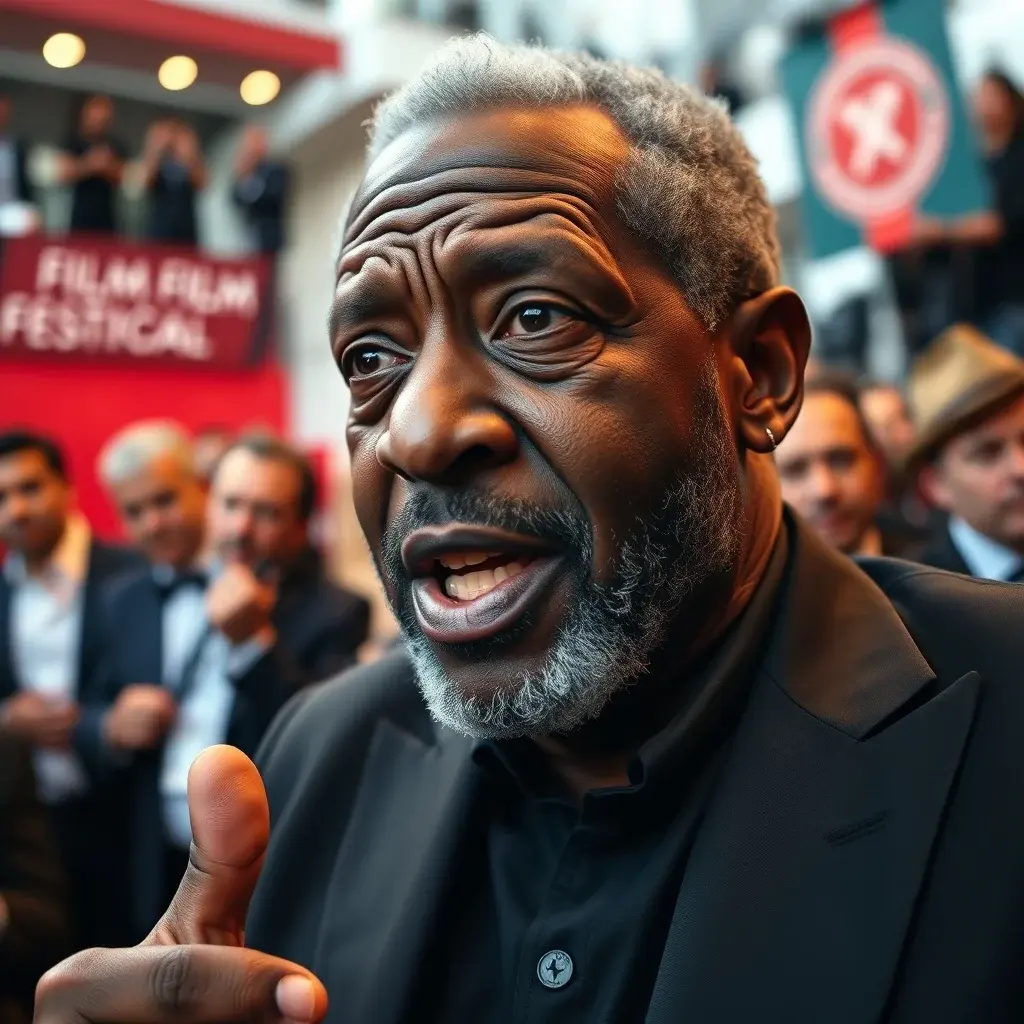
Veteran American actor Richard Lawson is urging Black individuals worldwide to leverage the digital age and cinema to tell their own stories, preserve their history, and safeguard their culture. Lawson made these remarks at the 79th Cannes Film Festival in France, highlighting the transformative power of accessible technology for authentic representation.
The Shifting Landscape of Storytelling
Lawson, who began his acting career in 1969, reflected on the stark differences in the entertainment industry over the decades. He noted that when he started, approximately 95 percent of visual stories were produced by white individuals lacking genuine understanding or connection to Black communities.
This historical lack of authentic representation often led to Black narratives being misunderstood, misrepresented, or entirely ignored. “Certain legitimate, organic stories were bypassed,” Lawson stated, emphasizing that opportunities for Black storytellers were severely limited by traditional industry gatekeepers.
Democratization Through Digital Technology
The advent of digital technology, particularly smartphones, has dramatically reshaped the filmmaking landscape, Lawson explained. “The opportunities are completely different now because the iPhone has changed everything,” he said. This democratization means that “everyone is a storyteller. Everyone has a story to tell.”
Digital tools empower individuals to document their experiences and share their perspectives without needing to gain approval from established studios or networks. This shift is crucial, Lawson believes, at a time when he feels Black stories and culture are being marginalized.
The Imperative of Authentic Narrative
Lawson stressed the critical importance for Black people to actively tell their own stories now more than ever. He observed that “Black stories, Black history and Black culture are being minimized, while other great stories are being invigorated.” He argues that authentic storytelling is vital for preserving cultural identity and ensuring future generations have access to accurate portrayals of Black experiences.
Cinema, Lawson contends, remains a uniquely powerful medium capable of challenging dominant narratives, preserving history, and fostering cross-cultural understanding. “Cinema is the last frontier which can’t be changed,” he asserted.
Supporting Black Voices
The actor also highlighted the significance of institutions dedicated to promoting African and Black storytelling. He specifically mentioned Pavillon AfriNova as an example of an organization that provides a vital platform for filmmakers and creatives of African descent.
These institutions are essential for showcasing work and connecting Black creatives with international audiences. Lawson’s comments align with ongoing industry-wide discussions about diversity, representation, and the growing demand for more inclusive narratives.
The Future is Now
As filmmaking technology becomes increasingly accessible, the responsibility to document and share Black voices, histories, and cultures now rests with the creators themselves. Lawson envisions a future where storytelling is not confined to traditional power structures but is driven by anyone with an authentic story and the courage to tell it.










Leave a Reply