

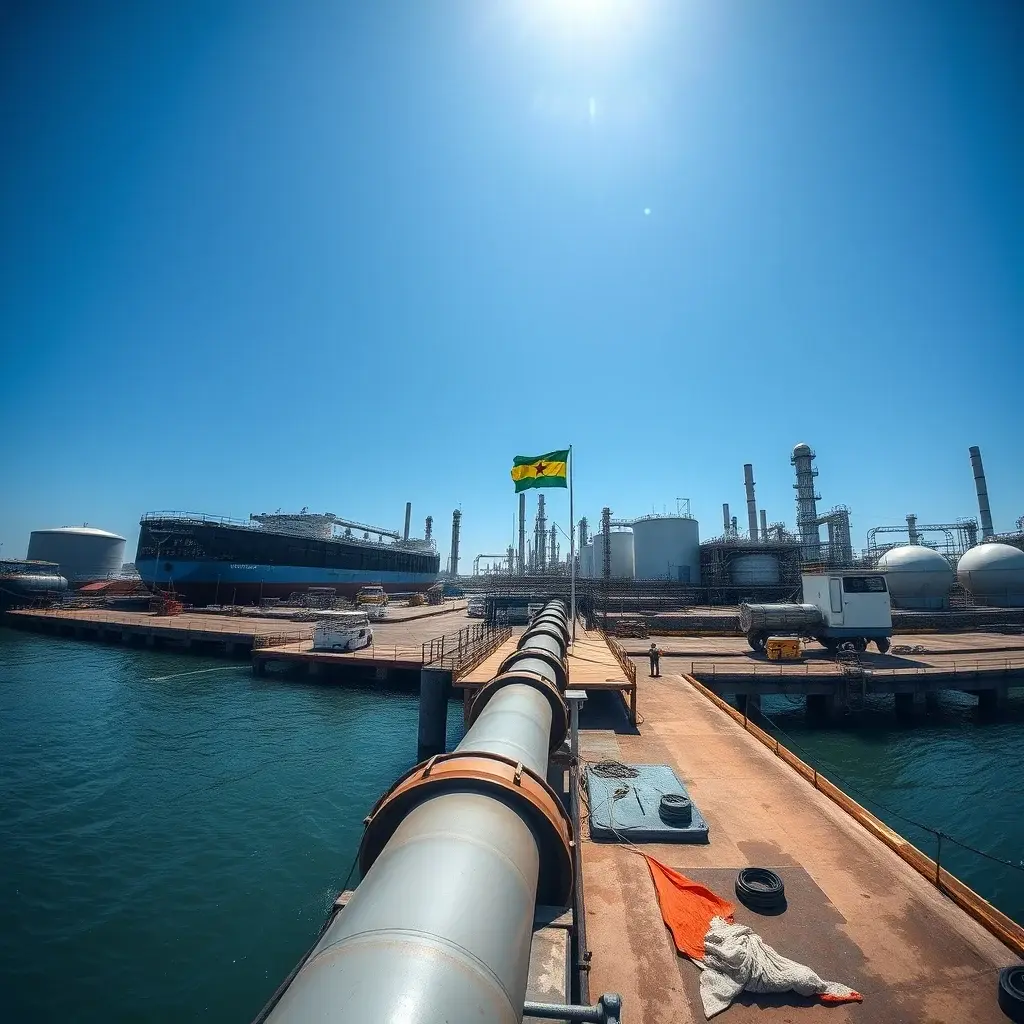
Tema Oil Refinery (TOR) has successfully restarted its refining operations, commencing the processing of one million barrels of crude oil. This significant development, announced on June 3, 2026, by the Minister for Energy and Green Transition, John Abdulai Jinapor, signifies a major stride in revitalizing Ghana’s key state-owned refinery and bolstering the nation’s energy security.
Revival of a National Asset
The restart follows the successful delivery of one million barrels of Jubilee crude oil to TOR on May 27, 2026. Minister Jinapor expressed his excitement, highlighting the event as a breakthrough in the government’s persistent efforts to restore the refinery to sustainable and efficient operations. This move is crucial for strengthening Ghana’s downstream petroleum industry and reducing its reliance on imported refined petroleum products.
“This marks a significant milestone in the Government’s efforts to restore Ghana’s premier refinery to sustainable operations,” stated Dr. Jinapor during a ceremony celebrating the delivery of crude oil to the Sentuo Oil Refinery.
Ensuring Continuous Operations
To support the sustained functionality of TOR, a stable crude oil supply arrangement has been established. This measure is intended to guarantee a consistent flow of petroleum products to the domestic market. The government’s strategy also includes receiving a second consignment of locally produced crude oil, underscoring a commitment to fostering local value addition within the petroleum sector.
The successful recommencement of refining activities at TOR is expected to significantly boost domestic refining capacity. This enhancement is a key component of the broader national objective to fortify Ghana’s downstream petroleum industry.
Collaboration and Economic Impact
Minister Jinapor emphasized that TOR’s operational restart underscores the positive outcomes achievable through collaboration between government agencies and industry stakeholders. Such partnerships are vital for advancing industrialization, ensuring energy security, and promoting economic growth.
The implications of TOR’s renewed operations extend to potential job creation and economic stimulus. By processing crude oil domestically, Ghana can capture more value within its petroleum supply chain, potentially leading to foreign exchange savings and increased revenue generation.
Future Outlook and Watchpoints
The successful processing of the initial million barrels is a critical first step. Key areas to watch will include the refinery’s consistent performance, the reliability of the crude oil supply chain, and the effectiveness of government policies in supporting TOR’s long-term viability. Furthermore, the refinery’s ability to meet domestic demand for refined products and its potential for export will be closely monitored as it ramps up operations.








Leave a Reply