
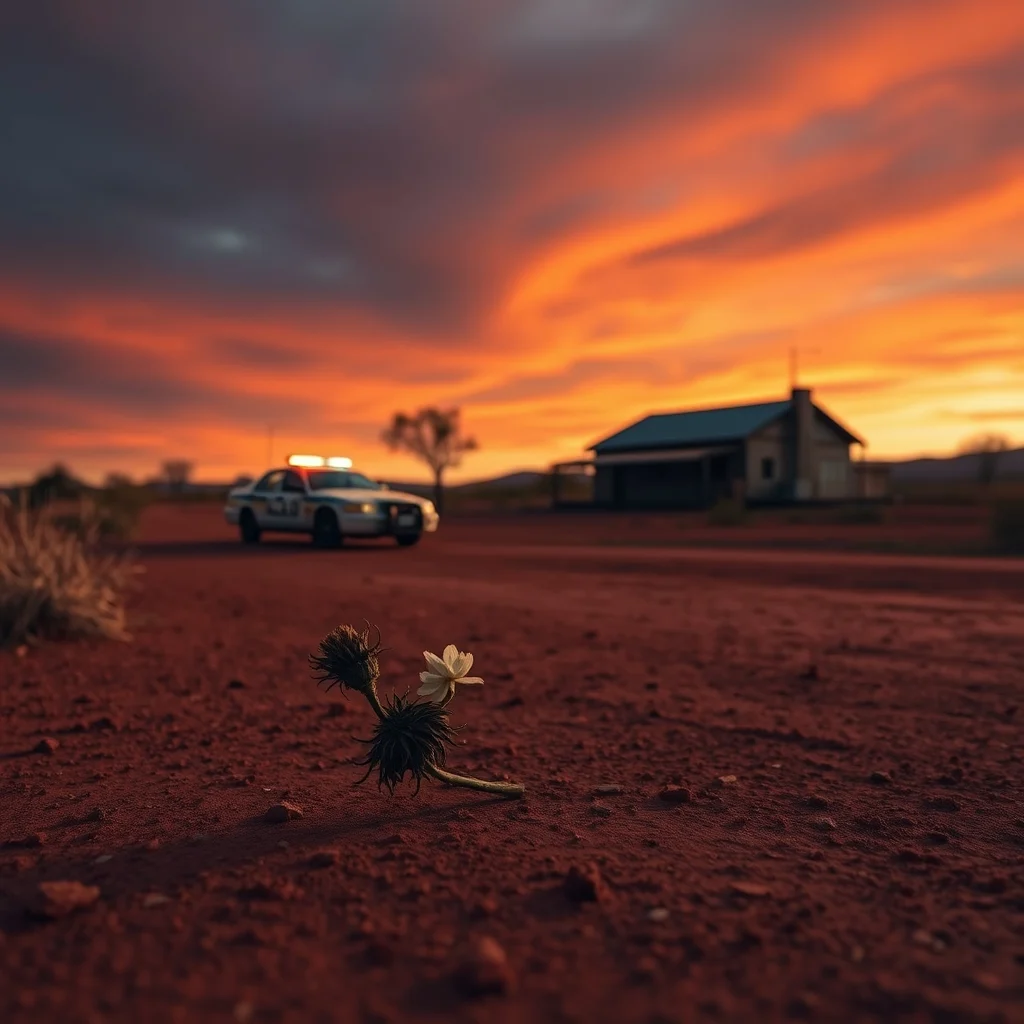
JEFFERSON LEWIS, 47, has been charged with murder and two counts of sexual assault in connection with the death of a five-year-old girl, identified by her family as Kumanjayi Little Baby, whose body was discovered on Thursday in the Northern Territory of Australia. The charges followed a major police search and have ignited violent riots in Alice Springs, leading to five arrests and the relocation of the accused to Darwin.
Community Gripped by Tragedy and Unrest
The discovery of Kumanjayi Little Baby’s body on Thursday marked the culmination of a multi-day police operation. Her family, adhering to cultural traditions, has given her a pseudonym for the mourning period to protect her spirit. The gravity of the loss has deeply affected the community, prompting an outpouring of grief and anger.
Northern Territory Police Commissioner Martin Dole announced the charges against Lewis on Sunday morning, expressing deep distress and solidarity with the victim’s family and the wider community. He urged respect for the judicial process as the investigation unfolds.
The Accused and the Riots
Lewis, 47, was arrested on Thursday and reportedly faced an attack in Alice Springs before his apprehension. He was initially treated for injuries in the town’s hospital, but escalating violent riots prompted authorities to move him to Darwin, approximately 1,500 kilometers north.
Video footage captured chaotic scenes outside the Alice Springs hospital on Thursday night, showing dozens of individuals throwing projectiles and police deploying tear gas. Protesters also attacked police vehicles, with at least one van reportedly set ablaze. Commissioner Dole condemned the riots as “disgusting” and “abhorrent,” distinguishing them from genuine expressions of grief.
Further footage revealed crowds swarming a local petrol station and a supermarket, looting items before dispersing. Police estimate the property damage and stolen goods from these incidents exceed A$180,000.
Cultural Context and Calls for Calm
Some protesters outside the hospital were heard demanding “payback” for the child and accusing police of protecting Lewis. “Payback” refers to traditional forms of punishment under Aboriginal customary law, often administered by elders to restore harmony.
Kumanjayi Little Baby disappeared last Saturday from an Aboriginal town camp near Alice Springs. Her mother shared a poignant statement expressing profound grief and love for her daughter, while her grandfather, Robin Granites, a senior Yapa (Warlpiri) elder, appealed for calm. He emphasized that the violence was contrary to their cultural ways and urged the community to allow the justice system to operate while they mourn and support the family.
Implications and Future Outlook
The tragic death of Kumanjayi Little Baby and the subsequent civil unrest highlight complex issues within communities, including the intersection of grief, cultural practices, and law enforcement responses. The “payback” demands underscore the cultural differences in seeking justice and reconciliation.
As Jefferson Lewis prepares to appear in Darwin court on Tuesday, the focus remains on the legal proceedings. The community’s reaction, however, signals ongoing tensions and the need for sensitive handling of such profound tragedies. Observers will watch how the judicial process unfolds and whether the calls for calm and adherence to customary law can prevail amidst deep-seated grief and anger.
The incident also raises questions about community safety, police response protocols in volatile situations, and the long-term impact of such events on vulnerable populations. The coming weeks will likely see continued efforts to address the community’s trauma and ensure accountability through the legal system, while also navigating the cultural nuances of grief and justice within Indigenous communities.










Leave a Reply