
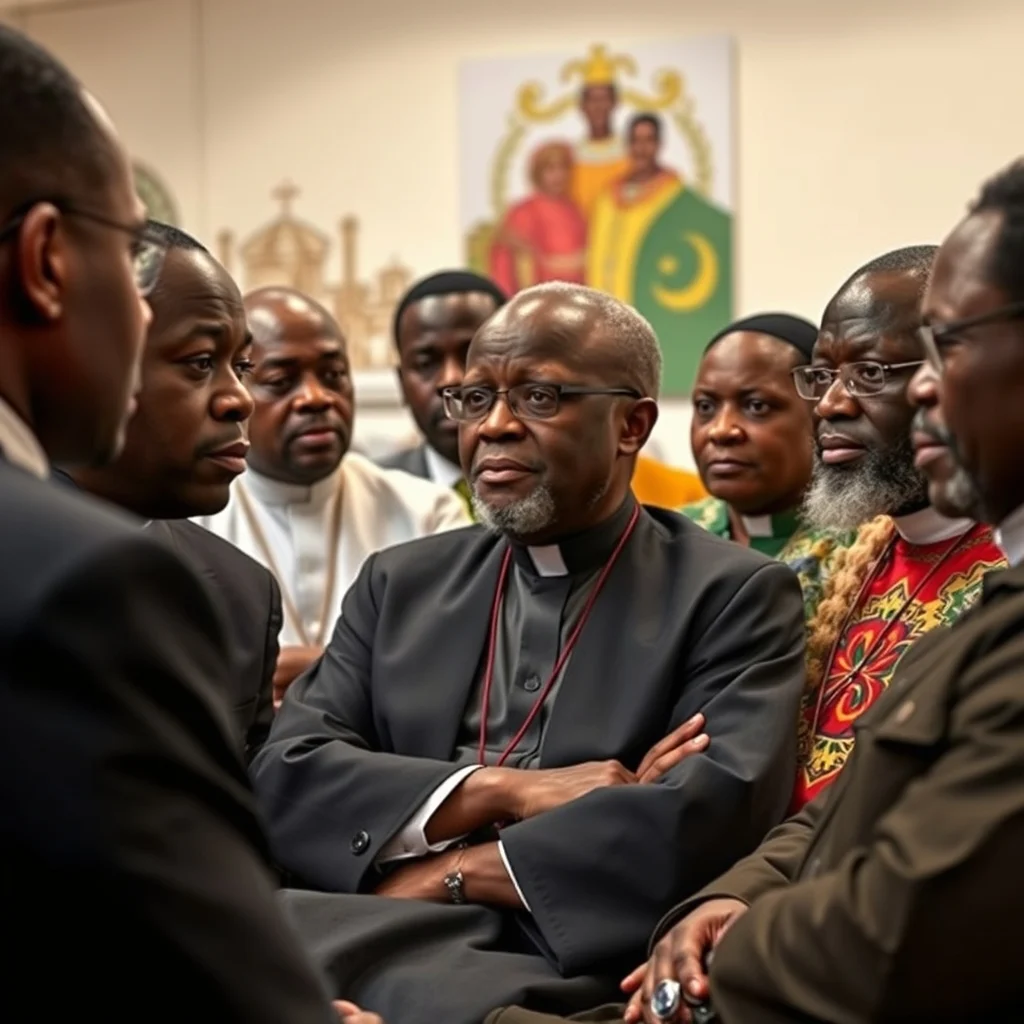
The General Secretary of the Christian Council of Ghana, Rev. Cyril Fayose, has urged restraint and a second chance for Dr. Mary Awusi, the CEO of the Ghana Free Zones Authority, following recent controversy over her remarks concerning illegal mining and the church. The call for leniency comes after Dr. Awusi issued an apology to the Chairman of the Church of Pentecost, Apostle Eric Nyamekye, for comments made during discussions on ‘galamsey’.
Context of the Controversy
The incident gained public attention after Dr. Awusi’s remarks, which reportedly caused offense to church leadership. This led to a public apology from the Chief of Staff, Julius Debrah, to the church leadership, signaling the gravity with which the matter was being treated at higher levels of government.
Rev. Fayose, speaking on Joy News’ PM Express, acknowledged the need for condemnation of the conduct but argued against dismissing Dr. Awusi from her position. He emphasized that the Christian approach prioritizes forgiveness and views such situations as opportunities for learning and growth.
Clergy’s Stance on Discipline and Forgiveness
“Yes, I wanted to say that as clergy and ministers of God, we are people of grace and mercy. So we give second chances to people, and we see some of these things as learning processes,” Rev. Fayose stated. He believes that Dr. Awusi has likely learned her lesson from the public outcry and subsequent apology.
While agreeing that more than just a public apology is necessary, Rev. Fayose suggested that the government should issue a strong statement to distance itself from the conduct. He proposed a firm but proportionate reprimand, stopping short of removal from office.
“The government must dissociate itself from such conduct, and even if there might be a strong reprimand, without going to the extent of taking away her current position from her, I’m sure by now she has learned her lessons,” he explained.
Ensuring Substantive Action Over Symbolic Gestures
Rev. Fayose also raised concerns about the sufficiency of the Chief of Staff’s apology alone. He stressed the importance of a clear governmental directive to public officials, reinforcing that certain behaviors are unacceptable and fall below expected standards.
Without such a directive, the public might perceive the apologies as mere symbolic gestures rather than substantive actions to uphold integrity in public office. “Short of that, then we will think that the public apology is just something to for the cameras,” he warned.
Broader Perceptions of Religious Leadership
The General Secretary also addressed the tendency to generalize the actions of a few individuals to the entire clergy. He cautioned against this practice, highlighting that a small fraction of religious leaders may cause problems, while the majority uphold ethical standards.
“And then I also want to say that sometimes we bunch all the religious leaders together… there are a few bad nuts… maybe about one to 5% of us cause a lot of problems,” Rev. Fayose remarked. He advocated for singling out and addressing the misconduct of problematic individuals, whether within religious institutions or the state apparatus.
Future Implications and What to Watch
The debate highlights a broader discussion on accountability, forgiveness, and the appropriate response to misconduct in public office. The Christian Council’s stance suggests a preference for restorative justice and personal growth over punitive dismissal, provided that lessons are learned and standards are reinforced.
Moving forward, it will be crucial to observe how the government responds to Rev. Fayose’s call for a clear statement to public officials. The effectiveness of the disciplinary measures taken, if any, will likely influence public perception of the seriousness with which such issues are handled. Additionally, the ongoing dialogue about differentiating between individual misconduct and the broader religious community’s integrity will continue to shape public discourse.










Leave a Reply