
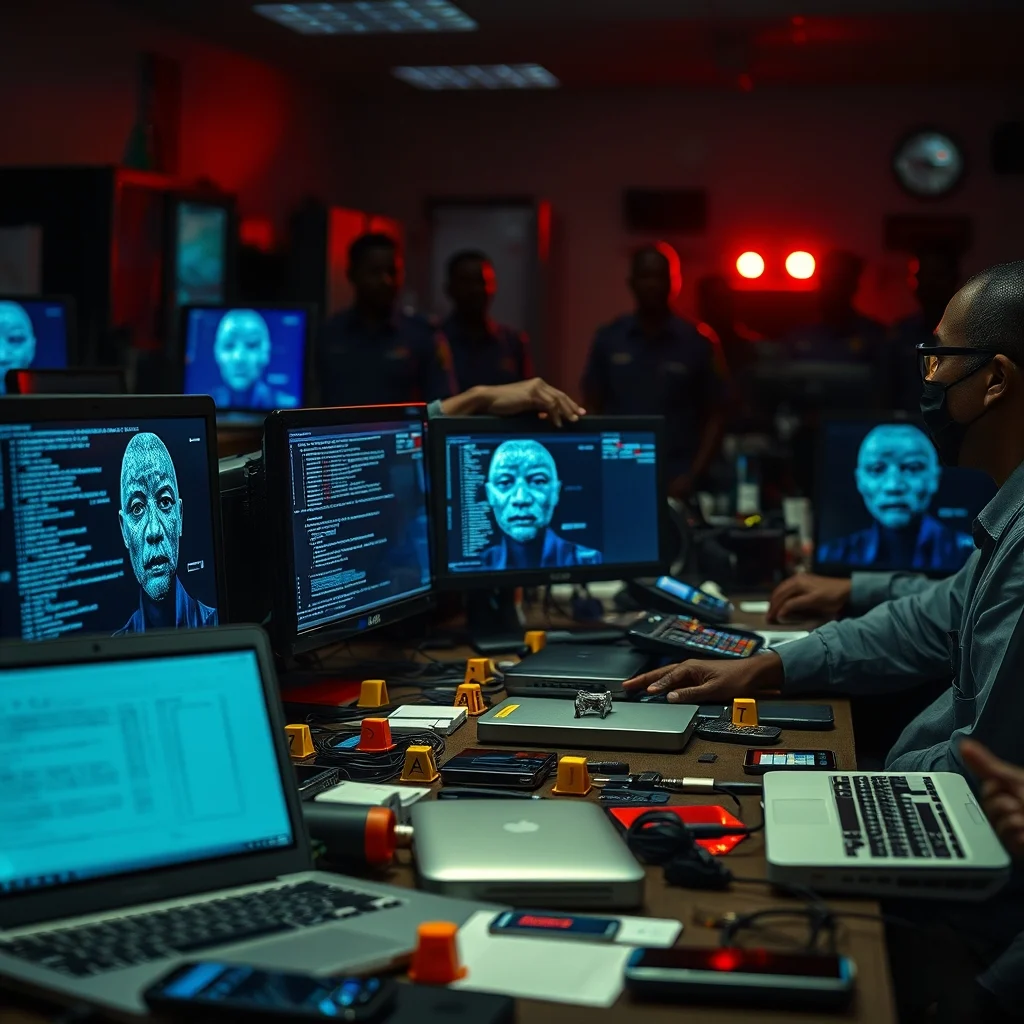
The Ghana Police Service’s Cyber Vetting and Enforcement Team (CVET) has apprehended 11 individuals, including Nigerian nationals, for allegedly creating and distributing deepfake artificial intelligence (AI) generated videos impersonating former President John Dramani Mahama. The arrests occurred between May 1 and May 4, 2026, following coordinated operations across several towns in the Volta Region.
Cyber Operations Uncover Deepfake Network
Intelligence led the CVET to conduct cyber operations in Sogakope, Dabala, Tongu, Akatsi, and Aflao. These operations resulted in the initial arrest of five Ghanaian suspects: Raphael Ablordeppey, 32; Anipah Jonathan, 23; Dzamesi Bright Kofi, 35; Thomas Ayoyo, 17; and Louis Segbawu, 18. They are accused of generating and circulating AI-driven video content designed to impersonate the former president.
A subsequent operation on May 4, 2026, in Aflao led to the arrest of five more Nigerian suspects and one Ghanaian national. These individuals were reportedly involved in similar online fraudulent activities.
The arrested Nigerian suspects are Bishop Esiri, 46; Wisdom James, 25; Ali Lucky, 23; Edwin Edos, 22; and John Kofi Darlington, 20. The Ghanaian suspect in this group is Danu Peter, 19.
Exhibits and Preliminary Findings
During the operations, law enforcement seized several crucial exhibits. These included laptop computers, mobile phones, internet routers, and 120 pre-registered SIM cards. A Nigerian-registered ML 350 Mercedes-Benz with license plate Lagos LSR 138HR was also recovered.
Police preliminary investigations suggest the suspects utilized the fabricated AI content to defraud the public. Their methods reportedly involved soliciting money and sensitive personal information from unsuspecting individuals through various online platforms.
Authorities believe the arrested individuals are part of a larger criminal network. This network is allegedly dedicated to producing and distributing fraudulent digital content, employing impersonation of high-profile figures for financial gain.
Legal Proceedings and Court Decisions
On Wednesday, May 6, 2026, nine of the eleven suspects appeared in court. The court ordered that these nine individuals be remanded into police custody. They are scheduled to reappear on May 25, 2026.
Two of the younger suspects, Thomas Ayoyo and Louis Segbawu, were granted bail. The court stipulated that each must provide two sureties who would be subject to justification, indicating a thorough vetting process for their release.
Implications of Deepfake Technology in Crime
This incident highlights the growing threat of deepfake technology and AI-generated content being weaponized for criminal activities. The ability to convincingly impersonate public figures poses significant risks to public trust and financial security.
The use of AI for fraud necessitates enhanced cybersecurity measures and public awareness campaigns. Law enforcement agencies face increasing challenges in detecting and prosecuting sophisticated digital crimes.
The international dimension of this case, involving both Ghanaian and Nigerian nationals, underscores the cross-border nature of cybercrime. It points to the need for greater international cooperation in combating these digital threats.
Future Watch: Evolving AI Threats
Moving forward, it will be crucial to monitor the evolution of deepfake technology and its potential misuse. Lawmakers and technology developers will likely face pressure to implement safeguards against malicious AI applications.
The public should remain vigilant against online solicitations, especially those involving familiar or prominent figures, and verify information through trusted channels. The Ghana Police Service’s proactive stance in tackling these emerging threats sets a precedent for other nations grappling with similar challenges.










Leave a Reply