
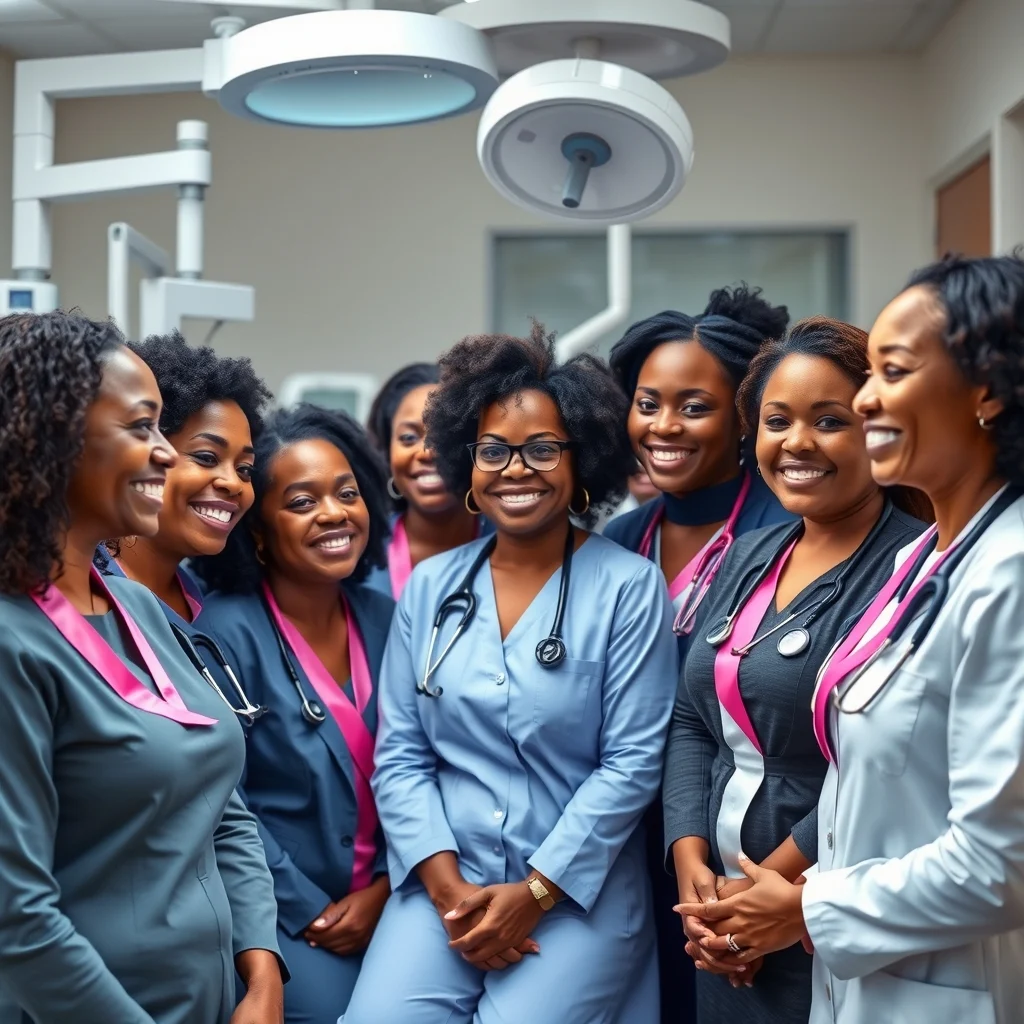
A delegation from the United States, led by Dr. Cheryl Simmons-Grey of The Links Incorporated, visited Ghana’s Peace and Love Hospital, praising its breast cancer care efforts as “inspirational” and vital for Africa and the African diaspora. The visit, aimed at supporting awareness, survivorship, and collaborative research, highlighted the hospital’s advanced treatment capabilities and the critical need to overcome stigma and fear surrounding the disease.
Addressing Awareness and Stigma
Stephanie Hayes-Jameison, President Elect of The Links Incorporated, identified a significant challenge in the fight against breast cancer: a pervasive lack of awareness and an underlying fear that prevents individuals from seeking timely diagnosis and treatment.
Many women, particularly within communities of African descent, suffer in silence due to cultural attitudes that discourage open discussions about health issues. This stigma can lead to feelings of shame or guilt, deterring individuals from seeking help.
“In the Black community in general, or people of African descent, we tend to keep things private. We don’t want to share our stories because we sometimes feel there could be shame or guilt around it. But there’s no shame, and there’s no guilt,” Hayes-Jameison emphasized.
She urged women battling breast cancer to embrace hope, seek support from their networks, and view their diagnosis not as an end, but as a challenge that can be overcome, enabling them to help others.
Praise for Peace and Love Hospital’s Advanced Care
Hayes-Jameison lauded Peace and Love Hospital as a leading facility, noting its advanced technology and holistic approach to patient care. She described it as one of the few centers in Africa offering comprehensive cancer treatment.
“Walking around and seeing the different technology here was very impressive, and just the total care for the total woman was remarkable,” she stated.
Dr. Cheryl Simmons-Grey highlighted the visit’s alignment with The Links Incorporated’s mission to support vulnerable communities and enhance healthcare outcomes for people of African descent. The organization aims to give back and improve lives through such initiatives.
The interactions with breast cancer survivors at the hospital were particularly moving for the delegation, reinforcing the impact of their mission.
The Importance of Early Detection and Prevention
Dr. Simmons-Grey underscored the treatable and curable nature of breast cancer when detected early. She strongly advocated for regular screenings and self-examinations as crucial preventive measures.
“Cancer is curable, but you have to seek treatment. You can’t wait,” she advised. “Prevention is a major key. Women must regularly check their own breasts to make sure they don’t have any lumps.”
Shared Challenges and Collaborative Opportunities
Dr. Beatrice Wiafe Addai, President of Breast Care International and Peace and Love Hospital, views the partnership with The Links Incorporated as pivotal for advancing cancer research, treatment, and awareness. She noted striking similarities in breast cancer patterns between Black women in the U.S. and Africa, including early onset and high rates of triple-negative breast cancer.
“It shows us that we have the same tumour biology,” Dr. Wiafe Addai explained. “They migrated from here to the US, so that link is still there.”
This shared biology presents significant opportunities for research collaborations, scientific exchanges, and enhanced genetic testing initiatives tailored for African women.
Addressing Healthcare Gaps and Future Initiatives
Discussions during the visit focused on research prospects, existing healthcare gaps, and practical interventions needed to improve breast cancer diagnosis and treatment across Ghana. A key concern raised was the scarcity of mammography machines, with calls for their equitable distribution to regional capitals to reduce the burden on patients who currently travel long distances for diagnostic services.
“We need to have mammography machines in every regional capital. Why should a woman travel for eight or ten hours before she can have a diagnostic mammogram?” Dr. Wiafe Addai questioned. “It’s because there are no machines in several regional capitals.”
The delegation also expressed strong interest in supporting the development of the second Comprehensive Cancer Centre of Excellence in Ghana, a project spearheaded by Otumfuo Osei Tutu II.
Looking Ahead
The U.S. delegation’s visit underscores the growing recognition of Ghana’s advancements in cancer care and the potential for international collaboration. Future engagements will likely focus on strengthening research partnerships, addressing critical infrastructure needs such as mammography equipment, and leveraging shared biological insights to improve outcomes for Black women globally. The establishment of more accessible diagnostic centers and the continued support for advanced treatment facilities like Peace and Love Hospital will be crucial in the ongoing fight against breast cancer.










Leave a Reply