
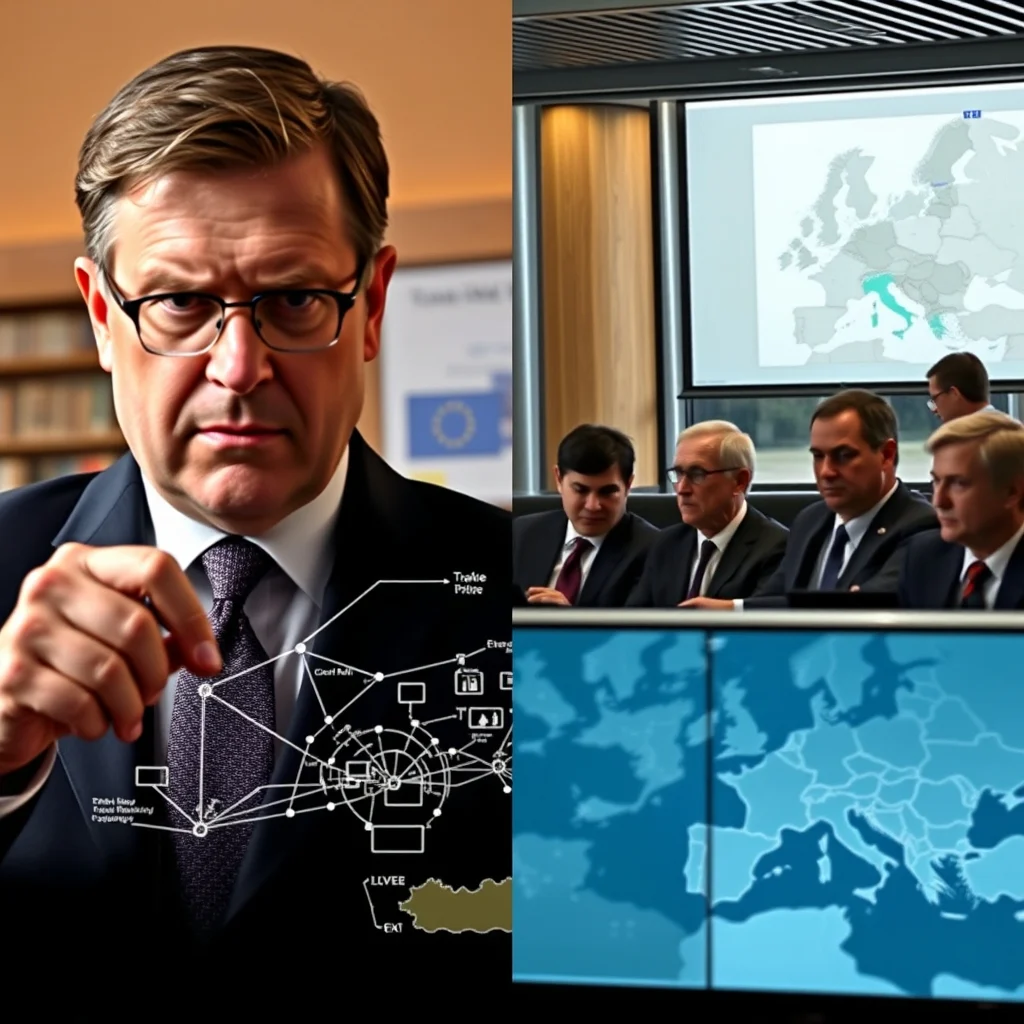
Sir Keir Starmer, leader of the UK Labour Party, has publicly stated his intention to forge tighter links with the European Union, aiming to position Britain “at the heart of Europe” to bolster the UK’s economy, trade, and defence. This strategic shift, articulated in a recent speech following disappointing local election results, signals a potential recalibration of post-Brexit UK-EU relations, though its reception in Brussels is nuanced and mixed.
Context: A Shifting Post-Brexit Landscape
The United Kingdom formally left the European Union on January 31, 2020, ending over four decades of membership. The subsequent Trade and Cooperation Agreement established a new framework for relations, but introduced significant barriers to trade and movement compared to EU membership. The upcoming 10-year anniversary of the Brexit vote serves as a backdrop to Starmer’s overtures, highlighting the political sensitivity surrounding the UK’s relationship with its European neighbours.
Starmer’s Overture: Defence vs. Economy
Starmer’s recent address emphasized rebuilding the relationship with Europe, a move that has surprised some EU observers given the proximity to the Brexit anniversary. While the Labour leader pledged to put Britain “at the heart of Europe,” his proposals have been met with varied reactions from the continent. Experts suggest that the focus on defence and security is viewed more positively than economic integration proposals.
In the realm of defence, the EU is currently preoccupied with major geopolitical challenges, including the conflict in Ukraine, tensions with Iran, and potential shifts in US foreign policy. Within this context, the UK is seen as a steadfast ally within NATO and a valuable partner for the EU. Recent UK actions, such as imposing new sanctions on Russia, reinforce this perception of continuity in foreign policy, regardless of potential leadership changes in the UK.
Conversely, the economic dimension of Starmer’s approach has generated a degree of “weary cynicism” in Brussels. Despite Starmer’s call for a “bigger response” beyond “incremental change” on issues like growth and energy, the concrete proposals for economic re-engagement remain limited.
Limited Scope of Current Proposals
The Labour government has engaged in discussions with the EU regarding specific areas to reduce post-Brexit friction. These include a potential agreement on Sanitary and Phytosanitary (SPS) measures for food and drink, a carbon emissions trading agreement, and a youth mobility scheme. The youth scheme, in particular, has been highlighted by Starmer, though it is noted that this was an EU initiative initially met with some resistance from the UK government.
However, these proposed measures are not expected to significantly boost the UK economy as a whole. Similarly, other sector-specific agreements, such as closer alignment on the EU’s single market for electricity, are seen as incremental rather than transformative.
The ‘Red Lines’ Dilemma
For substantial economic benefits from closer EU ties, significant steps would be required, such as joining a customs union or the EU’s single market. These moves would necessitate adherence to the EU’s fundamental principles, including the free movement of people. This particular aspect, alongside rejoining the single market and customs union, has been designated as a “red line” by Labour, given public concerns over immigration in the UK.
Starmer’s recent avoidance of direct questions regarding these red lines has fueled speculation about a potential shift in Labour’s stance ahead of the next general election. However, Brussels remains impatient with ambiguity, viewing the current approach as long on rhetoric and short on clear, actionable content.
“Pay to Play” and Regulatory Alignment
The principle of “pay to play” is already evident in the UK’s current engagement with the EU. Participation in the EU’s Horizon science programme, for instance, comes with a significant annual cost. While supporters argue for the benefits of rejoining such programmes, the UK’s alignment with EU regulations in sectoral agreements, such as the proposed food and drinks deal, means accepting current and future EU rules.
This increasing alignment with EU legislation could complicate the UK’s ability to strike independent, wide-ranging free trade agreements with other nations, such as the United States. Critics, including Nigel Farage’s Reform Party, accuse Labour of attempting to “reverse Brexit through the back door” by seeking closer regulatory alignment.
EU’s Perspective and Future Watch
The rise of parties like Reform, with strong eurosceptic platforms, is noted in Brussels. While the EU will continue to negotiate with the current UK government, there is consideration among officials about potentially incorporating penalty clauses into future agreements to safeguard against the UK reneging on deals. The coming months will reveal whether Labour’s “pragmatic” and “ambitious” approach translates into tangible economic benefits for the UK and if the party is willing to navigate the political complexities of its EU “red lines.”









Leave a Reply