
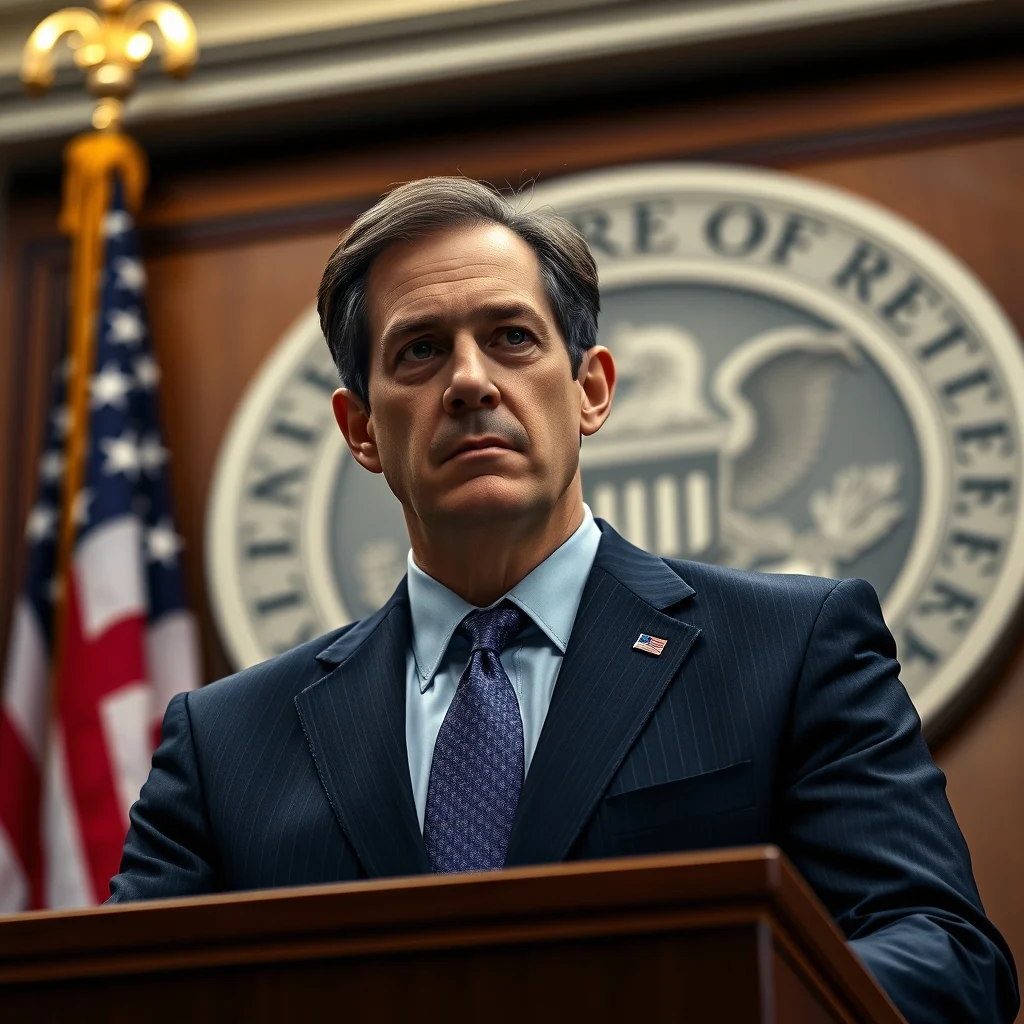
Kevin Warsh has been confirmed by the U.S. Senate as the new Federal Reserve chair in a 54-45 vote that largely followed party lines. Warsh will succeed Jerome Powell, whose term concludes Friday, and whose tenure was marked by significant disagreements with President Trump over interest rate policy. This confirmation marks the narrowest margin for a Fed chair appointment since the process was established in 1977.
A Divided Senate and a Contentious Confirmation
The confirmation vote saw only one Democrat, Senator John Fetterman of Pennsylvania, vote in favor of Warsh. The close vote underscores the increasing politicization of appointments to critical executive branch roles, a trend observed in recent confirmations of U.S. attorneys and federal judges.
Warsh’s appointment comes at a time of significant economic challenges, including rising inflation driven by global events. His predecessor, Jerome Powell, frequently clashed with President Trump, who publicly criticized Powell for not lowering interest rates quickly enough.
Navigating Inflationary Headwinds and Presidential Expectations
Warsh faces a complex economic landscape upon entering his new role. President Trump has explicitly stated his expectation that the Fed chair will lower interest rates, a stance that directly conflicts with current inflationary pressures. Recent inflation figures for April showed an annual rise of 3.8%, the fastest rate since May 2023, leading most economists to anticipate interest rates will remain unchanged, or even increase, until next year.
The surge in inflation is largely attributed to escalating energy costs, exacerbated by the closure of the Strait of Hormuz which has driven up oil prices. Additionally, costs for food, housing, and airfare are also on an upward trend.
This situation places Warsh in a precarious position. He is under pressure from President Trump to stimulate the economy through lower rates, while standard monetary policy dictates a more restrictive approach to combat rising prices.
Defending Independence Amidst Political Pressure
During his confirmation hearing before the Senate Banking Committee, Warsh pledged to uphold the Federal Reserve’s independence, stating he would not act as President Trump’s “sock puppet.” However, ranking Democrat on the committee, Senator Elizabeth Warren, expressed concerns, warning that Warsh is “uniquely ill-suited” for the role and suggesting his appointment is intended to serve the president’s agenda.
Warsh’s prior service as a Fed governor from 2006 to 2011 provides him with direct experience within the central bank. He is set to replace Stephen Miran, currently the Fed’s most vocal proponent of lowering interest rates.
Expert Views: A “Mission Impossible” Scenario
Legal scholar Carl Tobias, Williams Chair in Law at the University of Richmond, described Warsh’s upcoming tenure as a “Mission Impossible.” Tobias highlighted the conflicting pressures: “Inflation is ‘roaring’ while the US president is ‘vociferously demanding lower interest rates and the Fed board is sharply divided.'”
Tobias further commented on the political implications of the confirmation vote, noting it “exemplifies the increasingly politicised confirmation processes for critical executive branch nominees.”
Looking Ahead: The Balancing Act for the New Fed Chair
The confirmation of Kevin Warsh signifies a new chapter for the Federal Reserve, one that will be closely watched by markets, policymakers, and the public. His ability to navigate the delicate balance between presidential expectations and the imperative of maintaining price stability in the face of rising inflation will be a defining characteristic of his leadership. The coming months will reveal whether Warsh can successfully assert the Fed’s independence while addressing the economic realities and political pressures that define his mandate.






Leave a Reply