
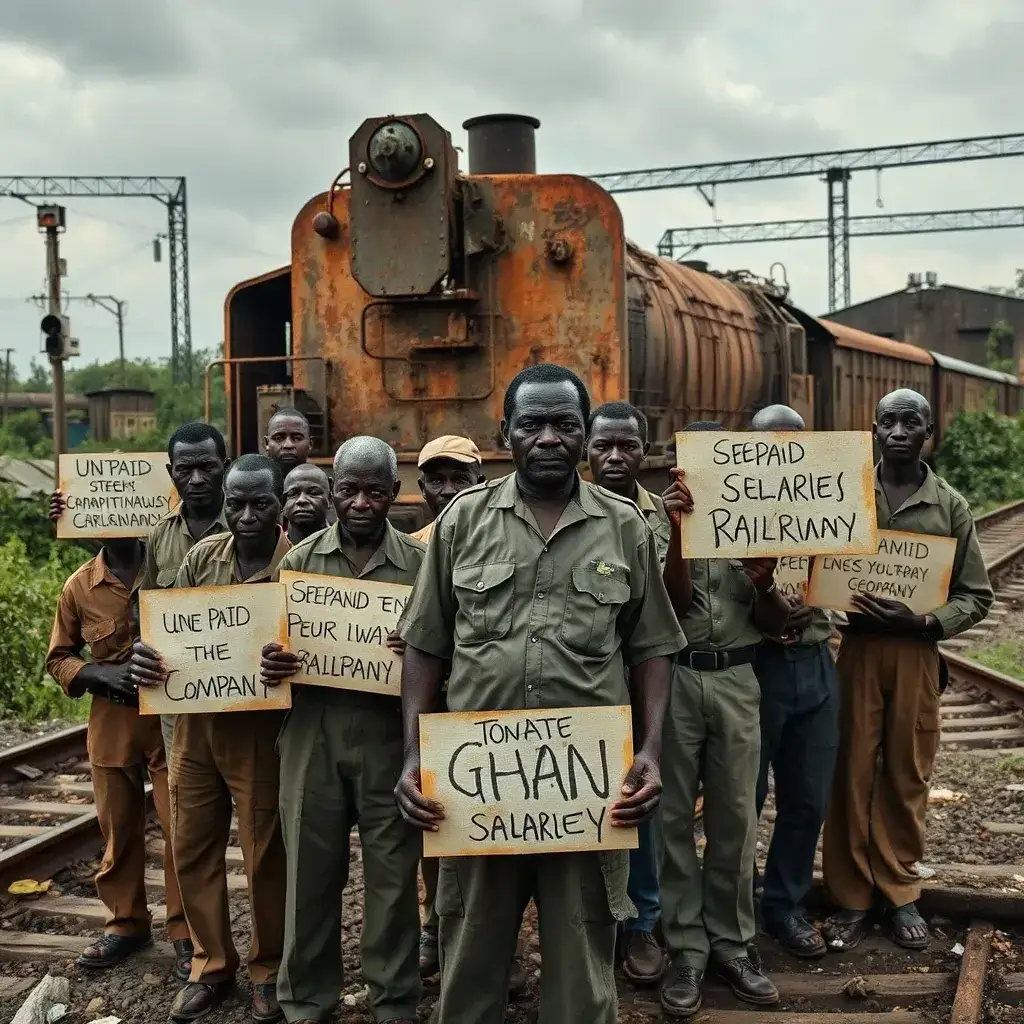
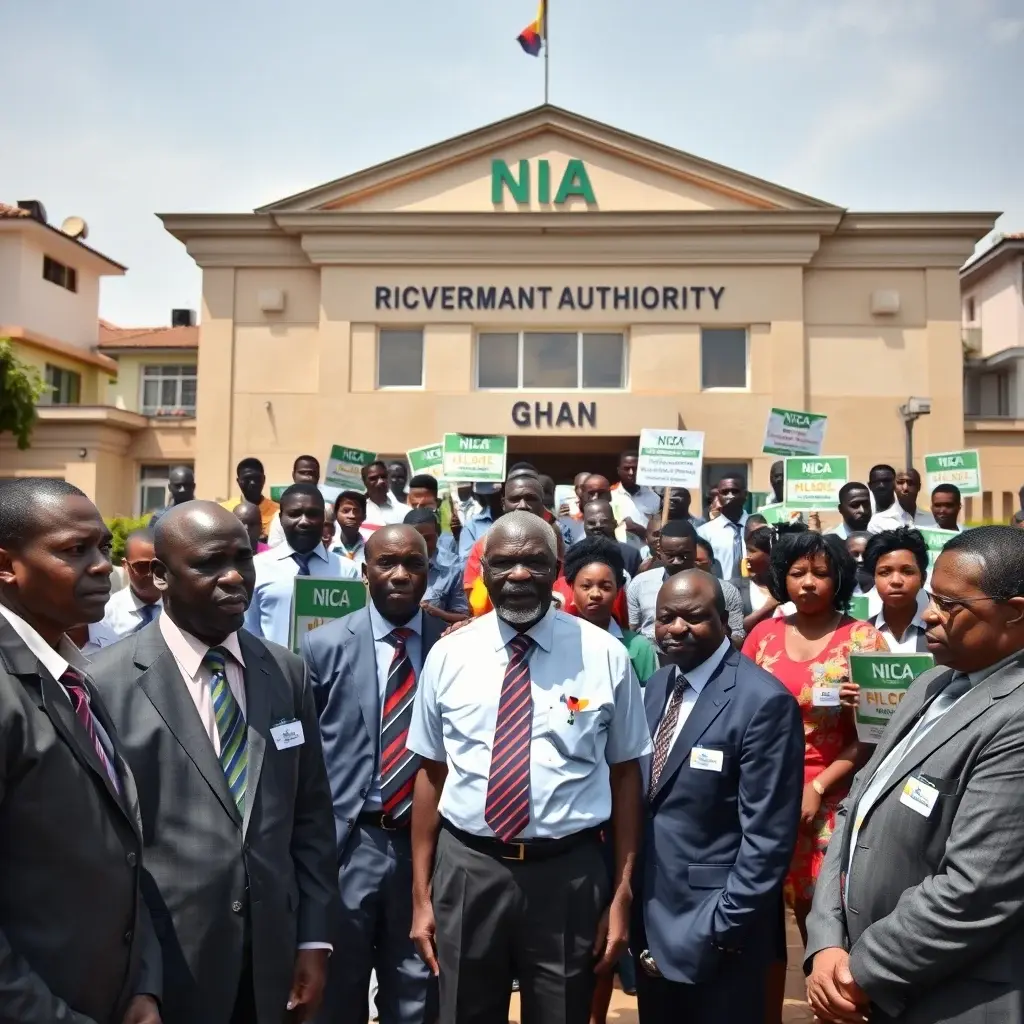
Workers of the Ghana Railway Company Limited (GRCL) are urgently appealing to the government for intervention concerning escalating operational challenges, significant salary arrears, and a pervasive uncertainty about the company’s long-term viability. The demands come after a press conference where employees highlighted the alarming state of the railway sector, attributing its deep distress to years of systemic neglect.
Context of Decline
The workers explained that the GRCL’s operational and financial decline accelerated following the withdrawal of government subventions previously allocated for crucial spare parts and operational inputs. This funding gap forced the company into a cycle of relying on improvised components and temporary fixes.
Such measures, while necessary to maintain minimal operations, exacerbated the deterioration of vital railway infrastructure and equipment. The lack of proper maintenance and modern parts exposed employees to increasingly unsafe working conditions.
Numerous attempts by past administrations to revitalize the railway sector have reportedly fallen short. The workers contend that these interventions lacked the comprehensive scope required to fully restore the company’s operational capacity.
Operational Hazards and Unfair Competition
The current state of GRCL’s assets presents a hazardous work environment. Defective railway signals, makeshift braking systems, and obsolete cranes are commonplace. Employees often work without adequate operational tools or essential protective equipment.
Adding to the infrastructure challenges, the tracks themselves are impacted by illegal mining activities, further compromising safety and operational reliability. This situation creates a dangerous environment for railway staff.
Furthermore, the workers highlighted a perceived unfair competition from the burgeoning road haulage sector. While road transport operators do not bear the costs of infrastructure maintenance, GRCL is burdened with the responsibility of maintaining its tracks, bridges, and culverts.
This disparity in operational overhead places the railway company at a significant disadvantage, particularly in the transport of bulk commodities like bauxite and manganese, which are increasingly being shifted to road transport.
Allegations Against GRDA and Financial Hardship
The workers also raised serious allegations against the Ghana Railway Development Authority (GRDA). They claim the GRDA is operating railway services in contravention of Section 98 of the Railways Act, 2008 (Act 779), which prohibits the Authority from managing operational aspects.
Specifically, the GRDA is accused of managing the Sekondi-Takoradi shuttle service through Kojokrom, utilizing select GRCL staff. This alleged overreach by the GRDA is seen as undermining the GRCL’s mandate.
A significant point of contention is the prolonged non-payment of salaries. Employees report that wages have been outstanding for several months, causing severe financial hardship.
Workers allege that portions of these arrears were only settled after the reported sale of railway assets, including coaches, rails, locomotives, and machinery. Proceeds from these asset sales reportedly amounted to GH¢21.6 million.
The workers claim these funds could have been sufficient to clear multiple months of owed salary arrears, suggesting a mismanagement of resources intended for employee compensation.
The persistent delays in salary payments have dire consequences for employees, many of whom struggle to service loans and overdrafts due to accumulated deductions and interest charges. This financial strain impacts their ability to meet basic financial obligations.
Moreover, the delays have also affected timely contributions to the Social Security and National Insurance Trust (SSNIT) and Tier 2 pension schemes, jeopardizing the long-term financial security of the workers.
Demands and Future Outlook
In response to these critical issues, the workers are demanding the immediate disbursement of all outstanding salary arrears and pension contributions.
They are also calling for definitive government action to clarify the future of the Ghana Railway Company Limited and provide assurance for the livelihoods of its over 800 employees.
A key demand is for the Ghana Railway Development Authority to cease its operational activities and transfer railway service management back to the GRCL.
The workers emphasize the strategic importance of the railway sector as a national asset crucial for Ghana’s economic transformation and industrial development.
They issued a stern warning that continued neglect of this vital sector poses a significant threat to the nation’s broader transport and industrialization agenda.
Looking Ahead
The situation at GRCL underscores a broader challenge facing public infrastructure in Ghana. Stakeholders will be watching closely to see if the government will address the immediate financial distress of the workers and implement a sustainable long-term strategy for the railway sector. The effectiveness of any proposed solution will hinge on comprehensive planning, adequate funding, and a clear demarcation of responsibilities between GRCL and GRDA, as well as addressing the competitive pressures from road transport. The coming months will be critical in determining whether Ghana’s railway network can be revitalized to play its essential role in national economic development.



Leave a Reply