
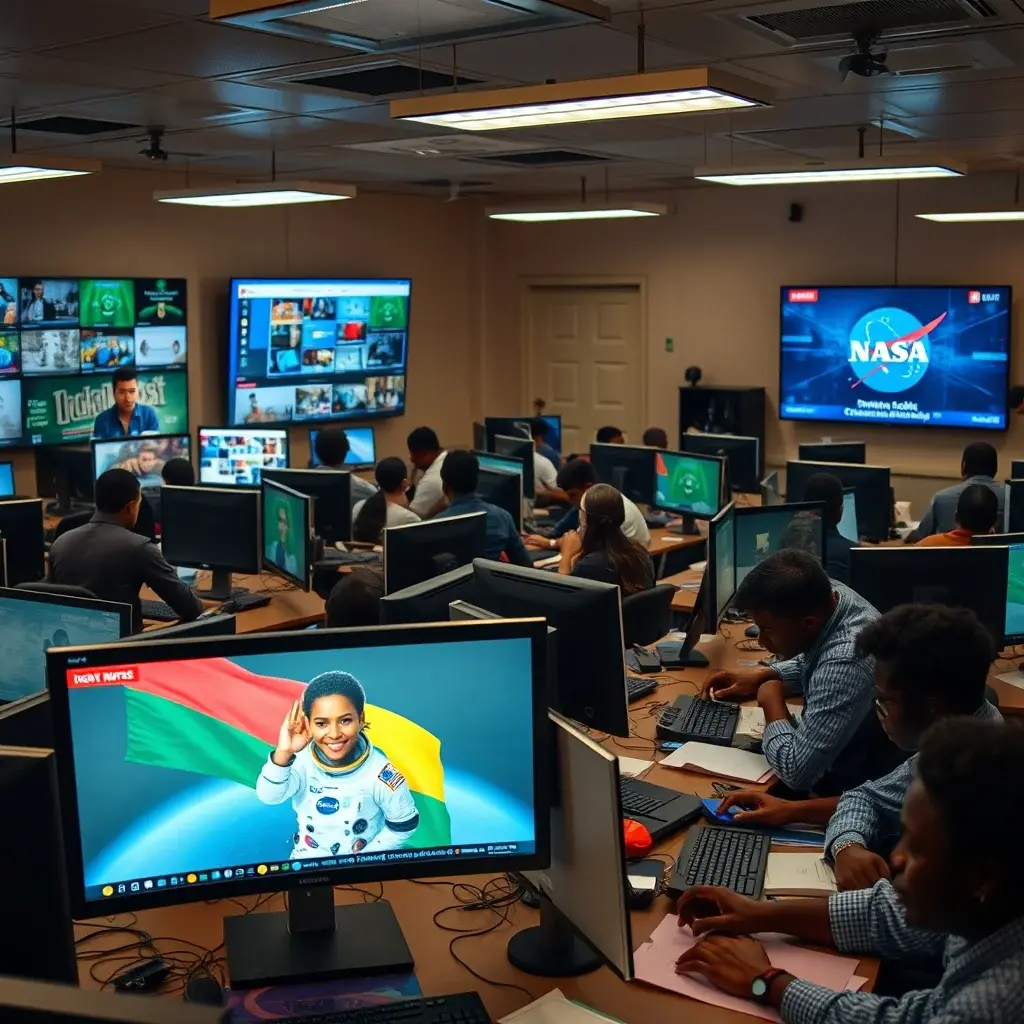
The pervasive spread of misinformation and disinformation, exemplified by recent high-profile incidents involving NASA astronaut Christina Koch, a purported Guinness World Record holder, and a fraudulent UN awards ceremony, poses an existential threat to Ghana’s media landscape and public trust. These instances, which saw false claims amplified by prominent media houses and even reaching the presidency, underscore a critical failure in journalistic verification processes, eroding public confidence and potentially influencing national decision-making.
The Blurring Lines of Truth and Deception
Misinformation and disinformation, while similar in their propagation of falsehoods, differ fundamentally in intent. Misinformation involves the unintentional circulation of incorrect information, whereas disinformation is deliberately crafted to deceive. Both, however, plague Ghana’s media environment, leading to dangerous consequences that demand urgent attention.
The University of Ghana’s Response: Fostering Media Literacy
Recognizing the growing problem, the Media and Information Literacy Club – UG Chapter was launched on the University of Ghana campus on June 21, 2025. This initiative aims to equip individuals with the critical skills needed to navigate the complex information ecosystem.
An expert at the launch emphasized the importance of meticulous verification, illustrating the point with a simple yet profound example: distinguishing a genuine TV3 logo from a manipulated one. This highlights how subtle details are often exploited by those spreading false narratives.
The Christina Koch Saga: A Failure of Verification
Around April 2026, a significant misinformation event unfolded when numerous social media accounts and Ghanaian media outlets falsely reported that NASA astronaut Christina Koch had taken Ghana’s flag to the Moon on the Artemis II mission. The accompanying image, widely circulated, was originally posted by Koch in December 2019 from the International Space Station.
This incident raised critical questions about the responsibility of media personnel. Why did prominent Ghanaian media houses and journalists fail to verify the claim through official NASA channels or Koch’s verified accounts before publication? Such failures not only misinform the public but also erode the credibility of journalistic institutions.
The misinformation escalated when Ghana’s Minister for Foreign Affairs, Samuel Okudzeto Ablakwa, shared the false narrative on Facebook. More alarmingly, President John Dramani Mahama publicly commended Koch for the alleged gesture, demonstrating how unchecked misinformation can infiltrate the highest levels of government.
The Chef Smith Controversy: Celebrated Falsehoods
Another major incident involved an individual known as Chef Smith, who on July 2, 2024, claimed to have broken the Guinness World Record for the longest cooking marathon. Almost every major media house in Ghana reported this claim without prior verification from Guinness World Records.
The damage was already done by the time Guinness World Records clarified the claim was false. This event again exposed a systemic failure within the media to prioritize authentication before dissemination, turning media outlets into unwitting conduits for misinformation.
The Dr. UN Embarrassment: Unverified Honors
A notorious case from August 28, 2020, involved Kwame Fordjour, popularly known as Dr. UN, who organized the “7th Global Leadership Service to Humanity Awards.” The event, featuring plaques branded as “UN Kofi Annan Excellence Awards,” honored numerous high-profile Ghanaian personalities.
The ceremony garnered significant publicity until investigations revealed Dr. UN’s lack of affiliation with the United Nations or the Kofi Annan Foundation, and his absence of verifiable credentials. This public embarrassment could have been prevented with basic checks through official UN platforms or the Kofi Annan Foundation.
Sports Reporting and the Speed of Falsehoods
The rapid spread of misinformation was evident on May 18, 2026, when a journalist shared a flyer in a sports WhatsApp group falsely claiming that the Black Stars head coach had released a provisional squad. Despite being quickly debunked within the group, a prominent Ghanaian media house with over 1.3 million followers published the same false information shortly after.
Verification should have started with the official handles of the Ghana Football Association and the Black Stars, yet the information was broadcast without confirmation, misinforming a vast audience.
An Existential Threat Requiring Urgent Action
Just as illegal mining (galamsey) is recognized as an existential threat to Ghana, misinformation warrants the same level of national concern. Its destructive consequences impact public trust, governance, journalism, and the overall national discourse.
Misinformation does not merely distort facts; it shapes decisions, damages reputations, influences public opinion, and weakens institutional credibility. Until verification becomes an ingrained practice rather than an afterthought, misinformation will continue to undermine the very fabric of informed society.
Looking Ahead
The ongoing challenge of combating misinformation necessitates a multi-pronged approach. This includes strengthening media literacy programs in educational institutions and public awareness campaigns. Furthermore, media organizations must implement robust internal verification protocols and hold journalists accountable for factual accuracy. Regulatory bodies may also need to explore frameworks that encourage responsible reporting without stifling press freedom. The public, too, must cultivate a habit of critical consumption, questioning information and seeking corroboration before accepting it as truth.




Leave a Reply