
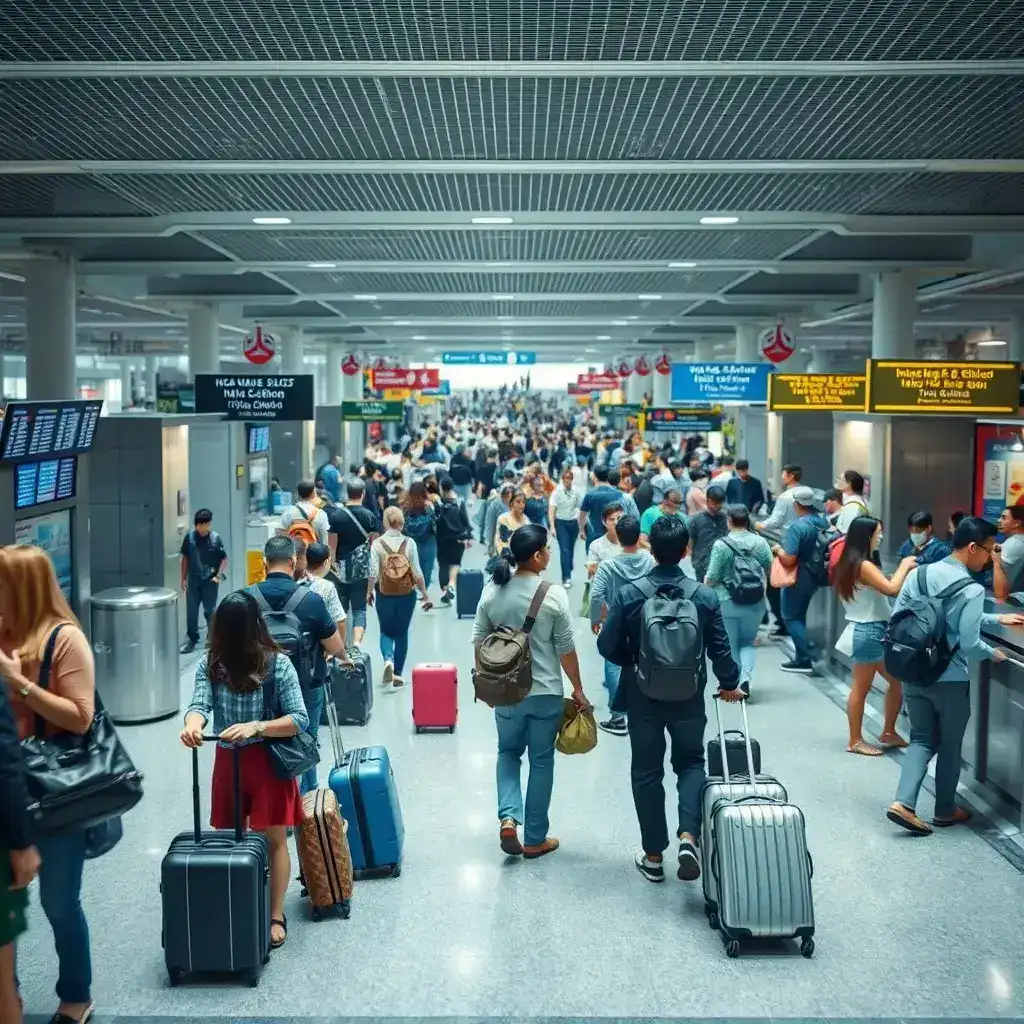
Thailand’s government has approved plans to shorten the visa-free stay period for citizens of 93 countries, including the UK, Australia, China, and the US, reversing a policy introduced just last year. The change, announced Tuesday, will revert many nationalities to a 30-day visa-free limit, with longer stays requiring a visa application, a move aimed at enhancing national security and streamlining a previously confusing visa system.
Context: Post-Pandemic Tourism Boost and Security Concerns
In July 2024, Thailand expanded its visa-free entry to 60 days for nationals of 93 countries, a measure designed to revitalize its crucial tourism sector following the economic downturn caused by the COVID-19 pandemic. Tourism is a significant contributor to Thailand’s economy, which saw nearly 40 million visitors in 2019, a figure that plummeted during the pandemic and has only recently begun to recover. This year alone, nearly 12 million tourists have already visited the country.
However, recent months have seen a spate of high-profile arrests of foreign nationals across Thailand, involving serious crimes such as drug trafficking and sex trafficking. Incidents include the arrest of foreigners for drug smuggling and, in April, the apprehension of 10 individuals working without permits at an unlicensed international school in Bangkok, as reported by local media.
Policy Shift Explained
Prime Minister Anutin Charnvirakul stated that the government deemed the visa policy revision necessary to better suit the “current situation, both in terms of the economy and national security.” The foreign ministry indicated that the aim is to reduce the complexity arising from multiple, sometimes overlapping, visa exemption schemes that can confuse foreign visitors.
Under the new framework, the duration of visa-free stays will be determined on a country-by-country basis. While many nationalities previously benefiting from the 60-day exemption will now be limited to 30 days, some may be granted shorter or longer periods based on reciprocal visa agreements between Thailand and their home countries.
Implementation and Impact
The revised visa regulations are slated to take effect 15 days after their official publication in the Royal Gazette, the government’s official journal for legal and regulatory notices. The decision comes as Thailand continues its efforts to balance economic recovery through tourism with the imperative of maintaining public safety and national security.
Data from the Tourism Authority of Thailand (TAT) shows a steady recovery in international arrivals. As of early 2024, the country was on track to approach pre-pandemic visitor numbers. However, the government’s focus has shifted to ensuring the quality and safety of tourists entering the country, not just the quantity.
Expert Perspectives and Industry Reactions
Industry analysts suggest that while the move might deter some short-term leisure travelers who planned for longer stays, it could also lead to a more targeted approach to tourism, potentially attracting visitors who engage in more meaningful, longer-term stays or business activities.
“This policy adjustment reflects a growing trend among nations to reassess their immigration and visa policies in light of evolving global security landscapes and economic priorities,” commented Dr. Anya Sharma, a geopolitical analyst specializing in Southeast Asian affairs. “Thailand is not alone in seeking to balance open borders for economic benefit with the need for robust security measures.”
The Thai Ministry of Foreign Affairs emphasized that the change is not intended to significantly hinder tourism but rather to create a more transparent and secure entry system. They are expected to work with embassies and consulates to facilitate visa applications for those requiring them for extended stays.
Looking Ahead
The effectiveness of this policy shift will be closely monitored. Key indicators to watch include the impact on overall tourist arrivals, the success rate of visa applications for longer stays, and any shifts in the demographic of visitors to Thailand. The government’s ability to clearly communicate the new regulations and provide accessible visa processing will be crucial for managing the transition and maintaining traveler confidence. Future adjustments may depend on the evolving security situation and the ongoing performance of the tourism sector.










Leave a Reply