
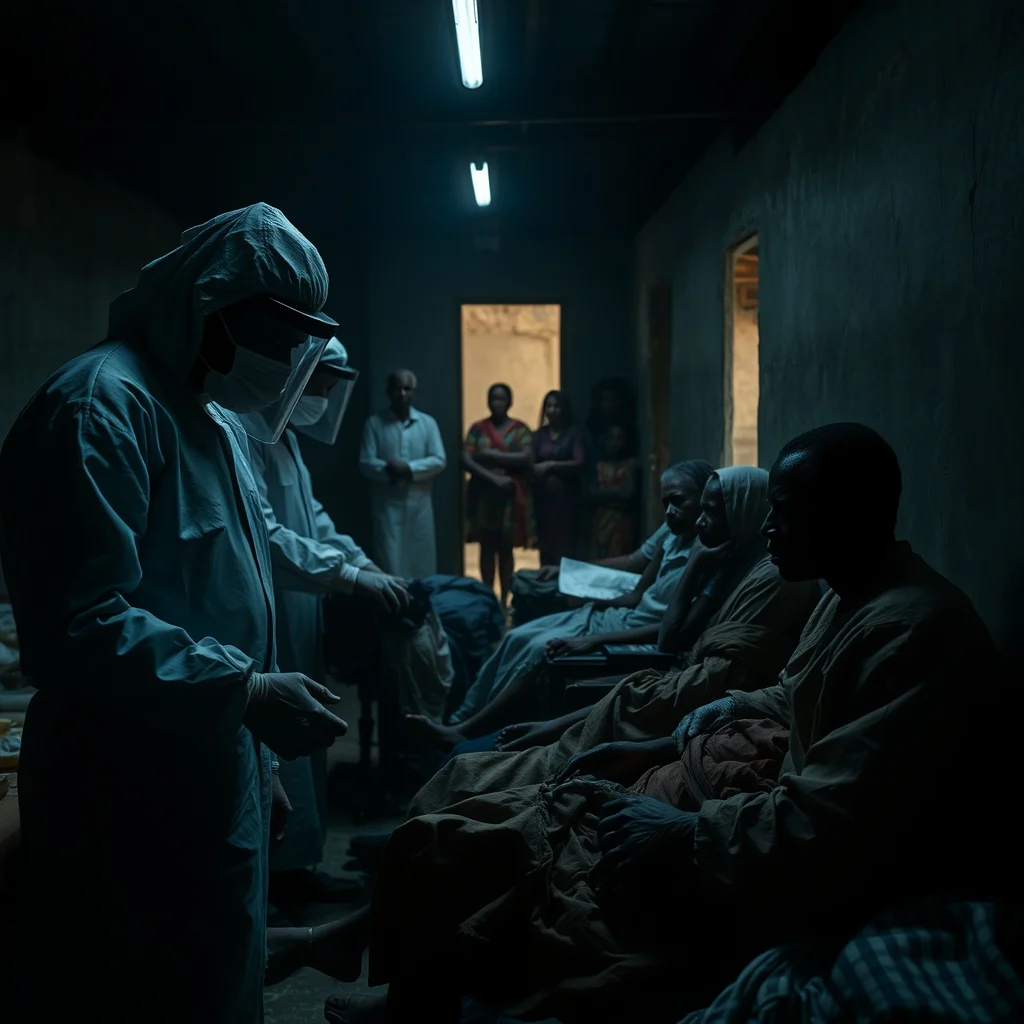
Fear is palpable in eastern Democratic Republic of Congo as health officials scramble to contain a burgeoning Ebola outbreak, suspected to have been spreading undetected for weeks. The virus, identified as the rare Bundibugyo strain, has led to hundreds of suspected cases and numerous deaths, raising anxieties in communities already strained by conflict and humanitarian crises. The outbreak, officially declared on April 24, has seen cases emerge in multiple provinces, including Ituri, North Kivu, and South Kivu, with one death reported in neighboring Uganda.
A Virus Eluding Early Detection
The presumed index case was a nurse who died in Bunia, the capital of Ituri province, but was buried in the gold-mining town of Mongwalu. This town, along with the nearby area of Rwampara, has become the epicenter of the outbreak, reporting the majority of suspected cases and deaths. Congolese Health Minister Dr. Samuel Roger Kamba acknowledged that health teams are playing catch-up, suggesting the virus may have been circulating earlier than initially detected.
“At the community level, this hasn’t been effective,” Dr. Kamba stated, referring to the reporting mechanisms. “It means someone may have died before him [the presumed index case], or someone else may have been sick before him, but no one reported it.” This lack of early reporting allowed the virus to spread silently, creating a significant challenge for containment efforts.
The Bundibugyo Strain: A Familiar Yet Dangerous Foe
This marks the 17th Ebola outbreak in the Democratic Republic of Congo, but it is caused by the Bundibugyo strain, a less common variant. This strain has only been responsible for two previous outbreaks, in 2007 and 2012, each with a fatality rate of approximately 30%. Unlike the more frequently encountered Zaire strain, Bundibugyo can present with less obvious symptoms, leading to delayed diagnosis as people may mistake them for malaria.
“Bundibugyo can show fewer obvious signs, which delays diagnosis because people think, ‘No, this is just malaria,'” explained Dr. Kamba. In some affected communities, particularly in Mongwalu, deaths were initially attributed to witchcraft, a phenomenon referred to as the “coffin phenomenon,” where it was believed anyone touching a deceased person’s coffin would also die. This further obscured the true nature of the illness.
Save the Children noted that the Bundibugyo strain had not been previously seen in Ituri province. Local testing facilities were primarily equipped to detect the Zaire strain, leading to a critical delay in identifying the actual pathogen. “By the time the Bundibugyo strain was detected, it had already spread quite far. We are in a game of catch-up,” said Greg Ramm, the organization’s DR Congo representative.
Challenges in a Region Plagued by Conflict
The spread of the virus into larger urban centers like Bunia, Butembo, and Goma presents significant challenges. Many residents express frustration over the slow response and the lack of adequate facilities. “If there’s no treatment centre here in the capital, then what about other areas?” questioned one Bunia resident.
Basic public health measures, such as handwashing, avoiding handshakes, and limiting gatherings, are reportedly not widely followed in densely populated areas like Goma. For many struggling with daily survival in a region deeply affected by conflict, adhering to these measures is a secondary concern. “It’s too much to ask people struggling to eat to follow these rules,” commented one resident.
Eastern DR Congo is a region already grappling with extensive conflict and a severe humanitarian crisis, with hundreds of thousands of displaced people and compromised healthcare systems. Save the Children described the Ebola outbreak as “a new massive crisis on top of an already difficult situation.” The M23 rebel group controls Goma, a major trading hub, and militia activity is present in Butembo, further complicating response efforts.
International Response and Future Outlook
The United States has announced $13 million in emergency assistance for DR Congo and Uganda and is considering further funding. Travel restrictions related to the outbreak are also being evaluated. An American national, Dr. Peter Stafford, working at Nyakunde Hospital, is among those infected and has been evacuated for treatment, with efforts underway to evacuate other exposed Americans.
The World Health Organization (WHO) declared the outbreak a public health emergency of international concern on May 15. Congolese authorities are drawing upon their extensive experience from previous Ebola outbreaks, relying on established public health measures to confront this latest challenge. The coming weeks will be critical in determining the effectiveness of containment strategies against the elusive Bundibugyo strain in a complex and volatile region.






Leave a Reply