
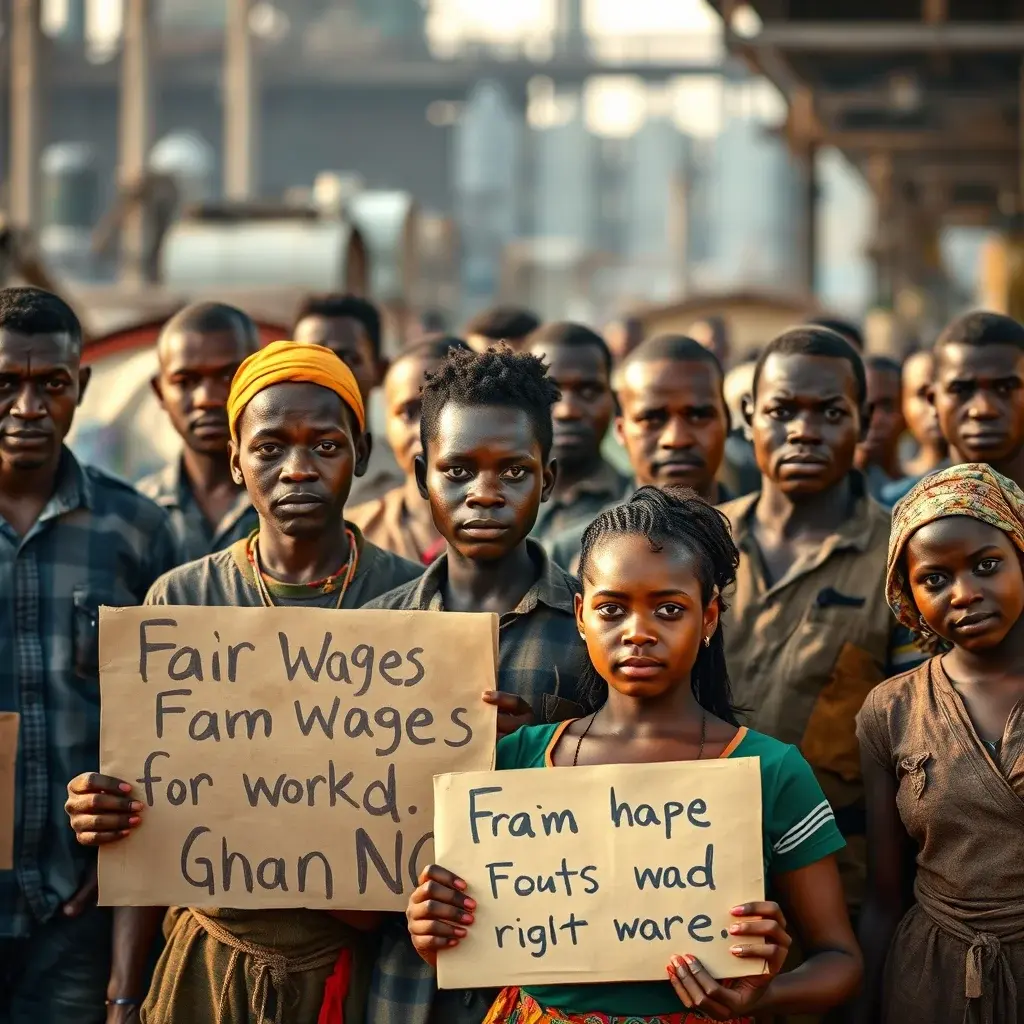
Accra, Ghana – On the eve of International Workers’ Day 2026, the Industrial and Commercial Workers’ Union (ICU) has directed a strong appeal to the Ghanaian government, urging it to ensure that recent macroeconomic stability translates into tangible improvements in the daily lives of workers. ICU General Secretary Morgan Ayawine highlighted that despite economic recovery efforts, many Ghanaians continue to grapple with a persistent high cost of living, making economic gains feel distant.
Context: Acknowledging Progress, Demanding Real Impact
The ICU’s message, issued on April 29th, acknowledges the government’s success in stabilizing the economy. However, the union leadership emphasized that these macroeconomic achievements must directly benefit the working class. This call comes as Ghana prepares to observe May Day, a global day dedicated to celebrating workers and addressing labor-related issues. In Ghana, this occasion is traditionally a platform for organized labor to advocate for better wages, improved working conditions, and enhanced job security.
Mr. Ayawine pointed out a historical disconnect where years of hard work and sacrifice by Ghanaian workers have not yielded the expected economic prosperity. This persistent gap raises significant concerns about underlying structural inefficiencies within the nation’s economic management framework. The union leader expressed that the logical outcome of diligent work should be rewarding, but over time, the reality for many has been the opposite.
Main Body: Unmet Expectations and Unfair Practices
Despite the government’s commendable efforts in economic recovery, the ICU asserts that these measures have not yet alleviated the financial pressures faced by ordinary workers. Essential costs such as rent, utilities, transportation, and food continue to rise, creating a significant burden. The union stressed that macroeconomic stability alone is insufficient to guarantee improved livelihoods for the populace.
Beyond the government’s role, the ICU also directed criticism towards certain employers. Mr. Ayawine accused some businesses of engaging in unfair labor practices, specifically mentioning outsourcing and the casualization of labor. These practices, he warned, often lead to precarious employment conditions for workers who perform the same duties as permanent staff but under less favorable terms and without adequate security.
The ICU leadership called for an immediate cessation of such exploitative practices, advocating for fairness and equity in employment arrangements. The union underscored that contract and casual workers are increasingly becoming a significant part of the workforce, yet they often lack the benefits and stability afforded to permanent employees.
Expert Perspectives and Data Points
While specific data points were not cited in the ICU’s statement, the union’s concerns echo broader trends observed in economies undergoing recovery. Reports from various labor organizations globally often highlight that gains from economic stabilization can take considerable time to trickle down to the average worker. Factors such as inflation, wage stagnation, and the increasing prevalence of non-standard employment contracts can exacerbate these disparities. The ICU’s call for a review of economic systems suggests a need for policy interventions that directly address income inequality and ensure that economic growth is inclusive.
Implications: A Call for Inclusive Growth
The ICU’s May Day message signifies a crucial juncture for Ghana’s economic policy. It implies that the government and employers must move beyond broad macroeconomic indicators and focus on policies that directly improve the purchasing power and living standards of workers. This includes ensuring that wage increases keep pace with inflation and that job creation initiatives prioritize sustainable, secure employment over temporary or contract-based roles.
For Ghanaian workers, the message is one of solidarity and a call for continued advocacy. The ICU’s stance suggests that workers should remain vigilant and continue to engage with unions and labor bodies to ensure their rights are protected and their contributions are recognized. The union’s commitment to working with stakeholders indicates a willingness to collaborate on solutions, but with a firm insistence on accountability from economic managers.
Looking ahead, attention will be on whether the government and private sector will heed the ICU’s call for more direct worker support. Key areas to watch include potential policy changes regarding minimum wage adjustments, regulations on contract employment, and initiatives aimed at controlling the cost of essential goods and services. The effectiveness of these responses will determine whether Ghana can truly translate economic recovery into widespread improvements in the quality of life for its working population.









Leave a Reply