
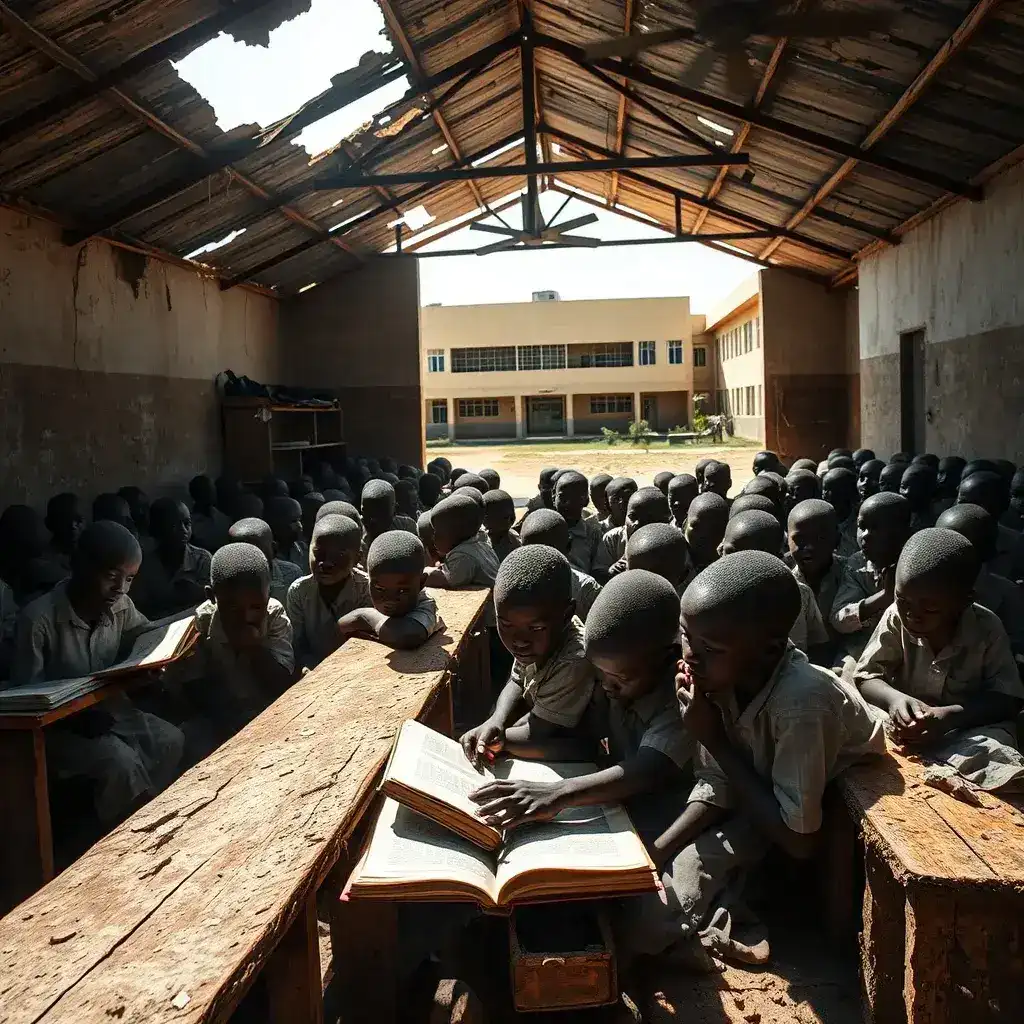
Accra, Ghana – Africa Education Watch (Eduwatch) has raised alarm over the current distribution formula for education infrastructure funding under the District Assemblies Common Fund (DACF), asserting that it is exacerbating educational disparities between rural and urban schools across Ghana. The advocacy group released a policy brief on Saturday, May 2, highlighting how inadequate school infrastructure continues to impede access and progression in basic education, particularly in deprived rural communities.
Infrastructure Deficit in Northern Ghana
The report from Eduwatch points to a critical infrastructure gap in northern Ghana, where a significant portion of primary schools lack attached Junior High Schools (JHS). This deficiency directly impacts pupils’ ability to transition to the next educational level, contributing to an increase in dropout rates.
Eduwatch acknowledges the intention behind the decentralized financing approach through the DACF, which was established to address infrastructure deficits in the education sector. However, the organization contends that the existing allocation model does not sufficiently prioritize districts with the greatest needs.
“DACF allocations for education have so far proven to be inequitable, potentially reinforcing existing rural–urban disparities in basic school infrastructure,” the policy brief stated. This inequity is particularly evident in the shortage of JHS facilities in many underserved areas.
Calls for Reform
In response to these findings, Eduwatch is urging the Ministries of Education and Local Government to undertake a review of the current DACF allocation formula. The organization advocates for the adoption of a needs-based approach that directs resources to districts facing the most severe infrastructure challenges.
“It calls on the Ministries of Education and Local Government to introduce a needs-weighted DACF education sub-formula that aligns allocation with basic school infrastructure deficits,” the report added. Such a reform, the think tank believes, is crucial for reducing educational inequalities.
Potential Impact of Reforms
Implementing a needs-weighted formula could significantly improve access to education in rural areas. By ensuring that funding aligns with critical infrastructure gaps, the reforms aim to enhance transition rates from primary to JHS and subsequently lower dropout levels in these vulnerable communities.
The current system, by failing to adequately address the specific needs of the most deprived districts, risks perpetuating a cycle of educational disadvantage. Eduwatch’s analysis suggests that a more equitable distribution of DACF resources is essential for achieving Ghana’s broader educational goals.
Future Outlook
The coming months will be critical in observing whether the Ghanaian government will heed Eduwatch’s recommendations. The effectiveness of the DACF in promoting equitable educational development hinges on its ability to adapt its allocation strategies to meet the diverse needs across the country. Stakeholders will be watching closely to see if a needs-weighted formula is indeed introduced and how its implementation impacts infrastructure development in Ghana’s rural schools.










Leave a Reply