
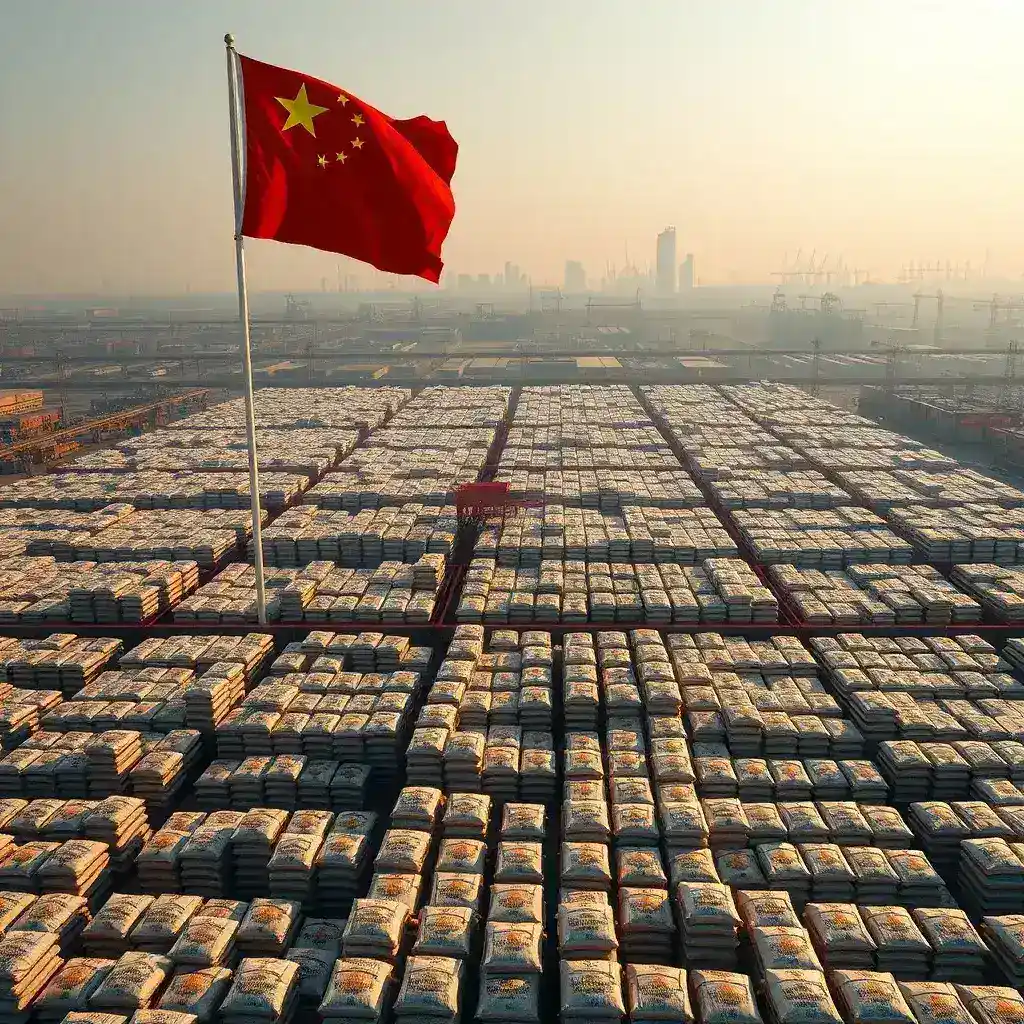
Global Supply Chains Under Strain, China’s Reserves Questioned
Former World Bank President David Malpass has called on China to cease its hoarding of food and fertilizer, urging the nation to release its substantial stockpiles to alleviate a worsening global supply crisis. The crisis is exacerbated by disruptions stemming from the conflict in Iran and the subsequent closure of the Strait of Hormuz, a vital shipping lane.
Context: The Looming Fertilizer Shortage
Nations worldwide are facing critical shortages of fertilizer as spring planting season approaches. This scarcity is driven by a confluence of factors, including geopolitical tensions and export restrictions. China, which holds the world’s largest reserves of both foodstuffs and fertilizer, has itself halted fertilizer exports since March, citing the need to secure domestic supplies.
Malpass Criticizes China’s ‘Developing Nation’ Status
Speaking ahead of a high-stakes summit with former US President Donald Trump in Beijing, Malpass, who also served as Treasury Under Secretary for International Affairs, questioned China’s continued claim of developing nation status. He argued that as the world’s second-largest economy, China’s pretense of being a developing country within international bodies like the WTO and World Bank is no longer credible.
“They have the biggest world stockpile of foodstuffs and of fertiliser,” Malpass stated. “They can stop building their stockpiles.” He added, “They present themselves as a developing country when they’re the second biggest economy in the world and in many ways rich.”
Strait of Hormuz Disruptions and Geopolitical Ramifications
The closure of the Strait of Hormuz has severely impacted global trade, particularly the shipment of essential commodities like fertilizer. Malpass emphasized the need for global unity in demanding a resolution to the situation involving Iran. He highlighted the dual threat posed by a rogue state possessing nuclear material and the potential for blockading critical maritime routes.
Malpass expressed hope that China would play a constructive role in resolving the deadlock in the Strait of Hormuz, noting that the free movement of ships aligns with China’s own economic interests. “China benefits from open waterways worldwide,” he observed. “They run the shipping lines, own the containers, and make huge profits from trade with the rest of the world. So, they would be a big loser if Iran in some way had control of the Strait of Hormuz.”
US Economic Outlook and Resilience
Addressing the economic outlook for ordinary Americans, Malpass anticipated further price increases on various products, even as crucial April inflation data for the US was set to be released. However, he pointed to robust job data as evidence of the US economy’s resilience.
Implications for Global Food Security and Trade
Malpass’s statements underscore the interconnectedness of global economies and the significant impact that China’s resource management policies can have on international markets. The call for China to release its reserves highlights a growing concern over food security and agricultural stability worldwide. Should China comply, it could lead to a significant easing of fertilizer prices and improved availability, directly benefiting farmers and consumers globally. Conversely, continued hoarding could intensify the current supply crisis, potentially leading to higher food prices and increased geopolitical tensions. The international community will be watching closely to see if China alters its current trade policies in response to these global pressures and the upcoming high-level discussions.










Leave a Reply