
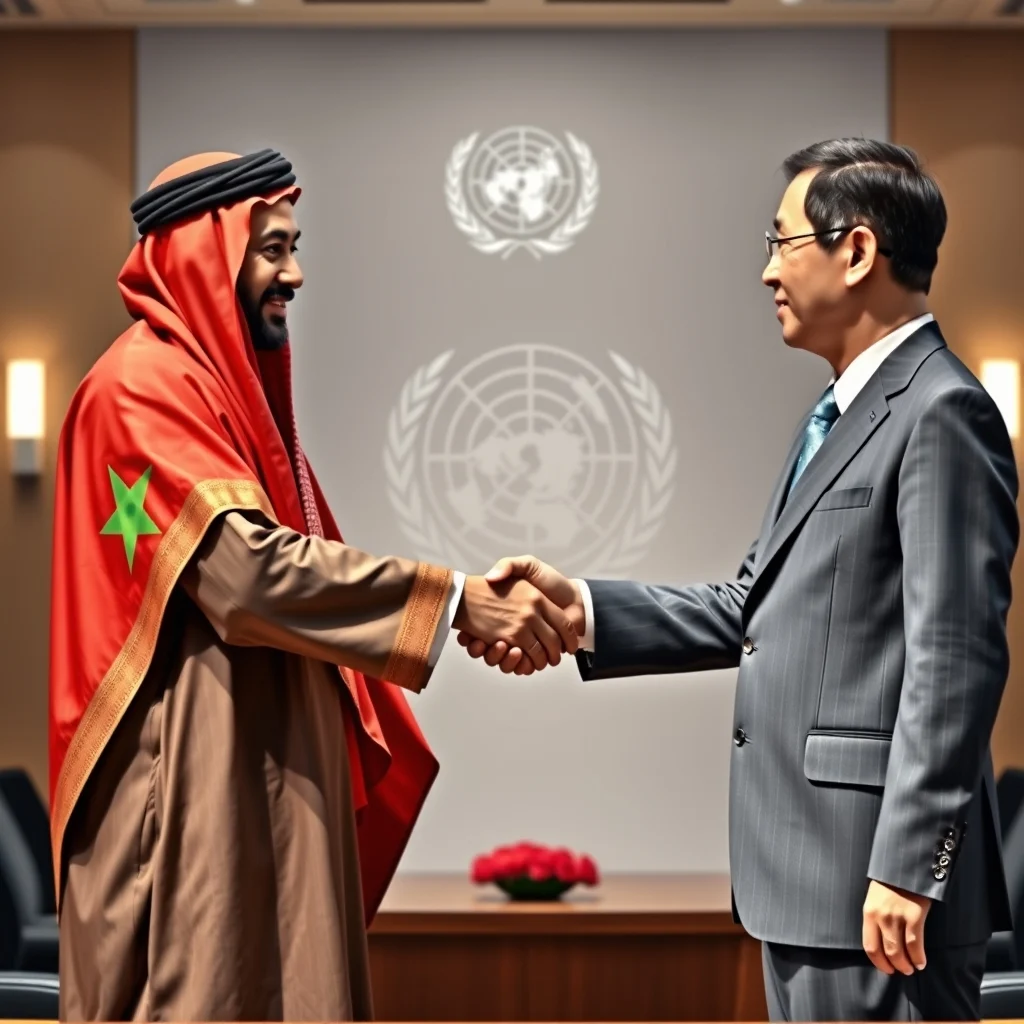
Japan has officially backed Morocco’s autonomy plan as a viable solution to the Western Sahara dispute, a significant diplomatic shift announced during a video conference between Moroccan Foreign Minister Nasser Bourita and his Japanese counterpart Motegi Toshimitsu. The joint communiqué, issued as part of activities marking the 70th anniversary of diplomatic relations between the two nations in 2026, affirmed that “a genuine autonomy, under Moroccan sovereignty, could be one of the most feasible solutions.” This stance aligns Japan with the recent United Nations Security Council Resolution 2797, which also supports the autonomy initiative as a basis for a political settlement.
Context of the Western Sahara Dispute
The Western Sahara is a sparsely populated desert region on Africa’s Atlantic coast. It was a Spanish colony until 1975, when Spain withdrew and Morocco claimed sovereignty. The Polisario Front, an independence movement, declared the Sahrawi Arab Democratic Republic (SADR) and has been fighting for independence ever since, with support from Algeria.
The United Nations has been involved in mediating the conflict for decades, aiming for a mutually acceptable political solution. Various proposals have been put forth, but a definitive resolution has remained elusive. The dispute has led to a protracted humanitarian crisis, with many Sahrawi refugees living in camps in Algeria.
Japan’s Shifting Position
In the joint communiqué, Japan expressed its support for the efforts of the UN Secretary-General and his Personal Envoy. Specifically, Tokyo welcomed Resolution 2797, stating it endorses the Moroccan autonomy initiative as the foundation for resolving the conflict. Japan urged all parties to engage in negotiations without preconditions, emphasizing the Moroccan autonomy plan as the pathway to a “definitive and mutually acceptable political solution.”
This move signifies a notable alignment of Japan’s foreign policy with Morocco’s position. The communiqué explicitly recognized Morocco’s efforts to resolve the dispute over its Southern Provinces, a term Morocco uses for Western Sahara. Japan’s endorsement is framed as a reflection of growing international support for the autonomy under Moroccan sovereignty approach.
Diplomatic and Economic Alignment
Minister Toshimitsu indicated Japan’s readiness to align its diplomatic and economic actions with this newly articulated position. This suggests that Tokyo may consider this stance in its future bilateral engagements and international cooperation initiatives concerning the region. The statement highlighted the long-standing friendship and cooperation between Morocco and Japan, celebrating 70 years of diplomatic relations.
The communiqué stated that Japan views “a genuine autonomy, under Moroccan sovereignty, could represent one of the most feasible solutions.” This phrasing underscores Japan’s pragmatic approach, suggesting that the autonomy plan offers a realistic path forward compared to other potential outcomes.
International Dynamics and Expert Views
Japan’s endorsement comes at a time when several countries have shown increasing support for Morocco’s autonomy plan. This regional shift in diplomatic recognition could influence ongoing efforts by the UN and other international actors to find a lasting peace. The support from a major global economic power like Japan adds significant weight to the Moroccan initiative.
“This is a significant development, as Japan’s support adds a new dimension to the international backing for the autonomy plan,” noted Dr. Kenji Tanaka, a geopolitical analyst specializing in North Africa. “It reflects a pragmatic approach to conflict resolution, prioritizing a solution that is seen as achievable and sustainable.”
Implications for the Region and Beyond
Japan’s strengthened position could encourage other nations to reconsider their stances on the Western Sahara issue. It might also influence the dynamics of negotiations facilitated by the UN, potentially accelerating the peace process. For Morocco, this endorsement is a diplomatic victory, reinforcing its territorial claims and strategy.
For the Polisario Front and its allies, this represents a challenge. They will need to assess how this growing international consensus impacts their long-standing demand for independence. The situation underscores the complex geopolitical landscape of the Western Sahara and the evolving international approaches to protracted territorial disputes.
What to Watch Next
The focus will now shift to how Japan translates its diplomatic support into concrete actions and whether this influences other countries’ positions. Observers will be watching the reactions from the Polisario Front and Algeria, as well as the impact on future UN-led negotiation rounds. The evolution of the situation, as mentioned by Minister Toshimitsu, will be key in understanding the long-term implications of Japan’s renewed diplomatic engagement.










Leave a Reply