
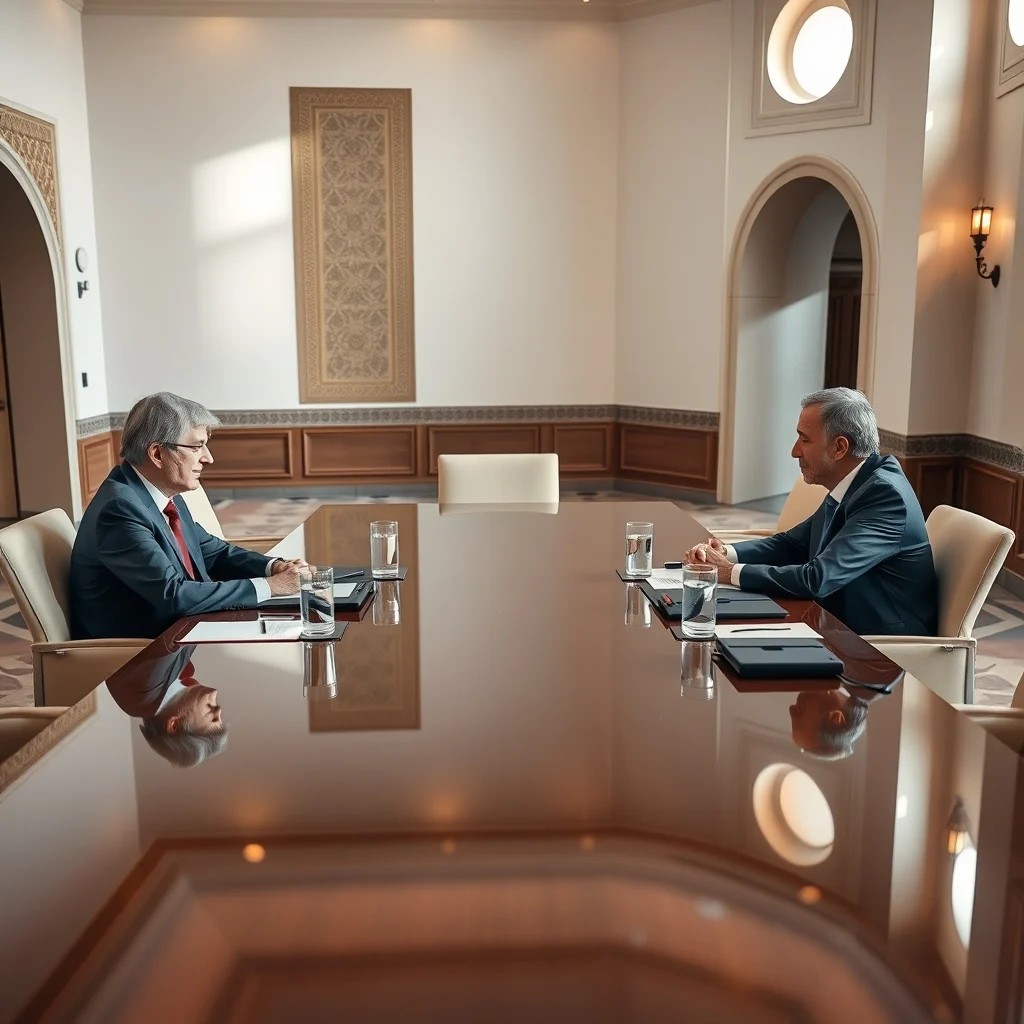
Rabat, Morocco – Germany officially reaffirmed its support for Morocco’s sovereignty over the Western Sahara region, endorsing an autonomy plan under Moroccan rule as the primary basis for resolving the long-standing dispute. This significant diplomatic shift was formalized during the second session of the Morocco-Germany Multidimensional Strategic Dialogue in Rabat on Thursday, signaling a new direction in bilateral relations and international policy concerning the territory.
Strategic Dialogue Solidifies Position
The meeting, which concluded with a joint declaration, saw Moroccan Foreign Minister Nasser Bourita and his German counterpart, Johann Wadephul, outline key areas of cooperation and agreement. Germany’s explicit backing of autonomy under Moroccan sovereignty is a pivotal development in the complex geopolitical landscape of the Western Sahara.
The declaration specifically welcomed United Nations Security Council Resolution 2797, adopted on October 31, 2025. This resolution highlights that “genuine autonomy under Moroccan sovereignty could represent the most feasible solution” to the regional conflict.
Morocco’s Autonomy Initiative Central
Berlin underscored the centrality of Morocco’s Autonomy Initiative, describing it as “a serious and credible basis for negotiations.” This position indicates Germany’s belief that the Moroccan proposal offers a viable path towards a political settlement that is just, lasting, and mutually acceptable.
Germany also reiterated its support for the efforts of the United Nations Secretary-General and his Personal Envoy. Their role is crucial in facilitating negotiations, which Germany now clearly aligns with the Moroccan autonomy plan.
The joint statement further welcomed Morocco’s willingness to elaborate on the practical implementation of autonomy under its sovereignty. This suggests an openness from Germany to engage further on the specifics of the Moroccan proposal.
Diplomatic and Economic Implications
Crucially, Germany committed to “act in accordance with this stance on the diplomatic and economic fronts.” This commitment implies that Germany’s future policies and actions, both at international forums and in its economic dealings with Morocco, will reflect this newly affirmed position on the Western Sahara.
This alignment could influence other nations and international bodies in their approach to the dispute. Germany’s economic engagement with Morocco, particularly in areas related to the disputed territory, may also see adjustments in line with this policy shift.
Broader Context of the Dispute
The Western Sahara dispute involves Morocco and the Polisario Front, an independence movement supported by Algeria. Morocco annexed the territory in 1975 after Spain withdrew. The Polisario Front seeks full independence for the region.
For decades, the UN has sought a resolution, with various proposals put forward. The autonomy plan presented by Morocco in 2007 offers self-governance for the region under Moroccan sovereignty. The Polisario Front has historically rejected this plan, advocating for a referendum on self-determination.
Germany’s previous stance had been more neutral, emphasizing support for UN-led processes without explicitly endorsing a specific solution. This recent declaration marks a significant departure from that position.
Expert and Data Perspectives
“This is a clear signal that key European powers are increasingly recognizing the pragmatic nature of Morocco’s autonomy initiative,” stated Dr. Anya Sharma, a geopolitical analyst specializing in North African affairs. “The German endorsement, given its economic and diplomatic weight, could encourage further international acceptance and potentially break the diplomatic deadlock.”
Data from the German Federal Foreign Office indicates a growing focus on stability in the Maghreb region as a key foreign policy objective. This may have contributed to Berlin’s decision to align more closely with Morocco’s proposed solution, viewing it as a stabilizing factor.
What to Watch Next
The implications of Germany’s endorsement are far-reaching. Observers will be watching closely to see if other European nations follow suit and how this influences ongoing UN-led negotiations. The economic dimension, particularly regarding investments and trade in the region, will also be a key area to monitor. Furthermore, the reaction from Algeria and the Polisario Front will be critical in shaping the future trajectory of the dispute.










Leave a Reply