
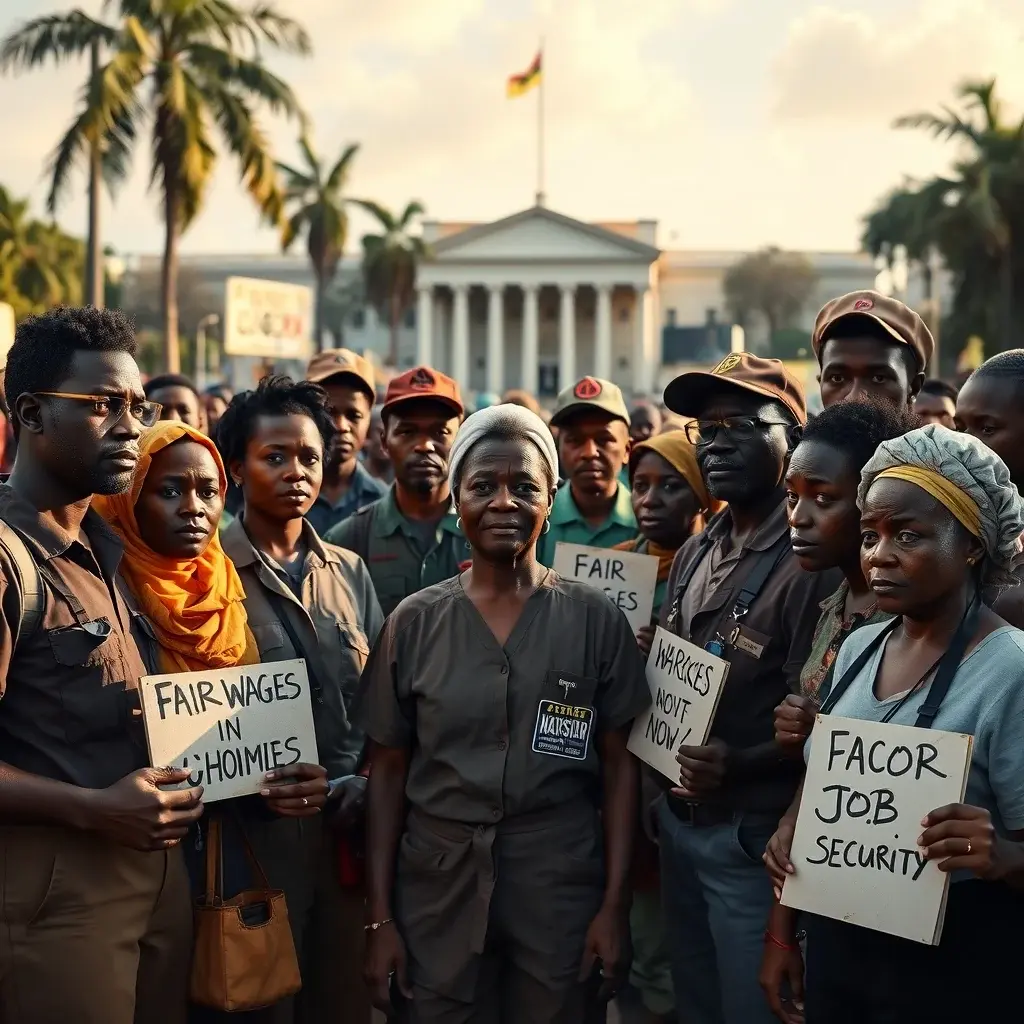
Accra, Ghana – On International Workers’ Day, the Minority caucus on Parliament’s Employment, Labour Relations and Pensions Committee issued a stark warning: escalating economic hardship is pushing Ghanaian workers to their limits, severely impacting national morale and threatening the country’s economic stability. The caucus highlighted the critical role of the workforce in national development while criticizing the current administration for failing to adequately support its laborers.
A Day for Reflection, Not Just Celebration
The statement, signed by Afigya Sekyere East MP and Ranking Member Mavis Nkansah-Boadu, emphasized that International Workers’ Day should serve as a crucial moment for national reflection on the resilience, dedication, and sacrifices of Ghanaian workers. This year’s observance comes at a time when many are struggling with the increasing cost of living and job insecurity.
“From the tireless efforts of our farmers who ensure food security, to the ingenuity of our industrial workers, the selfless service of our health professionals, the commitment of our teachers, the vigilance of our security agencies, and the enterprise of traders and artisans, these contributions, among others, remain indispensable to national development,” the statement read. It underscored that the strength of the economy, community stability, and future prospects are fundamentally tied to the daily efforts of the workforce.
Mounting Pressures Across Key Sectors
Despite the acknowledged importance of workers, the Minority caucus detailed a troubling landscape of deteriorating conditions. They pointed to significant pressures impacting vital sectors of the economy, suggesting a systemic failure to support the labor force.
Cocoa farmers, a cornerstone of Ghana’s export economy, are reportedly grappling with “declining and uncompetitive producer prices.” This situation is eroding their incomes and jeopardizing livelihoods in numerous cocoa-growing communities, raising concerns about the future sustainability of this critical industry.
Job losses and pervasive insecurity have also become widespread concerns. The caucus noted “growing concerns about mass dismissal of workers and job insecurity across several sectors,” leaving many families without stable income and intensifying economic uncertainty for households nationwide.
Frontline Workers Facing Delays and Disrespect
Even those in essential services are not exempt from hardship. Teachers, tasked with educating the nation’s future generations, have reportedly endured “prolonged delays in salary payments and postings.” Similarly, health professionals, who serve on the front lines of healthcare, have been compelled to resort to protests merely to claim “what is rightfully due to them,” indicating a breakdown in administrative and financial support systems.
Morale Erosion and Calls for Urgent Action
The Minority caucus warned that the consequences of these conditions extend far beyond immediate financial distress. “These conditions are not only unjust; they undermine morale, productivity, and the very fabric of national development,” the statement declared.
The caucus issued an urgent call for government intervention, stating, “It is imperative that government charts a just and equitable course, one that protects jobs, ensures fair and competitive remuneration, addresses wage arrears, and restores confidence across all sectors of the economy.” They specifically condemned “the continued unfair treatment of Ghanaian workers and calls for its immediate cessation.”
The statement concluded with a message of solidarity, urging workers, unions, and stakeholders to remain united in defending “the rights, dignity, and welfare of the labour force.” It reaffirmed the value of every worker’s contribution: “To every worker across the country, your efforts do not go unnoticed. Your sacrifices are the backbone of our nation.”
Looking Ahead: What to Watch
The upcoming months will be critical in observing whether the government heeds these warnings and implements concrete policies to alleviate worker hardship. Attention will be focused on measures to stabilize producer prices for cocoa farmers, address job security concerns, and ensure timely payments and fair treatment for teachers and health workers. The effectiveness of any proposed solutions will be a key indicator of the nation’s commitment to its workforce and its long-term economic health.










Leave a Reply