
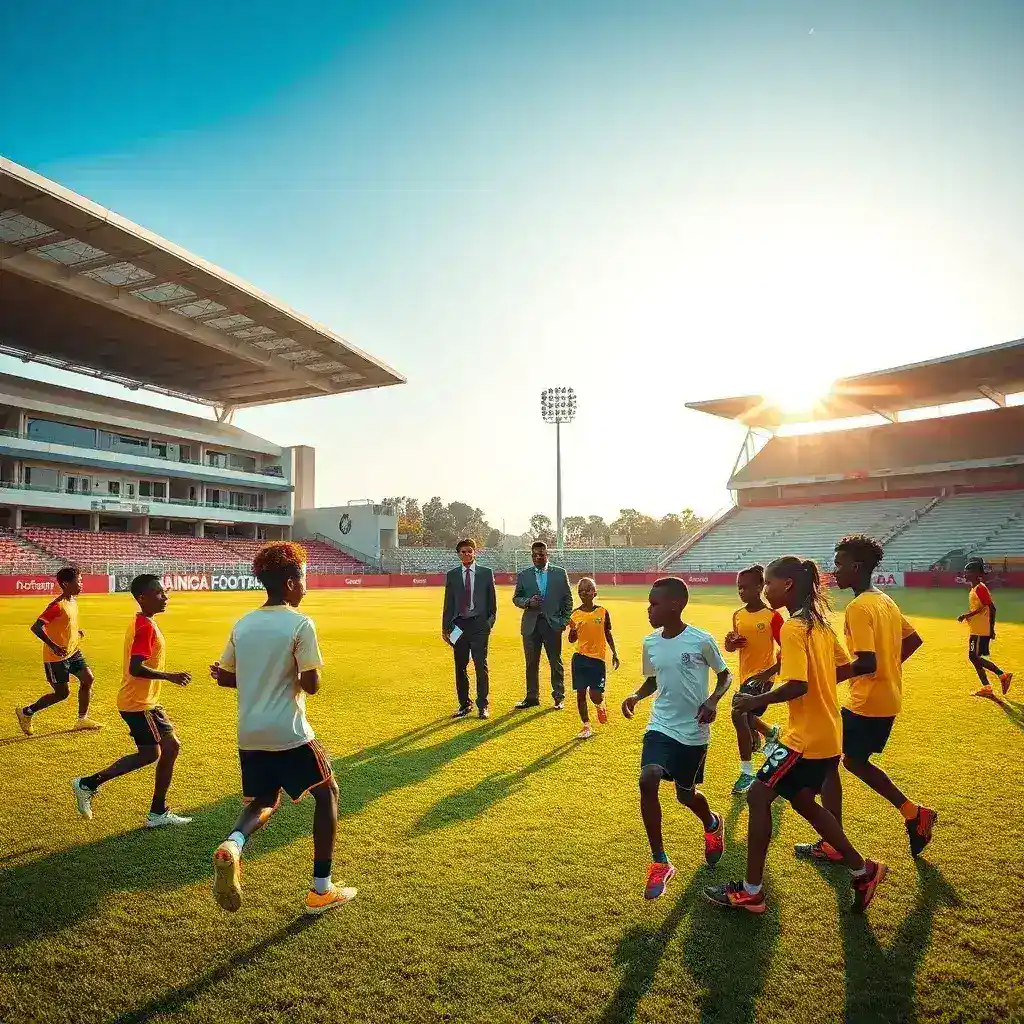
Ghana Football Association (GFA) President Kurt Okraku has overseen a notable increase in the nation hosting youth football tournaments, a trend that analysts suggest is a deliberate strategy to develop infrastructure and elevate Ghana’s standing in continental football, even as the senior national team, the Black Stars, faces persistent performance issues.
The GFA, under Okraku’s leadership since October 2019, has consistently bid for and secured hosting rights for various youth competitions, including WAFU Zone B U-17 and U-20 Girls championships, culminating in the recent announcement that Ghana will host the CAF U-20 Africa Cup of Nations in 2027. This marks the first time Ghana will host this prestigious youth tournament in 27 years.
This consistent hosting of youth tournaments is seen by many as a strategic pivot, a less visible but calculated approach to football development. While these events often receive limited media attention and generate modest commercial returns, they serve a crucial purpose in demanding and improving national standards in infrastructure, logistics, and administration. CAF’s requirements for hosting, even at the youth level, necessitate minimum benchmarks for training pitches, match venues, accommodation, medical facilities, and media infrastructure.
By repeatedly bringing these tournaments to Ghana, the FA has implicitly created pressure points on facility owners, local authorities, and the government. This obligation to meet international expectations can act as a catalyst for much-needed infrastructure upgrades, especially in a system where direct state-led investment can be slow. This strategy mirrors the development path of football powerhouses like Morocco, which has consistently invested in infrastructure by hosting competitions, transforming itself into a premier football hub.
The pattern of hosting is evident: WAFU Zone B U-17 Championship (Cape Coast, June 2022), WAFU B U-20 Girls Championship (Kumasi, June 2023), WAFU Zone B U-17 Championship (Legon, May 2024), WAFU B Girls Championship (Ghanaman Soccer Centre of Excellence, December 2024), CAF African Schools Football Championship (Legon, April 2025), and the upcoming CAF U-20 Africa Cup of Nations (2027).
While the strategic intent behind hosting youth tournaments is acknowledged, the impact on Ghana’s overall football infrastructure remains uneven. Many facilities are still in deplorable condition, with weak maintenance cultures and inconsistent investment. This highlights the limitations of a strategy that, without sustained state backing, risks stalling. The government’s role as an active partner is crucial to secure the legacy of these hosting opportunities, ensuring Ghana evolves into a football destination rather than just a host nation.
Despite the struggles of the senior national team, including a revolving door of coaches, declining FIFA rankings, and other administrative challenges, Okraku’s tenure has seen an expansion and increased visibility for youth and women’s football. Furthermore, the GFA has successfully accessed a significant portion of FIFA’s funding, accessing $16 million out of $19 million over the last decade, indicating a level of financial management and tactical engagement with the global football body.
The true measure of football leadership extends beyond the immediate performance of the senior national team. Long-term gains are built through structures, pitches, academies, and robust systems. If Ghana effectively leverages its youth hosting strategy, the potential for profound, lasting benefits is substantial. However, without continued commitment and alignment between the FA and the government, these tournaments risk becoming fleeting events devoid of a lasting legacy.










Leave a Reply