
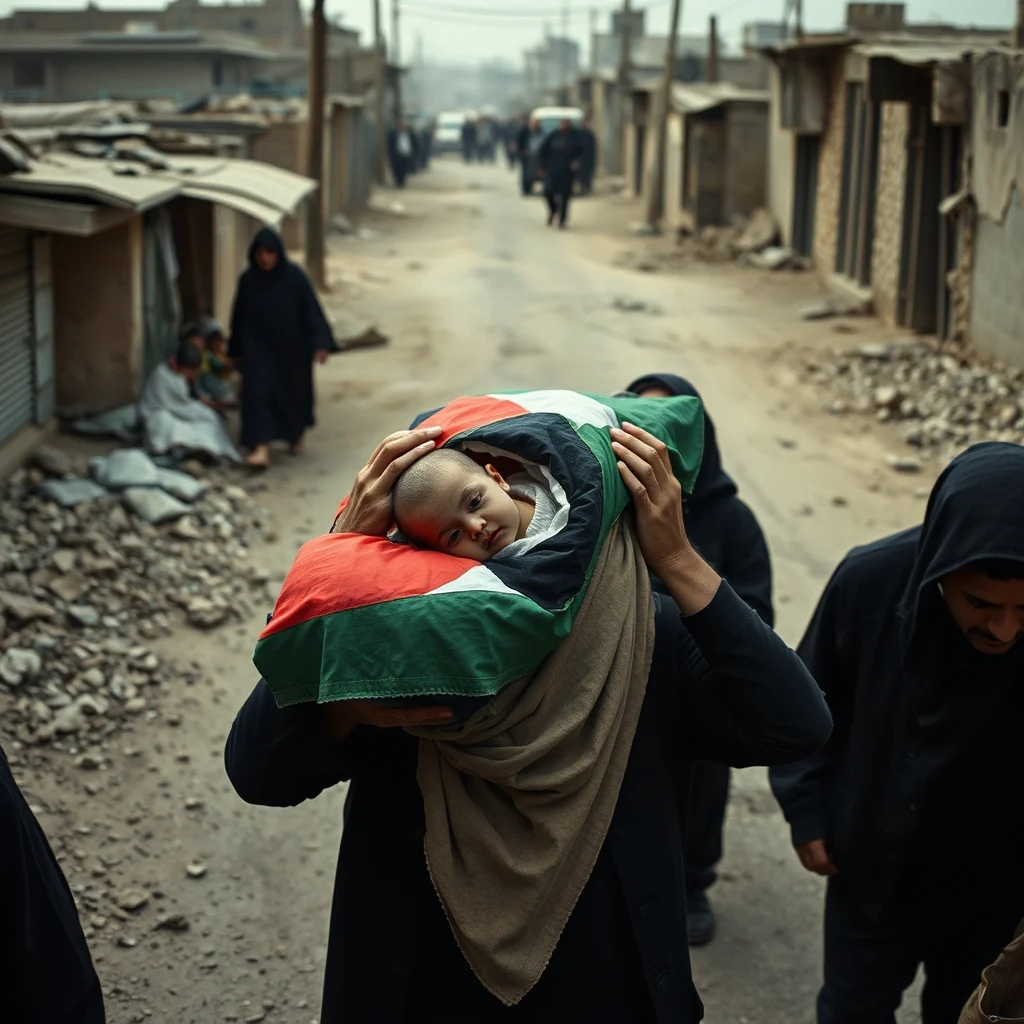
HEBRON, OCCUPIED WEST BANK – A seven-month-old Palestinian baby, Sam Fahd Abu Haikal, was laid to rest in Hebron on Saturday, the day after he was fatally wounded by a bullet fired by an Israeli soldier. The incident occurred Friday evening in the Tel Rumeida area of Hebron while the infant was in a car with his family.
The Israeli military stated that soldiers fired a shot after they “perceived a threat” from the vehicle. However, the family asserts they had stopped their car and complied with soldiers’ orders, posing no danger. The Israel Defense Forces (IDF) has since acknowledged the family were “uninvolved civilians” and expressed “deep sorrow” over the tragic event, a sentiment dismissed by the baby’s father.
Family Account Contradicts Military Narrative
Fahd Abu Haikal, the baby’s father, recounted that he was driving his family home from Bethlehem when they approached an Israeli checkpoint near their residence. As they spotted Israeli soldiers approaching from a side road, Fahd brought the vehicle to a halt and raised his hands.
According to both Fahd and the baby’s grandmother, Firyal, who was also in the car, gunshots followed immediately. “The bullets struck the car,” Fahd stated, describing how a single shot penetrated the windshield, grazed his arm, and then struck his son in the head and his wife in the face.
Sam died from his wounds in the hospital, while his mother is still receiving medical treatment. Traces of blood were visible on the road at the site of the shooting, according to local residents who spoke to journalists.
One unnamed local resident reported hearing only two shots and observed approximately four soldiers at the scene. This contrasts with the military’s statement of a single shot fired in response to a perceived acceleration of the vehicle towards the soldiers.
IDF Acknowledges Civilian Status, Opens Review
In a statement following the incident, the IDF acknowledged that the family were “uninvolved civilians.” The military also stated that the incident is currently under review. Despite the expression of regret from the IDF, Fahd Abu Haikal expressed his disbelief, stating, “When more than one bullet is fired, when there’s no warning shot and no warning at all, it can’t be a mistake!”
Tel Rumeida: A Persistent Flashpoint
The Tel Rumeida area of Hebron has long been a volatile zone, characterized by Israeli settlers living amidst the Palestinian population, with a significant Israeli military presence ostensibly for settler protection.
The location of Sam Abu Haikal’s family home, situated just beyond an Israeli checkpoint, underscores the daily realities and inherent tensions in such areas. The presence of Palestinian children playing nearby served as a poignant counterpoint to the underlying potential for violence.
Broader Context of Escalating Violence
This tragic incident occurs against a backdrop of a severe escalation in deadly confrontations across the occupied West Bank since the Hamas-led attacks in southern Israel on October 7, 2023. Palestinian health ministry figures indicate that over 1,000 Palestinians, including militants and civilians, have been killed in the West Bank since that date.
During the same period, at least 44 Israelis, comprising both civilians and soldiers, have died in Palestinian attacks or during Israeli military operations. The initial Hamas attacks resulted in approximately 1,200 deaths in Israel and the abduction of 251 individuals into Gaza. Israel’s subsequent retaliatory operation in the Gaza Strip has led to over 70,600 deaths, according to the Hamas-run health ministry.
Implications and Future Watch
The death of baby Sam Abu Haikal highlights the devastating human cost of the ongoing conflict and the critical importance of accountability for actions taken by security forces. The differing accounts of the incident underscore the need for thorough and transparent investigations.
As the review by the IDF continues, international attention will likely focus on the measures implemented to prevent such tragedies in the future and the broader implications for civilian safety in volatile areas like Tel Rumeida. The incident also raises questions about rules of engagement and the potential for unintended civilian casualties in densely populated zones with heightened security measures.





Leave a Reply