
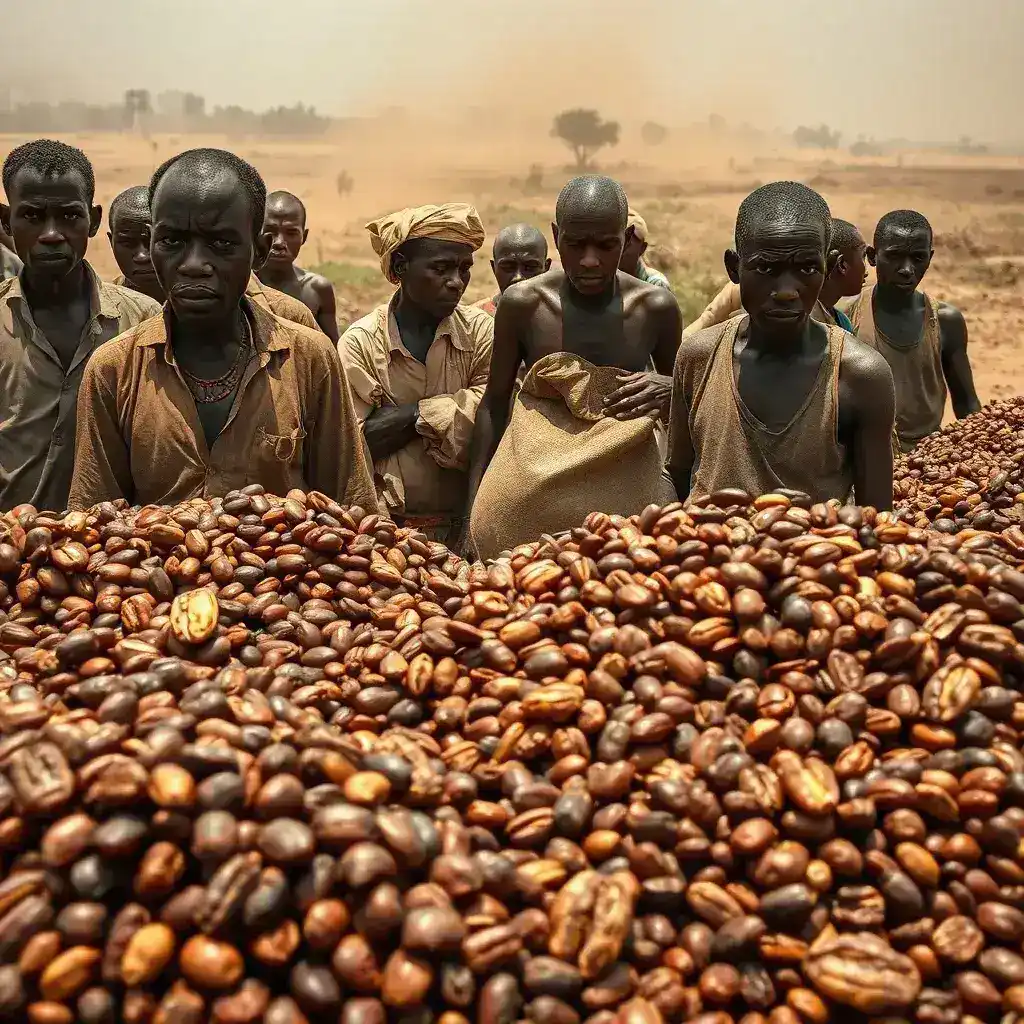
Ivory Coast’s Coffee and Cocoa Council (CCC) is dispatching officials to the center-east region to address escalating farmer protests over unsold cocoa stocks that are reportedly rotting. The demonstrations, which intensified last week, stem from farmers not receiving payment for beans sold during the main crop season, a situation that threatens to impact the upcoming harvest. A source close to the council confirmed the planned intervention in M’Batto, a town where police used tear gas on protesting farmers blocking roads last week.
Context of the Cocoa Crisis
The current unrest is rooted in a sharp decline in global cocoa prices during November and December. This price drop caused local prices, which are set by the CCC twice a year, to fall below global market rates. Consequently, unsold cocoa beans began to accumulate in Ivory Coast, the world’s largest cocoa producer.
While the government initiated a program to collect these surplus beans, many farmers and cooperatives report significant delays in receiving payment for their main-crop cocoa, harvested between October and March. The CCC and the agriculture ministry have not yet issued an official statement regarding the situation.
Farmers Face Financial Hardship and Distrust
In the center-western region of Daloa, a cooperative representing over 300 farmers still holds approximately 150 metric tons of unsold beans. Payment delays have eroded farmers’ trust in their cooperatives, leading to discouragement and financial strain.
Albert Konan, a farmer and cooperative manager in Daloa, highlighted the severe consequences. “This situation will affect the next (main crop) harvest because growers were counting on a lot of money to maintain their plantations,” he stated. Some farmers have fallen ill and cannot afford medical treatment due to the lack of funds.
Resignation and Undervalued Sales
In other regions like Soubre and Duekoue, farmers have resorted to selling their main-crop cocoa at the lower mid-crop price of 1,300 CFA francs ($2.34) per kilogram. This is a significant loss compared to the official main crop price of 2,800 CFA francs per kilogram.
Salif Kone, a farmer near Duekoue, explained the difficult choice: “We can’t get (the main crop price of) 2,800 francs per kilogram. Instead, the beans from the main crop are going bad, so I sold them for 1,300 francs per kilogram.” This indicates a widespread issue of cocoa spoiling before farmers can secure payment or a fair price.
Advocacy Groups Acknowledge Distress
The Ivorian Platform for Sustainable Cocoa, an organization advocating for farmer rights and cocoa governance reforms, confirmed awareness of the unsold stocks and payment issues. Pauline Zei, the platform’s manager, commented, “The government has made efforts to reduce (unsold) inventories. Despite these efforts, some cocoa has been purchased, but the farmers have not received payment. We understand their distress.”
The platform could not provide an estimate of the total volume of unsold cocoa.
Market Impact and Future Concerns
A European-based cocoa trader noted that the current situation has not yet impacted global supplies or prices, as the issues appear localized. However, there are concerns that if the problem isn’t resolved, it could affect the next season’s harvest as farmers might choose to withhold their cocoa.
Looking Ahead
The CCC’s planned intervention is a critical step towards de-escalating tensions and addressing the immediate financial needs of the farmers. The success of this mission, including swift and equitable payment processing, will be crucial in restoring farmer confidence and ensuring the stability of future cocoa production in Ivory Coast. Observers will be watching closely to see if these measures can prevent further deterioration of the situation and safeguard the upcoming harvest.





Leave a Reply