
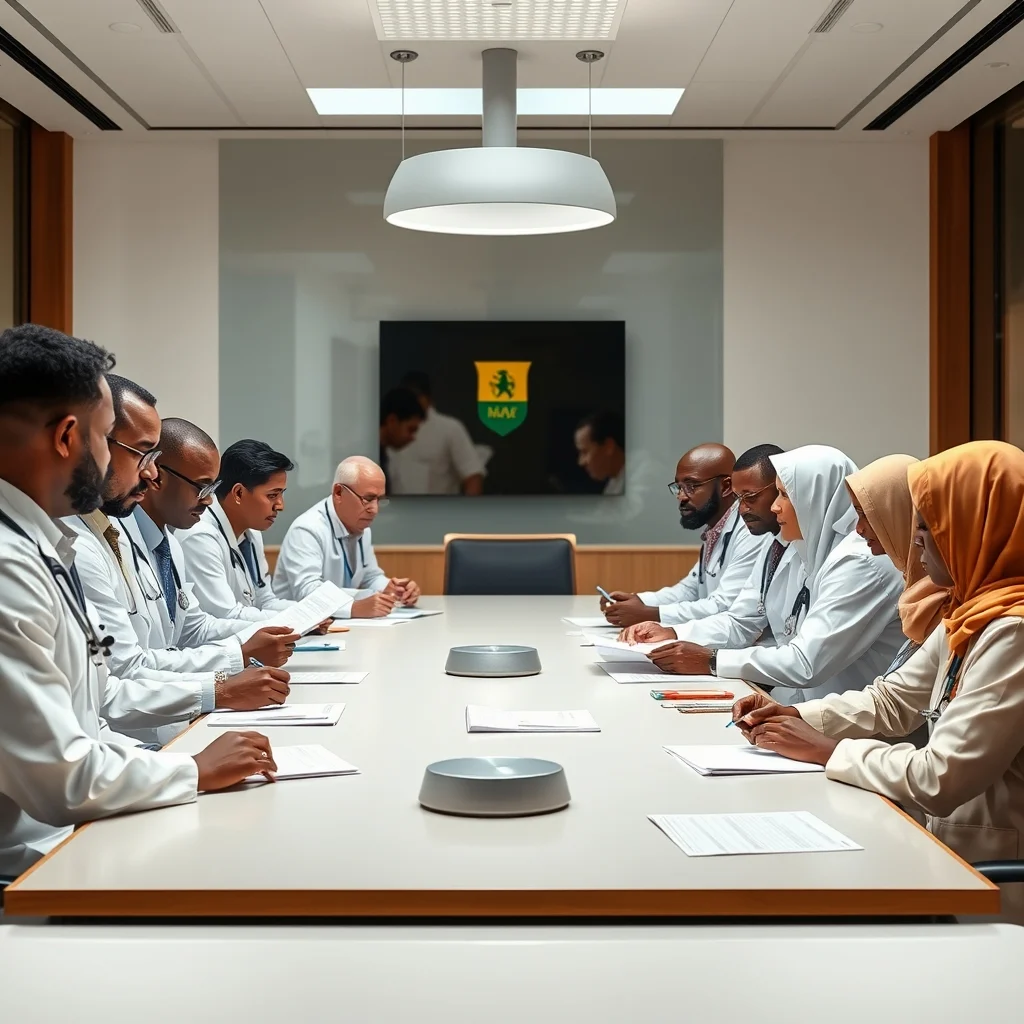
The M-CARE project, a significant five-year initiative aimed at revolutionizing healthcare for individuals with multiple chronic conditions and mental health challenges, held its inaugural Steering Committee meeting in Ghana recently. The meeting, hosted at the Ghana Ministry of Health, brought together key stakeholders to strategically guide the project’s implementation across Ghana, Kenya, and Uganda, focusing on integrating patient-centered care at the primary health level.
Context: Addressing a Growing Healthcare Gap
The M-CARE project addresses a critical gap in healthcare systems across Sub-Saharan Africa, where individuals often face fragmented care for multiple, interconnected health issues. Traditionally, healthcare has been delivered in a disease-specific manner, leaving those with co-occurring chronic diseases and mental health conditions underserved.
This initiative is funded by the European Union Horizon and involves a consortium of international and local partners. These include Amsterdam UMC, the African Population and Health Research Center (APHRC), the University of Ghana, Lira University, the University of Copenhagen, the London School of Economics and Political Science, and Vrije Universiteit Amsterdam.
M-CARE adapts World Health Organization (WHO) guidelines, specifically the Package of Essential NCD Interventions (PEN) and the Mental Health Gap Action Program (mhGAP), to empower frontline health workers in low-resource settings. The ultimate goal is to shift from a fragmented, disease-specific approach to an integrated, person-centered model of care.
Steering Committee Convenes for Strategic Oversight
The first Steering Committee meeting in Ghana served as a crucial platform for governance and strategic direction. Attendees included representatives from the Ministry of Health, academic institutions, research bodies, civil society organizations (CSOs), and the implementing partners.
The committee members were provided with a detailed overview of the M-CARE Project, including its objectives, work packages, progress to date, and plans for 2026. They shared insights into their roles and emphasized the project’s importance in addressing the complex needs of patients with multiple chronic and mental health conditions.
Notable members of the Steering Committee include Dr. Hafez Adam Taher, Director of Technical Coordination at the Ministry of Health, who chaired the meeting, and Dr. Amissah Caroline, Acting Deputy Director General of the Ghana Health Service (GHS), who served as Co-Chairperson. Professors Charles Agyemang and Alfred Edwin Yawson, along with Professor Ama de-Graft Aikins, brought academic and research expertise to the table. The committee also included leaders from the Mental Health Authority, NCD programs, and patient advocacy groups.
Strengthening Governance and Planning
During deliberations, the committee reviewed and proposed revisions to the Governance Committee’s Terms of Reference to enhance oversight, coordination, and accountability. This proactive step aims to ensure the project’s smooth and effective execution.
A significant outcome of the meeting was the agreement for the Steering Committee to convene four times annually—twice virtually and twice in person. This regular engagement will provide quarterly oversight and strategic direction, ensuring the project remains on track to meet its objectives.
Upcoming Webinar to Highlight Integrated Care Solutions
A key upcoming event discussed was the project’s first webinar, scheduled for May 28, 2026. Hosted by the M-CARE Consortium in collaboration with Amsterdam Public Health – Global Health, this webinar will bring together leading experts to discuss practical, scalable solutions for strengthening primary care for individuals with multiple chronic conditions in Africa.
The session will delve into the scale of the problem, the necessity of whole-person primary care, and the application of WHO PEN and mhGAP guidelines. It will also feature real-world insights from the M-CARE Project’s ongoing evaluation in Ghana, Kenya, and Uganda.
The webinar, chaired by Prof. Charles Agyemang, promises actionable strategies and a forward-looking discussion on improving care for millions across the region. Interested participants can register via a provided link, with more details available on the M-CARE project website.
Implications and Future Outlook
The establishment of the M-CARE Steering Committee and its commitment to regular oversight mark a critical step towards transforming healthcare delivery in Ghana and beyond. By focusing on integrated, patient-centered care at the primary level, the project has the potential to significantly improve health outcomes for vulnerable populations.
The upcoming webinar signifies the project’s active engagement with a broader audience, aiming to disseminate knowledge and foster collaboration. The success of M-CARE could serve as a scalable model for other low-resource settings grappling with the increasing burden of chronic diseases and mental health challenges. Key areas to watch include the effectiveness of the adapted WHO guidelines in real-world primary care settings and the project’s ability to foster sustainable integration of services.










Leave a Reply