
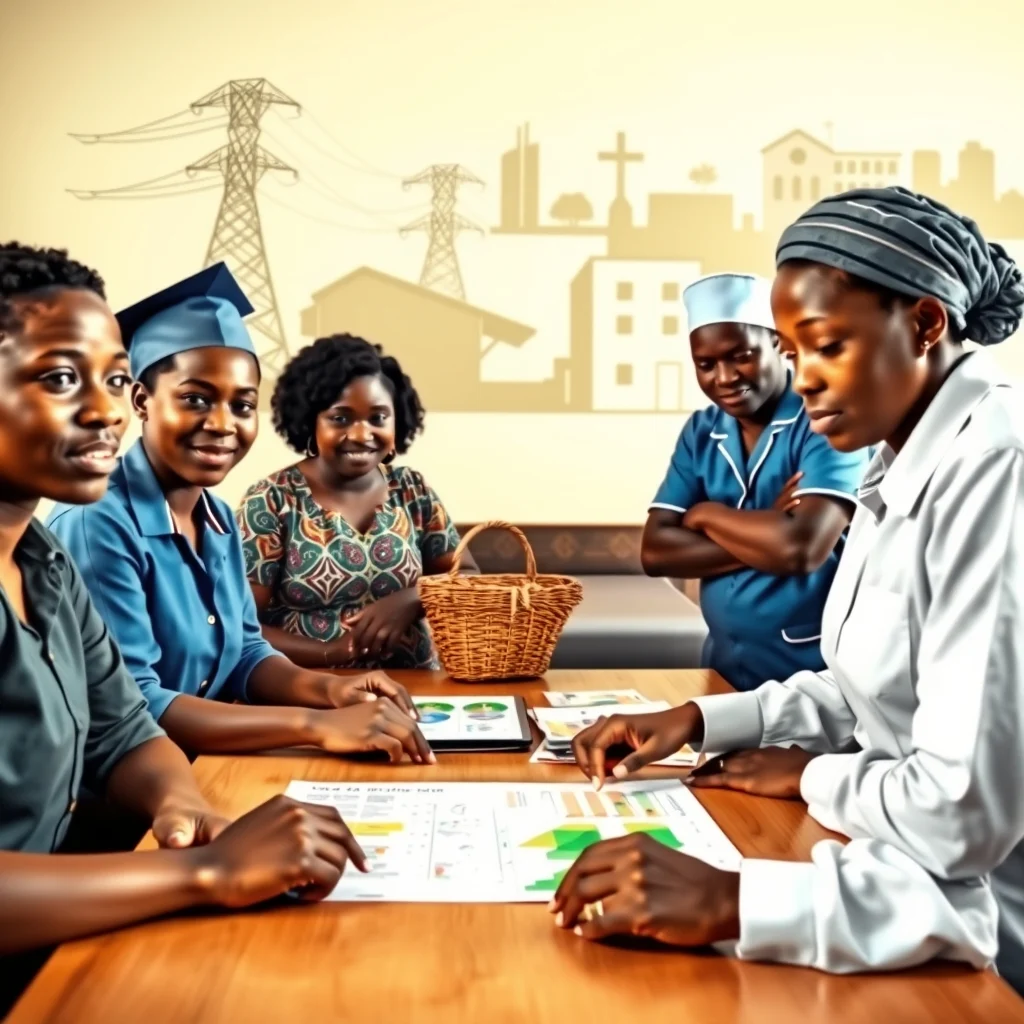
Accra, Ghana – In a strategic move to address the most pressing concerns of ordinary citizens, the New Patriotic Party (NPP) has established 23 sector policy committees. Launched recently in Accra, these committees aim to develop concrete solutions for key national issues including job creation, healthcare access, energy security, and education reform, directly responding to the anxieties that dominate Ghanaian public discourse.
Addressing Lived Realities
The formation of these committees signifies a deliberate effort by the NPP to align its policy-making with the daily struggles faced by a broad spectrum of Ghanaians. Sectors covered span from the concerns of market traders and nurses to young graduates, farmers, and small business owners, indicating a focus on grassroots issues rather than elite-driven agendas.
The Employment and Labour committee, for instance, is tasked with devising strategies for private sector job creation, expanding Technical and Vocational Education and Training (TVET), and bolstering youth entrepreneurship. This initiative directly targets the persistent unemployment crisis, which consistently ranks as the paramount concern for Ghanaian voters, according to various polls.
Healthcare and Energy Focus
In the health sector, a dedicated committee will scrutinize the implementation of Universal Health Coverage, assess primary healthcare infrastructure, ensure drug availability, and explore methods for retaining essential health workers. These issues gained significant public attention in 2025 due to widespread drug shortages reported in district hospitals.
Energy security presents a particularly sensitive mandate for the Energy Committee. Following years of intermittent power supply (load-shedding) under multiple administrations, public trust in energy promises remains low. The committee is expected to craft a comprehensive energy security roadmap that tackles supply deficits, distribution inefficiencies, and the transition to renewable energy sources, all while safeguarding industrial competitiveness.
Education and Broader Development
Education, a long-standing area of national debate, has its own committee dedicated to improving basic school quality, addressing the challenges in West African Senior School Certificate Examination (WASSCE) performance, expanding tertiary education, and urgently reforming the curriculum to emphasize Science, Technology, Engineering, and Mathematics (STEM) for the digital economy.
Beyond these core areas, the NPP’s policy framework extends to agriculture and food security, roads and infrastructure, digital transformation, gender and social protection, financial inclusion, trade and industry, and local governance. Collectively, these committees represent a comprehensive policy blueprint for Ghana’s developmental challenges.
Official Statements and Implementation Outlook
An NPP official emphasized the party’s approach, stating, “We are not guessing at what Ghanaians need. We are listening, we are researching, and we are building solutions.” This statement suggests a data-driven and responsive policy development process.
While the framework lays out a clear agenda, the ultimate success will hinge on effective implementation. The establishment of these committees, however, sends a clear signal that the NPP, under the leadership of Bawumia, is acknowledging and preparing to address the critical pain points affecting the nation’s populace.










Leave a Reply