
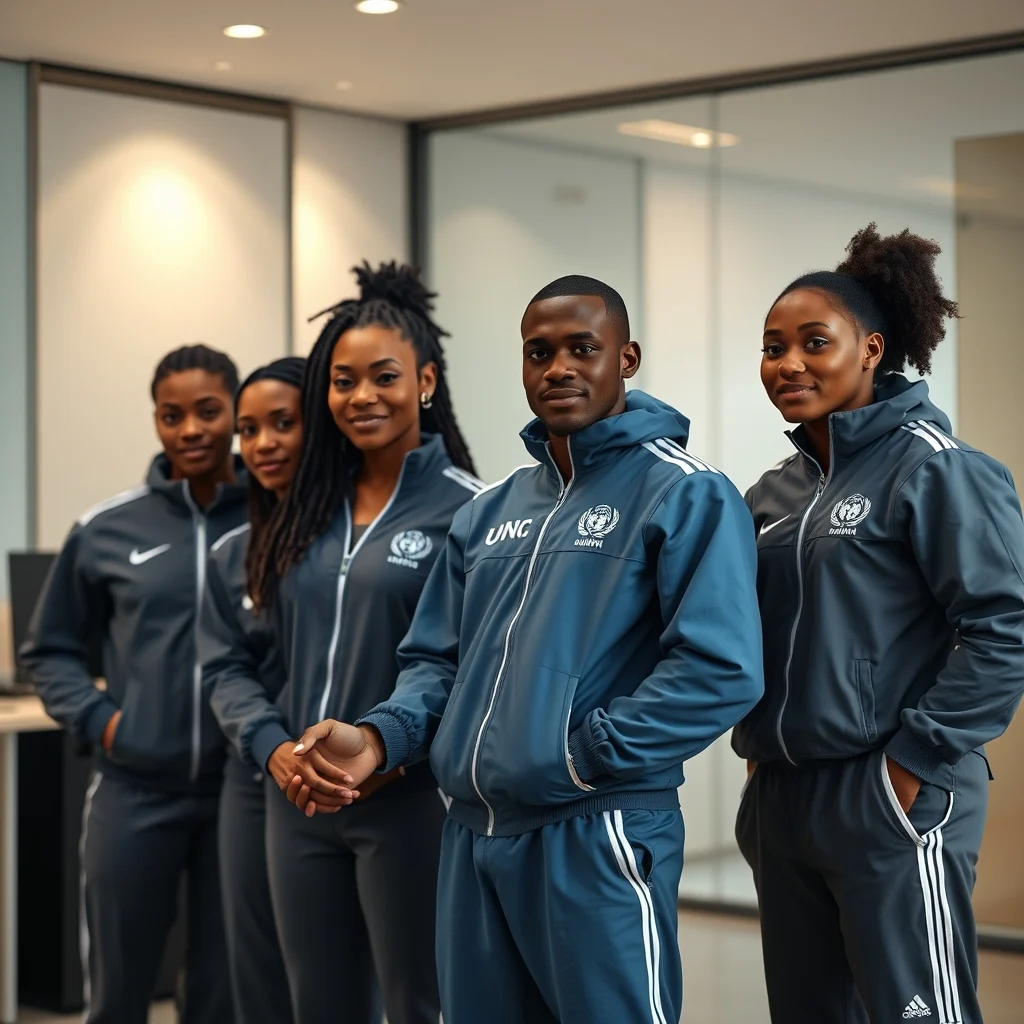
Five athletes representing the Athlete Refugee Team walked into the UNHCR national office in Accra, Ghana, on Thursday, midway through the African Senior Athletics Championships. These individuals, carrying the weight of their pasts and the ambition to overcome adversity, participated in the continental event, demonstrating that their refugee status does not define their potential.
Context: The Athlete Refugee Team’s Journey
The Athlete Refugee Team, established by the UNHCR, provides a platform for athletes who have been displaced by conflict and persecution. These athletes often come from challenging backgrounds, having fled war, endured difficult journeys, and spent years in refugee camps. The program aims to support their athletic development and offer them a chance to compete on a global stage, fostering hope and resilience.
Competition and Determination in Accra
The five athletes competing in Accra – Perina Lokure Nakang, Solomon Okeny, Abdifatah Aden Hassan, Dario Lokoro, and Kun Waar Liem – each have unique stories of survival and determination. Their journeys often began with fleeing conflict in their home countries, such as South Sudan, and navigating through refugee camps in places like Kenya. Despite these hardships, they now train under accomplished coaches and compete in major championships.
Perina Lokure Nakang, competing in the women’s 800 metres, expressed her commitment to continuous improvement. “Next time, people will organise for me another game, I’ll do my best, I’ll take medal or gold, I’ll try next year to put my effort,” she stated, reflecting a forward-looking mindset.
Abdifatah Aden Hassan, a 1500-metre runner who has been searching for his parents since fleeing Ethiopia in 2009, articulated his broader aspirations. “My hope is to become a world classic championship and Olympian. And also I want to motivate other refugees all over the world and inspire them,” he said.
Solomon Okeny, who competes in the 400 and 800 metres, found athletics in a refugee camp, chasing a prize of water and glucose. He described the track as a place of hope and growth. “When you step in the track, you participate with different people, different mindset, and you find yourself competing with a champion. It really gave me hope, and seeing myself growing, and doing my best,” Okeny shared.
Expanding the Reach of Refugee Athletics
While glory at the African Championships has been challenging to achieve for the team so far, the ambition of the program extends far beyond individual results. Lieutenant General Jackson Tuwei, President of Athletics Kenya and Vice President of World Athletics, who met with the athletes, emphasized the need for broader support.
“We want to urge other countries that host the refugees in their countries to also take up in this matter, so that it can then take care of all the refugees within the continent,” Tuwei urged, highlighting the program’s decade-long history and its current focus primarily on East African refugees.
A Message Beyond the Track
The visit to the UNHCR office underscored that the athletes’ participation in Accra carries a message larger than the competition itself. Tetteh Padi, head of the UNHCR national office in Ghana, praised their resilience. “The refugee athletes are an embodiment of the resilience of refugees. The fact that they’re like you and me, who have gone, but they have gone through unfortunate circumstances. But these athletes have proven that being a refugee should not be a barrier to realising your full potential,” Padi remarked.
Each race, each heat, and each personal best achieved by these athletes serves as a beacon of hope for others in refugee camps worldwide. They are actively demonstrating that challenging circumstances do not have to limit one’s aspirations.
Looking Ahead
The Athlete Refugee Team’s presence at the African Championships is a significant step in their ongoing journey. As the program seeks to expand its reach across the continent and beyond, the performances and stories of athletes like Nakang, Okeny, and Hassan will continue to inspire and motivate displaced individuals globally. The focus will be on how this momentum translates into increased opportunities and support for more refugee athletes in future international competitions.










Leave a Reply