
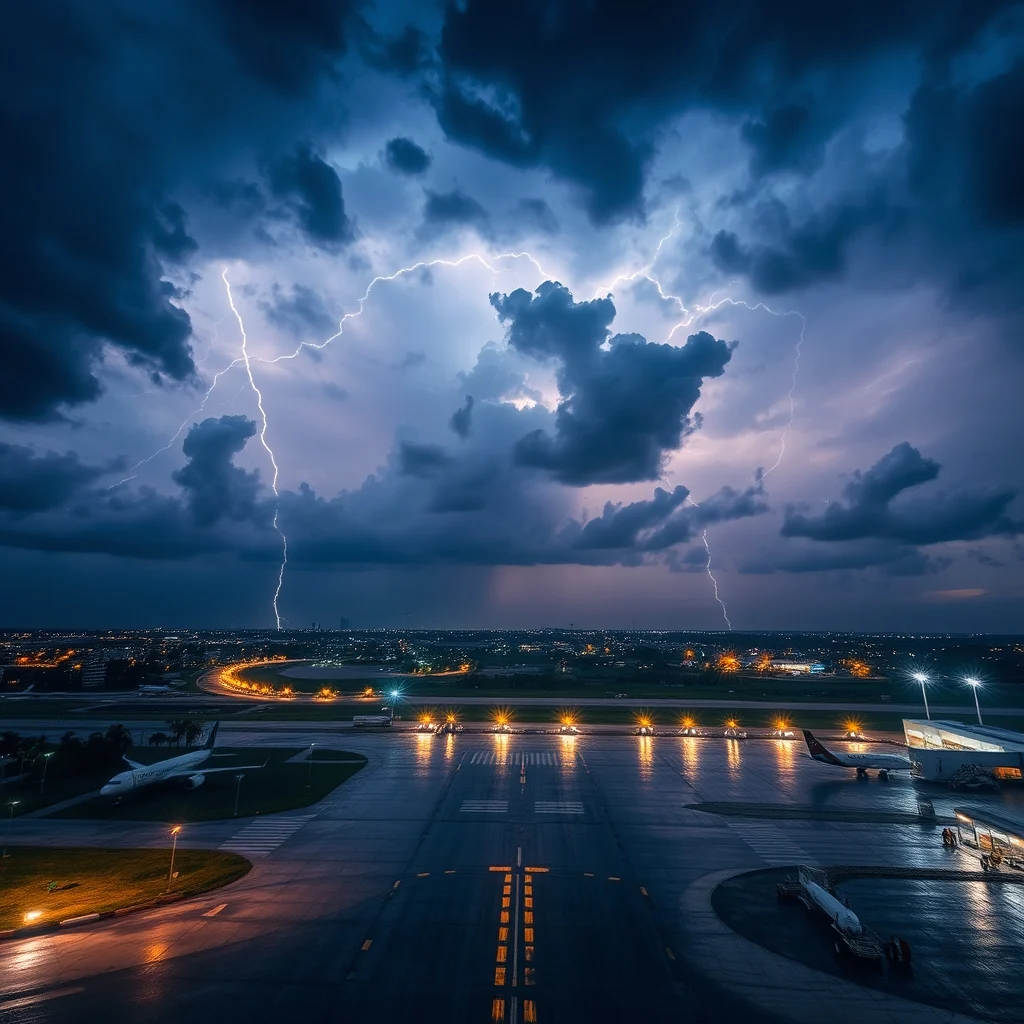
Heavy thunderstorms over Accra on Sunday, May 17, significantly disrupted flight operations at the Accra International Airport. The severe weather forced multiple inbound and outbound flights into holding patterns, causing delays and extended airborne circling as pilots navigated dangerously low visibility and unstable atmospheric conditions.
Airport Operations Grounded by Severe Weather
The meteorological conditions at the time indicated active thunderstorm activity directly over the capital. Winds were recorded at 310 degrees at 4 knots, with temperatures hovering around 26 degrees Celsius. This intense weather system drastically reduced visibility across the Accra airspace, directly impacting both landing and take-off procedures.
International inbound flights experienced the brunt of the disruption. Kenya Airways flight KQ511 and South African Airways flight SA52 were both placed in extended holding patterns. These aircraft circled over the Kpone Katamanso and Gulf of Guinea airspace as air traffic controllers prioritized safety by delaying landings.
Both flights eventually landed safely at Accra International Airport around 9:55 p.m. after prolonged periods of circling. The delay highlighted the challenges posed by the severe weather to air traffic management.
Domestic and Departing Flights Also Affected
The disruptions were not limited to international arrivals. British Airways flight BA2066, which was scheduled to depart Accra at 8:50 p.m., faced a delay of approximately 45 minutes. The aircraft eventually took off at 9:35 p.m. due to temporary slowdowns implemented in both ground and air operations to manage the weather.
Domestic carrier Africa World Airlines (AWA) flight AW125, traveling from Kumasi, also encountered difficulties. The aircraft was tracked approaching Accra and reached the Nsawam-Adoagyiri area before turning back towards Kumasi. It later returned to Accra, indicating a weather-related diversion as conditions over the airport deteriorated.
Ghanaian musician Kweku Smoke, who was aboard the AWA flight, confirmed the diversion via X (formerly Twitter) at 10:00 p.m. He posted, “Chale everybody turn woman for the AWA flight inside. We no fee land for Accra we come back Kumasi.” This provided a firsthand account of the passenger experience during the weather event.
Extended Holding Patterns for Other Carriers
Earlier in the day, Emirates flight EK788, en route from Abidjan to Accra, also experienced significant disruption. The aircraft was observed circling for an extended period between Ningo Prampram and Battor. This extended holding was a direct result of the thunderstorm activity over the capital.
Flight EK788, originally scheduled for a 4:43 p.m. landing, did not arrive until approximately 6:06 p.m. This resulted in a delay of over an hour for passengers, attributed to the necessary holding pattern due to the adverse weather.
Broader Impact of the Storm
Beyond the airport, the heavy rains, accompanied by lightning and strong convective activity, had a wider impact on Accra. Localized flooding was reported in several parts of the city. These conditions also created difficult driving conditions for residents navigating the capital during the storm.
Looking Ahead: Weather Preparedness and Aviation
The events of May 17 underscore the vulnerability of aviation operations to severe weather, particularly in regions prone to intense convective storms. As Accra continues to experience such weather patterns, the aviation sector will need to further enhance its strategies for managing disruptions. This includes optimizing air traffic control responses, improving real-time weather forecasting integration, and potentially investing in infrastructure that can better withstand extreme weather events. Passengers are advised to monitor flight status updates closely during periods of inclement weather. The industry will be watching how technological advancements and operational protocols evolve to mitigate the impact of increasingly unpredictable weather on air travel.










Leave a Reply