
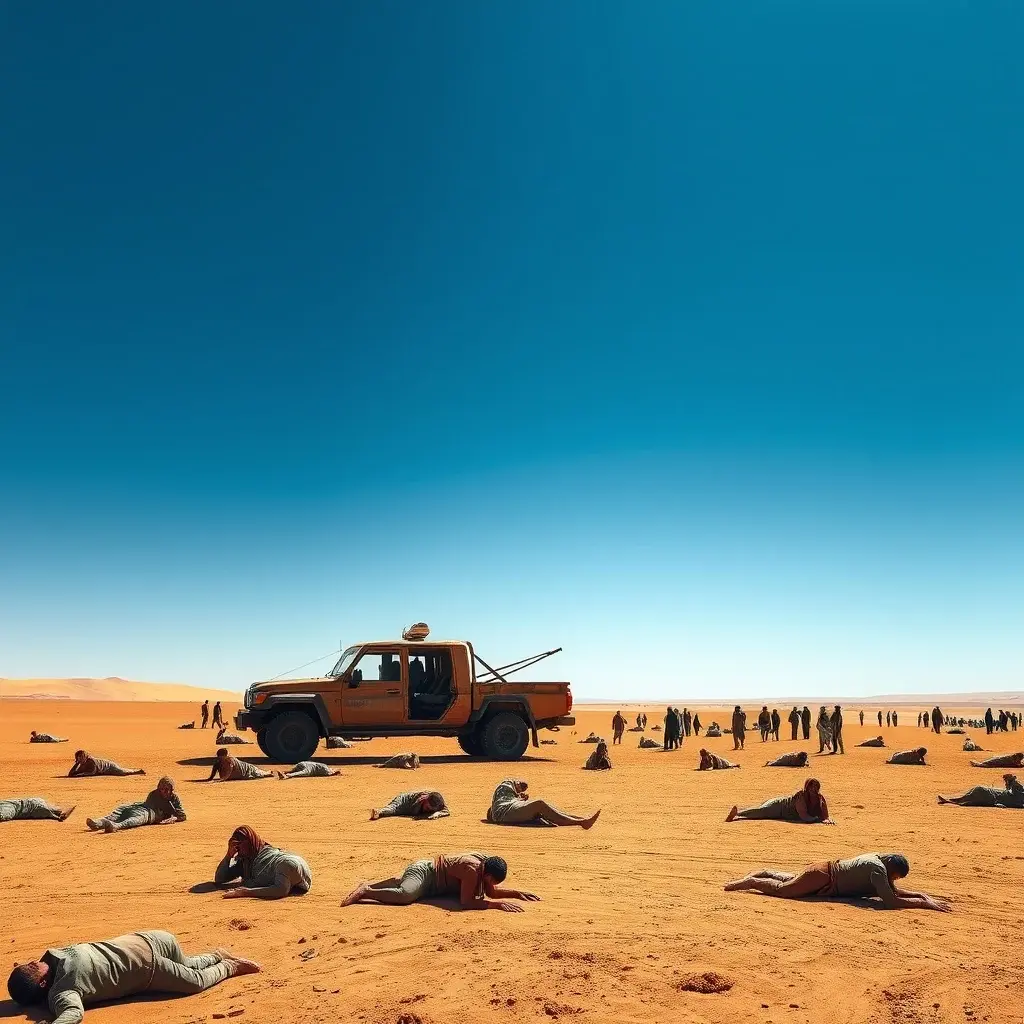
Nearly 50 people have died of thirst in a remote section of the Sahara Desert in northern Niger after the truck transporting them broke down, authorities confirmed. The tragedy occurred as the group was returning from Mali after attending celebrations for the Muslim festival of Eid al-Adha when their vehicle became stranded over 80 km west of Assamaka, a key border crossing between Niger and Algeria.
Context of a Perilous Journey
The Sahara Desert presents extreme environmental challenges, characterized by high temperatures and a scarcity of water sources, making survival exceptionally difficult for stranded travelers. This incident highlights the inherent dangers faced by individuals undertaking journeys through such hostile terrain.
The group had departed from the Malian town of Telhandek. Their intended route was deviated from, leading to their eventual breakdown. Attempts to repair the lorry over several days proved unsuccessful, leaving the passengers deprived of water and unable to continue their journey.
Tragic Discovery and Rescue Efforts
Rescue teams dispatched by local authorities discovered dozens of lifeless bodies near and under the immobile truck. The victims, all identified as Nigerien nationals, were subsequently buried in mass graves.
The severity of the situation was underscored when the same rescue team, en route back from the initial tragedy, encountered another broken-down lorry. This second vehicle was carrying over 60 individuals who had been stranded for three days due to a battery failure. They had set off from Harouba, a Malian town more than 300 km from the Niger border.
Nigerien troops were part of the rescue effort for the second group. They provided essential water supplies to the exhausted and distressed travelers and assisted in repairing the vehicle, enabling them to resume their journey safely.
Migration Routes and Vulnerability
The Niger desert serves as a critical transit corridor for migrants from across West Africa attempting to reach Europe. These journeys are fraught with risks, yet many continue to brave them in pursuit of better living conditions or economic opportunities.
The governor of Agadez, the nearest major city, emphasized that this tragedy exposes the vulnerability of young people involved in migratory and cross-border economic activities. These individuals are often compelled to traverse unstable regions to survive or improve their circumstances.
Expert and Local Perspectives
Chehuo Azizou, head of a local non-governmental organization, stated that such incidents are not unusual and that his organization has been actively raising awareness among drivers and travelers about the dangers of desert crossings. He noted that these cases are commonly observed on routes leading to Libya or Algeria.
Implications and Future Watch
This incident serves as a stark reminder of the ongoing humanitarian crisis along these migration routes and the critical need for improved safety measures and support for vulnerable travelers. The repeated occurrence of such events suggests that current awareness campaigns and infrastructure may be insufficient to mitigate the risks.
Moving forward, attention will likely focus on enhanced border security, potential international cooperation to address migration challenges, and the effectiveness of efforts to provide safer transit options or deter perilous journeys. The vulnerability of those seeking better lives will remain a central concern.








Leave a Reply