
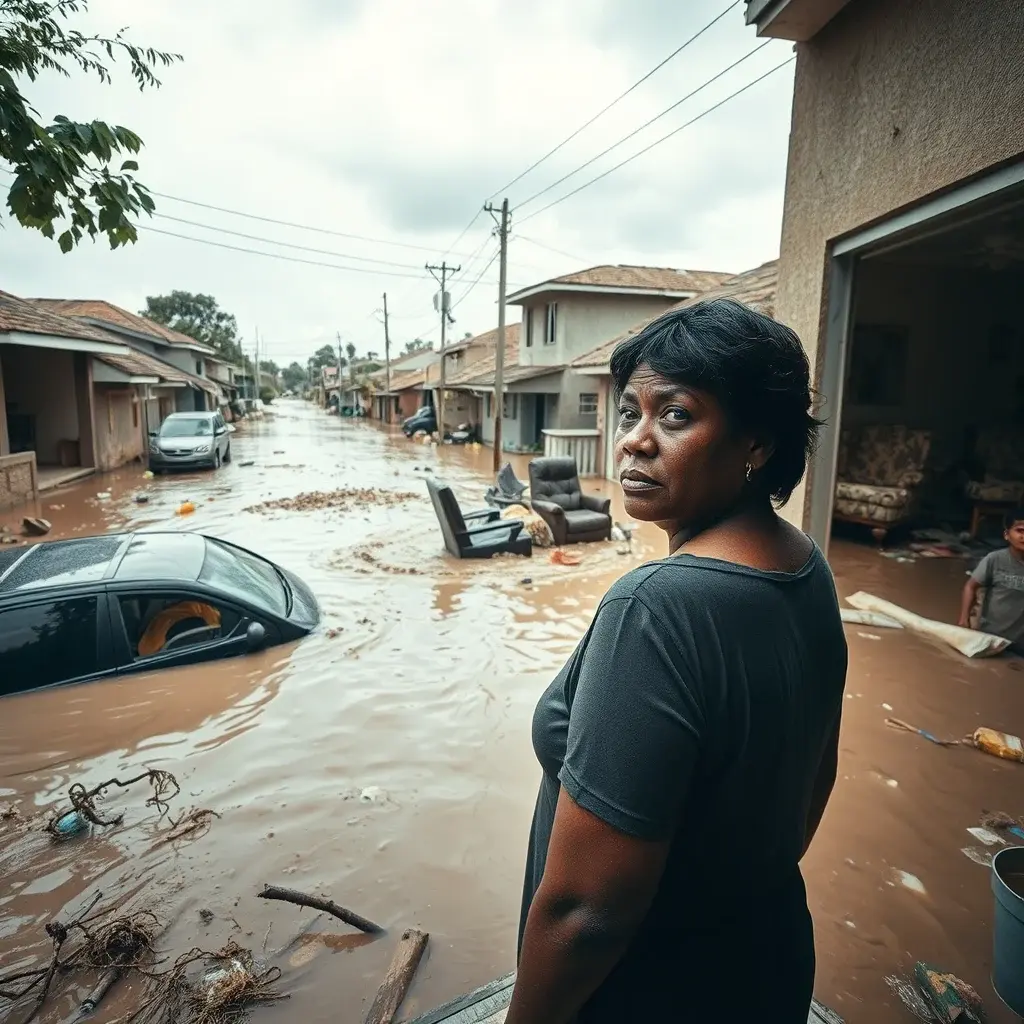
A routine afternoon rain in Old Ashongman, Accra, escalated into a devastating flood on Wednesday, June 3, leaving residents like florist Yvonne Mensah with immense material and emotional loss. By 9 pm, floodwaters had inundated homes, forcing families to seek refuge on elevated surfaces as years of possessions were destroyed.
The torrential downpour submerged the compound and home of Madam Mensah to chest height, trapping her, her husband, and their two children. They climbed onto kitchen cabinets to escape the rising waters, enduring nearly five hours of terror before being rescued by the National Disaster Management Organisation (NADMO) following emergency calls from neighbours.
The aftermath revealed a scene of widespread destruction. Madam Mensah’s home was left filled with thick mud, silt, and debris, symbolizing the abrupt end to years of hard work and accumulation of personal belongings. Essential household items, including sofas, beds, clothing, and all electronics such as televisions, laptops, fridges, and a deep freezer, were irrevocably damaged.
Among the most significant losses were crucial documents related to valuable properties entrusted to Madam Mensah by friends residing abroad. Her unregistered vehicle was also submerged and destroyed, compounding the financial and practical burdens faced by her family.
This incident underscores a recurring problem in Accra, where inadequate drainage systems and haphazard urban development exacerbate the impact of seasonal rains. Many communities, particularly those in low-lying areas or informal settlements, are highly vulnerable to flash floods. Previous flooding events in the city have resulted in similar destruction, loss of life, and significant economic disruption, yet comprehensive solutions remain elusive.
Data from the World Bank indicates that urban flooding in West Africa is a growing concern, driven by rapid urbanization, increased impermeable surfaces, and the strain on aging or insufficient infrastructure. In Accra, the problem is compounded by choked drainage systems, often blocked by solid waste, which prevents water from flowing freely.
The emotional toll on victims like Madam Mensah is profound, extending beyond the monetary value of lost possessions. These floods represent the erasure of cherished memories, the erosion of hard-won security, and the daunting challenge of rebuilding lives from scratch. The loss of irreplaceable documents further complicates recovery, potentially leading to long-term financial and legal repercussions.
For the residents of Old Ashongman and other flood-prone areas in Accra, the implications are stark. The immediate need is for disaster relief and support for affected families to begin the arduous process of recovery. In the longer term, this event highlights the critical necessity for substantial investment in urban planning, robust drainage infrastructure, and effective waste management systems.
The efficiency and effectiveness of NADMO’s response, while ultimately successful in rescuing Madam Mensah’s family, also bring into focus the need for proactive measures rather than solely reactive disaster management. Community engagement in maintaining drainage channels and adherence to building regulations are also vital components of a sustainable solution.
As Accra braces for more rainfall in the coming months, attention will likely turn to whether authorities will implement effective, long-term strategies to mitigate the impact of flooding. The rebuilding process for families like Madam Mensah’s will be a testament to their resilience, but the underlying vulnerability of the city’s infrastructure remains a pressing concern that demands immediate and sustained attention from policymakers and urban planners.






Leave a Reply