
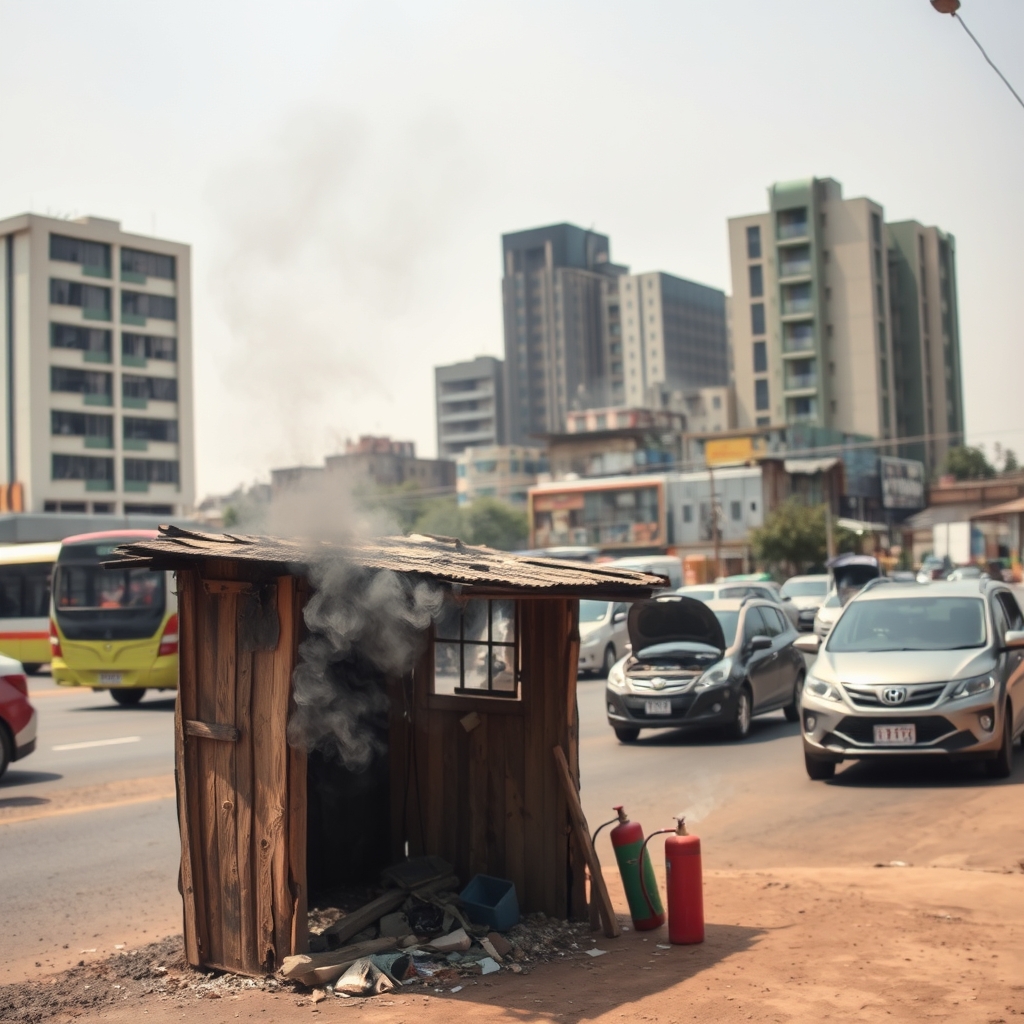
The Greater Accra Region has experienced a 24.8 per cent increase in domestic fire incidents during the first quarter of 2026, a rise primarily attributed by the Ghana National Fire Service (GNFS) to the prevalence of informal housing structures. Assistant Chief Fire Officer II Rashid Nisawu, the Regional Fire Officer, stated on Tuesday, April 28, that while the increase is not cause for widespread panic, it reflects the inclusion of fires originating from wooden structures, kiosks, containers, and slum dwellings in official statistics.
Context of Rising Fire Incidents
Officer Nisawu explained that the GNFS consistently records fires from all types of structures, including informal ones. The recent uptick in the domestic fire statistics is a direct consequence of these fires from less conventional housing being incorporated into the overall data. This suggests that while overall fire risk might not be drastically escalating, the nature of housing in certain areas contributes significantly to the reported numbers.
Analysis of the fire data indicates that a substantial number of domestic fire outbreaks originate in these informal settlements. Residents in these areas often rely on makeshift structures for their homes, which can be more susceptible to fire hazards due to materials used and proximity of structures.
Vehicle Fires See Significant Increase
In addition to domestic fires, the GNFS also reported a concerning surge in vehicular fires. A total of 27 cases were recorded in the first quarter of 2026, a notable increase from the 19 cases reported during the same period in the previous year. This represents a 42 percent rise in vehicle fires.
Officer Nisawu identified a critical contributing factor to this trend: a widespread lack of basic fire safety equipment in vehicles. Many car owners, he noted, do not carry fire extinguishers, leaving them ill-equipped to quickly address fires when they occur.
Fire Safety Initiatives and Recommendations
To combat the escalating number of vehicle fires, Officer Nisawu has initiated direct engagement with the public. He has personally visited major transport terminals, including VVIP and VIP stations, to educate drivers on crucial fire safety practices and the importance of equipping their vehicles with fire extinguishers.
He strongly advises vehicle owners to invest in dry chemical powder extinguishers, which are readily available and cost approximately GH¢200 to GH¢250. He emphasized that this is an essential safety measure, stating, “If you can afford a car, you should be able to afford an extinguisher. It can make all the difference in an emergency.”
Implications and Future Outlook
The data highlights a dual challenge for fire safety authorities: addressing the inherent risks associated with informal housing and improving basic safety preparedness in vehicles. For residents of informal settlements, this underscores the need for improved building materials, fire breaks, and community-level fire safety education. For vehicle owners, the message is clear: fire extinguishers are not a luxury but a necessity.
The GNFS’s proactive approach, including educational campaigns at transport hubs, signals an effort to shift from reactive firefighting to proactive prevention. The coming months will reveal the effectiveness of these initiatives in curbing both domestic and vehicular fire incidents. Observers will be watching to see if policy changes or increased public awareness campaigns can mitigate the risks posed by these trends.










Leave a Reply