
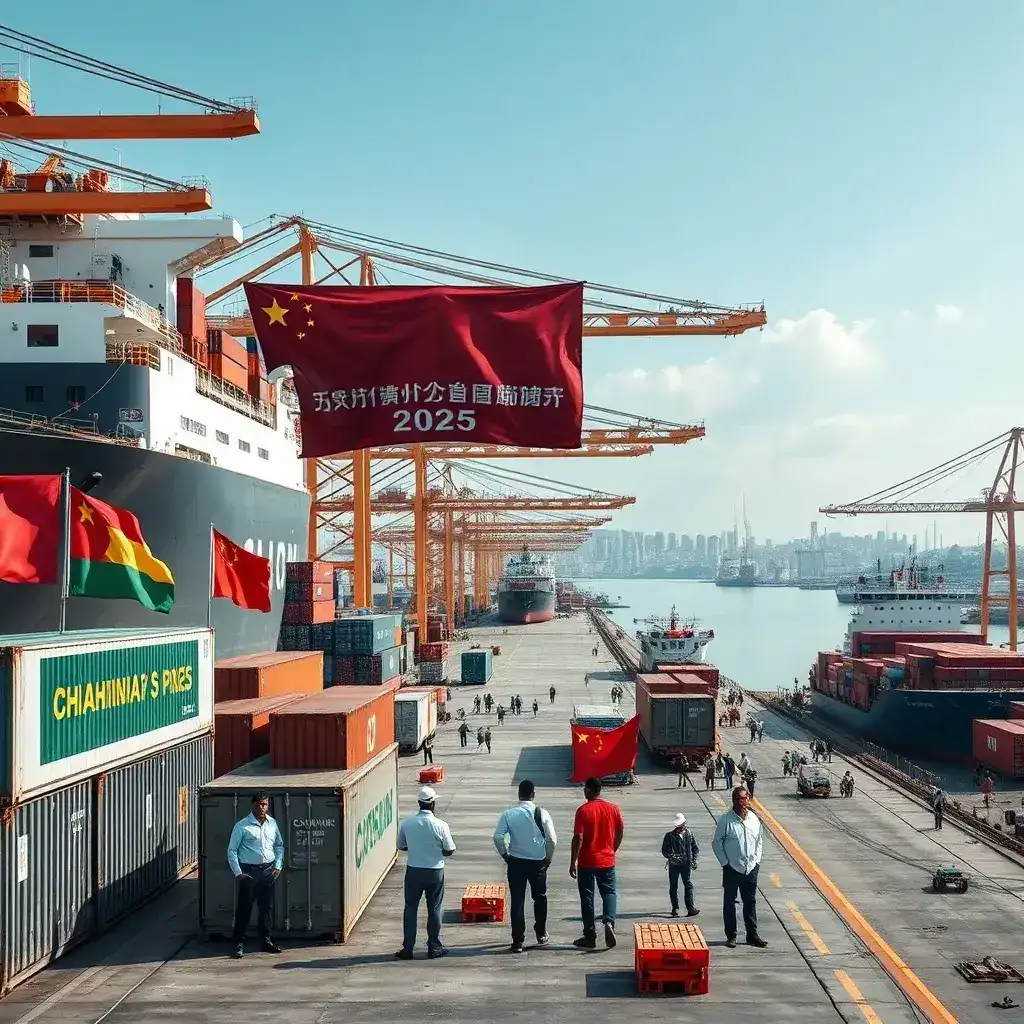
Accra, Ghana – In a significant milestone for bilateral relations, Ghana and China have achieved a record US$14.1 billion in trade for the year 2025, marking a substantial 19.3 per cent increase from the previous year. This surge underscores China’s solidified position as Ghana’s foremost trading partner and a crucial source of foreign direct investment, as announced by Chinese Ambassador to Ghana, Mr. Cong Song, during his inaugural press briefing in Accra on Monday.
Strengthening Economic Alignment
Ambassador Cong Song characterized the Ghana-China relationship as broad, dynamic, and strategically aligned, particularly as both nations pursue ambitious economic transformation agendas. While China navigates its 15th Five-Year Plan, focusing on high-quality development, technological advancement, and industrial modernization, Ghana is actively engaged in economic recovery and growth through its “24-Hour Economy” and “Resetting Ghana” initiatives.
“China and Ghana share highly compatible development philosophies, and the prospects for cooperation in various fields are broad,” Ambassador Cong stated, highlighting the synergy between their national development strategies.
Economic Recovery and Investment Drive
The Ambassador pointed to Ghana’s robust economic performance, reporting a 6 per cent Gross Domestic Product growth in 2025 and a notable decline in inflation to 3.4 per cent by April 2026. This economic uptick has been partly fueled by escalating Chinese investments across key sectors.
Chinese firms have established a strong presence in Ghana’s mining, energy, manufacturing, aviation, and construction industries. Investments in power plants, oil refineries, steel factories, airlines, ceramic companies, and cement manufacturers have not only created thousands of local jobs but have also significantly contributed to Ghana’s industrialization efforts and the promotion of “Made in Ghana” products.
“The China-invested mining companies, power plants, oil refineries, airlines, steel companies, ceramic companies and cement factories have deeply rooted themselves in Ghana, creating thousands of jobs and significantly improving the lives of local residents,” Ambassador Cong elaborated.
Future Cooperation and Industrialization Support
Looking ahead, China is poised to deepen its collaboration with Ghana through enhanced investment, technology transfer, and industrial partnerships. A key area of focus is supporting Ghana’s industrial transformation agenda, including the proposed Volta Economic Corridor project. This initiative is expected to unlock substantial opportunities in manufacturing, logistics, and trade.
The Ambassador emphasized that China’s strengths in capital, technology, and industrial development are well-matched with Ghana’s development priorities and rich resource potential. Both nations are committed to strengthening industrial value chains, with an emphasis on the deep processing of agricultural products and the promotion of local manufacturing.
Zero-Tariff Policy Boosts Trade
A significant catalyst for increased trade is China’s zero-tariff policy, which took effect on May 1, 2026. This policy grants duty-free access to the Chinese market for all products from 53 African nations with diplomatic ties to China, including Ghana.
This move dramatically reduces export costs for Ghanaian businesses, enhancing the competitiveness of products such as cocoa, cashew, shea butter, textiles, and handicrafts in the Chinese market. Previously, Ghanaian cocoa faced tariffs ranging from 8 to 22 per cent, a burden now lifted.
“For example, Ghanaian cocoa previously had tariffs ranging from eight to 22 per cent, but after the implementation of the zero-tariff treatment, cocoa and other products can now enter China duty-free,” Ambassador Cong noted. The policy is anticipated to spur export diversification, job creation, and growth for small and medium-scale enterprises in Ghana.
People-to-People Exchanges and Cultural Ties
Beyond economic cooperation, Ambassador Cong highlighted the importance of people-to-people exchanges in strengthening Ghana-China relations. Over 10,000 Ghanaian students are currently pursuing studies in Chinese language and culture. Furthermore, numerous cultural and educational exchange programs are planned under the 2026 China-Africa Year of People-to-People Exchanges initiative.
This initiative aims to foster deeper cultural understanding and cooperation through approximately 600 exchange activities involving youth, media, tourism, arts, and governance across Africa.
Addressing Illegal Mining and Media Relations
On the sensitive issue of illegal mining, or “galamsey,” Ambassador Cong reiterated China’s firm stance against its nationals’ involvement in such activities and affirmed the Chinese government’s support for Ghana’s efforts to combat the menace and protect its environment. He stressed that Chinese citizens abroad are expected to adhere strictly to the laws of their host countries.
The Ambassador also urged the Ghanaian media to continue providing fair and comprehensive coverage of Ghana-China cooperation and the contributions of Chinese businesses and communities operating within Ghana.
Outlook for Bilateral Relations
Ambassador Cong expressed strong optimism about the future of bilateral relations, predicting that the expanding economic partnership between Ghana and China will continue to generate valuable opportunities in trade, investment, industrialization, and sustainable development for both nations.










Leave a Reply