
Ghana Water Limited (GWL) has successfully recovered GH₵3.7 million from customers involved in illegal water connections and meter bypasses as part of a nationwide revenue mobilization and anti-water theft initiative. The intensified exercise, supported by National Security, has also uncovered nearly 400 illegal connections in Accra alone, highlighting significant financial losses for the state utility.
Context: Rising Non-Revenue Water
The crackdown stems from GWL’s efforts to combat high levels of non-revenue water (NRW), which includes water lost through leakages, illegal connections, and metering inaccuracies. Investigations revealed that water theft and pipeline leakages were major contributors to these losses.
To address this, GWL established a specialised Revenue Enhancement Team in August 2025. Initially comprising three operational units, the team was expanded to ten units in January of the current year to bolster enforcement and improve revenue collection.
Intensified Enforcement and Recoveries
Mr. Adam Mutawakilu, Managing Director of GWL, announced the recovery figures during an inspection visit to the company’s Central Workshop and sections of the Kpong transmission line undergoing repairs. He stated that as of the previous Friday, approximately 397 illegal connections had been identified in Accra.
These illegal activities encompass unauthorized connections, meter bypasses, and unmetered water offtakes from major transmission corridors. The exercise has so far identified liabilities totaling around GH₵16 million, with GH₵3.7 million already collected from offending customers.
Mr. Mutawakilu issued a stern warning, stating that customers who fail to settle their outstanding obligations will face prosecution and disconnection from the water supply network. “One is for them to come and pay the outstanding. If you are not willing to pay, then court process starts,” he declared.
Impact on Water Supply
The Managing Director explained that these illegal connections exacerbate water shortages in parts of Accra and Tema. Significant volumes of treated water are lost before reaching consumers due to the inability to account for their usage.
This issue is compounded by leakages on aging transmission pipelines originating from the Kpong Water Treatment Plant. These leaks affect the reliability of water supply to residents in Tema and Accra East.
Assessments by GWL indicate that nearly 40 percent of water produced at Kpong is lost through leaks before reaching Tema. A primary culprit identified is the aging 21-inch steel transmission line, some sections of which are over 70 years old.
Infrastructure Overhaul Underway
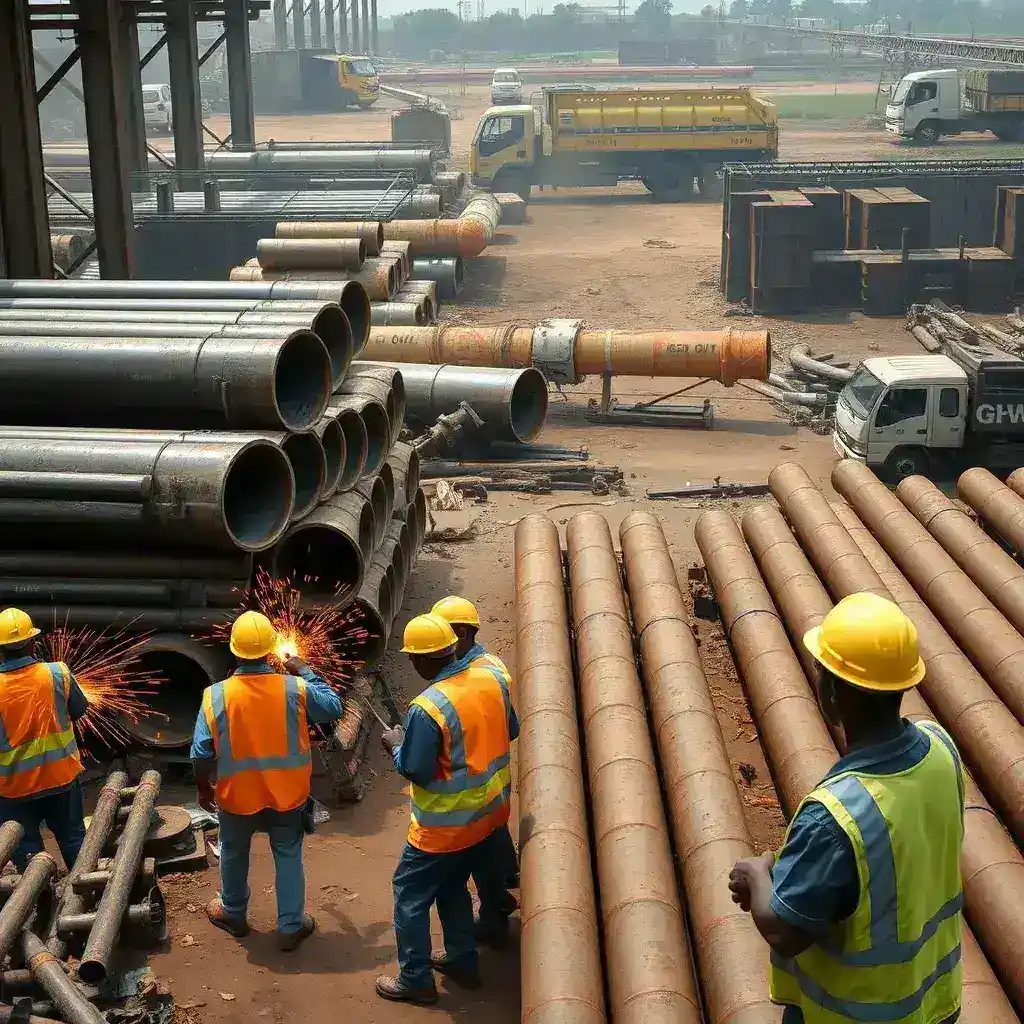
To combat these losses, GWL has initiated the fabrication and replacement of damaged sections of both 21-inch and 42-inch pipelines at its Central Workshop. The workshop is equipped for pipe rolling, fabrication of specialized fittings, welding, sandblasting, and coating to restore the transmission system’s integrity.
Currently, the workshop is producing 180 meters of 21-inch pipes and 162 meters of 42-inch pipes in six and twelve-meter sections for on-site installation. The facility also handles emergency repairs for detected leakages.
Approximately GH₵5 million has been invested in these fabrication works, with additional funding anticipated to expedite repairs and stabilize water supply. This infrastructure work is crucial as GWL simultaneously replaces all five pumps at the Kpong Water Treatment Plant to boost production and transmission pressure.
Future Outlook and Continuous Monitoring
Mr. Mutawakilu emphasized that reinforcing the pipeline network is essential to prevent future bursts and leakages once the new pumps are operational. GWL is committed to avoiding a recurrence of such maintenance challenges by implementing continuous monitoring systems for its pipelines.
“We are not going to wait for things to get worse before action is taken,” he asserted. These interventions are part of GWL’s broader strategy to reduce non-revenue water, enhance operational efficiency, and ensure a consistent supply of potable water to urban communities, aligning with the Government’s reset agenda.










Leave a Reply