
The Rockefeller Foundation announced it awarded over US$350 million and directly mobilized US$3 billion in 2025, impacting an estimated 731 million people worldwide. These figures, detailed in its 2025 Impact Report titled ‘Big Bets, Real Results,’ emerge as international development funding faces significant global pressure.
Context of Declining Aid and Growing Needs
The report’s release coincides with a period of decreasing global aid flows. This trend raises concerns about how nations, particularly in Africa, can sustain progress in critical sectors like health, education, food security, and energy access.
Focus on Africa and Local Capacity Building
The Foundation committed more than US$133 million across 66 initiatives in Africa. A primary focus is on expanding local capacity and supporting solutions driven by regional leaders.
Strengthening Health Systems in West Africa
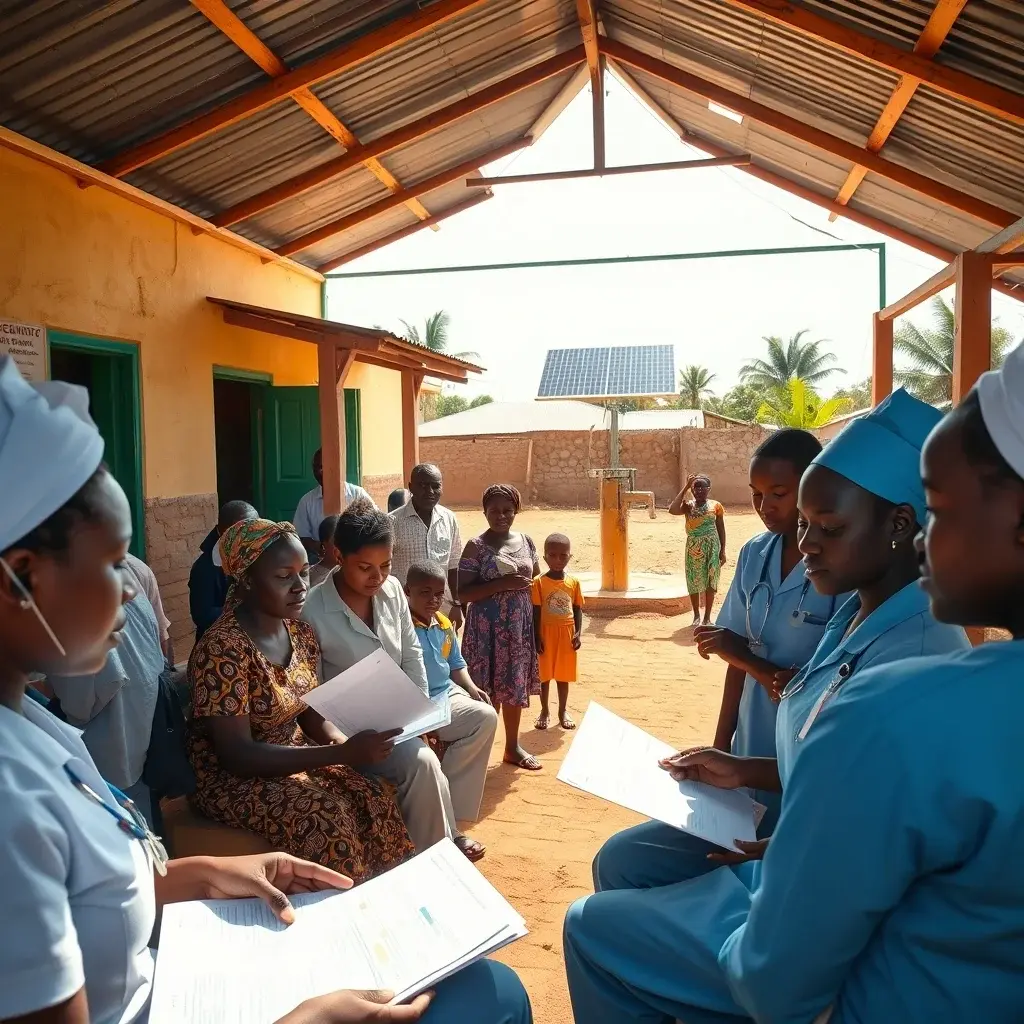
One highlighted initiative is a health partnership in West Africa, supported by the Global Fund, the Abbott Foundation, and IQVIA. This program aims to bolster laboratory systems, disease surveillance, and outbreak response capabilities across the sub-region.
The initiative has reportedly helped detect over 100 outbreaks, including viral hemorrhagic fevers and other epidemic threats. It has also trained more than 1,000 laboratory technicians and established sentinel surveillance systems in 11 countries.
Improving Food Systems and School Feeding
In Ghana, the Foundation partnered with the World Food Programme to enhance school feeding systems. The focus is on locally sourced, nutrition-focused food programs.
This multi-country program, spanning six nations including Ghana, seeks to strengthen the connection between schools and local agricultural systems. It also aims to support smallholder farmers by identifying supply chain challenges and promoting evidence-based nutrition policies.
Energy Access and Digital Agriculture in Africa
Energy and technology projects in other African nations were also featured. In Nigeria, an innovative energy initiative created the country’s first interconnected mini-grid system, combining solar panels, batteries, and grid infrastructure.
This project reportedly provided electricity to approximately 30,000 people, supported nearly 14,000 jobs, and attracted over US$287 million for further expansion. Nigeria also benefited from Digital Green’s AI-powered FarmerChat platform.
The FarmerChat platform offers agricultural guidance to farmers facing climate-related challenges. It has seen over 1.6 million downloads and handled more than 10 million queries across six countries.
Mission 300: Expanding Electricity Access
In Zambia, progress was noted under Mission 300, an initiative targeting electricity access for 300 million people across Africa by 2030. The Foundation reports that over 44 million people have already gained access to electricity through projects supported by the World Bank and the African Development Bank.
Expert Perspectives on Shifting Development Priorities
William Asiko, Senior Vice President and Head of The Rockefeller Foundation’s Africa Regional Office, commented on the evolving global landscape. He noted that increasing aid reductions, climate pressures, geopolitical tensions, and economic challenges are reshaping development priorities.
Asiko emphasized the intensified need for robust local systems and African-led approaches across health, education, and energy sectors.
Foundation’s Strategy and Future Outlook
The Rockefeller Foundation, celebrating 60 years of its Africa Regional Office, highlights its current strategy. It emphasizes partnerships, technology, and long-term investment models designed to tackle development challenges across the continent.
The Foundation’s significant investments and strategic focus on local capacity and innovative solutions come at a critical juncture for global development. As international aid faces headwinds, the effectiveness of such ‘big bets’ and their scalability will be crucial in determining future progress in developing economies.










Leave a Reply